

vSim M Richards Clinical Packet Latest Update 2025
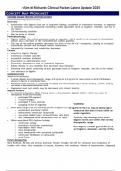
DESCRIBE DISEASE PROCESS AFFECTING PATIENT (Include Pathophysiology of Disease Process) Overview ▪ Intoxication with digoxin from use in long-term therapy, accidental or intentional overdose, or ingestion of naturally occurring compounds containing cardiac glycosides (such as foxglove, oleander, and lily of the valley) ▪ Life-threatening condition ▪ May be acute or chronic Pathophysiology ▪ Digoxin inhibits the sodium-potassium pump in myocytes, which results in an increase in intracellular sodium and a decrease in the transmembrane sodium gradient. ▪ The loss of the sodium gradient decreases the drive of the Na+-Ca2+ transporter, leading to increased intracellular calcium and increased muscle contractions. ▪ Automaticity increases and conduction decreases. Causes ▪ Long-term digoxin therapy ▪ Intentional overdose (suicide) ▪ Accidental overdose (children) ▪ Prescription or administration error ▪ Electrolyte disturbances such as potassium depletion ▪ Kidney disease or any condition that decreases drug clearance ▪ Poisoning with plants containing cardiac glycosides (such as foxglove, oleander, and lily of the valley) ▪ Low tolerance to digoxin DIAGNOSTICS TESTS (Reason for Test and Results) ▪ A serum digoxin level (therapeutic range, 0.8 ng/mL to 2.0 ng/mL for rate control in atrial fibrillation) above 2.5 ng/mL is considered toxic. ▪ Potassium level (serum) is commonly increased and life-threatening in acute toxicity; chronic toxicity can cause a decreased potassium level. ▪ Magnesium level test results may be decreased with chronic toxicity. Diagnostic Procedures ▪ An electrocardiography (ECG) tracing shows a characteristic digitalis effect, which can occur at therapeutic levels and includes: o prolonged PR segment o T-wave changes o prolonged T-wave intervals o scooping of the ST segment. WARNING! ▪ Other ECG changes that are relatively specific to digoxin toxicDitiygionxcilnudlee:vel may be falsely high if o accelerated junctional rhythm o bidirectional ventricular tachycardia o new-onset Mobitz type I atrioventricular (AV) block o non- paroxysmal atrial tachycardia with AV block. ▪ Other associated ECG rhythms include: o ventricular ectopy o premature ventricular contractions o high-degree heart block o sinus bradycardia o sinus bradycardia with junctional tachycardia o ventricular fibrillation or tachycardia o atrial flutter. PATIENT INFORMATION measured less than 6 hours after an acute ingestion. Toxicity may develop even when digoxin levels are within the normal therapeutic range. Non digoxin cardiac glycosides (such as foxglove, oleander, and lily of the Mary Richards, 82-year-old African American female. Brought into ED for confusion and complaints of trouble with vision. Also complains of nausea, dizziness, and weakness. History of hypertension, diagnosed 40 years ago, and heart failure, diagnosed 30 years ago. Her current medications include furosemide, amlodipine, and digoxin. ANTICIPATED PHYSICAL FINDINGS ▪ Anorexia ▪ Cardiac arrhythmia ▪ Diarrhea ▪ Visual disturbances (specifically xanthopsia, in which objects appear yellow) ▪ Photophobia ▪ Mydriasis ▪ Confusion ▪ Restlessness ▪ Weakness ▪ Irregular pulse (bradycardia) ▪ Hypotension ▪ Dyspnea ▪ Increased jugular vein pressure ▪ Neuralgia ▪ Vertigo ▪ Pedal edema (if kidney disease or decompensated heart failure is present) ▪ Seizures (rare) WARNING! The onset of vague symptoms accompanied by an arrhythmia in a patient who is taking digoxin or other cardiac glycosides is indicative of digoxin toxicity. ANTICIPATED NURSING INTERVENTIONS ▪ Institute continuous cardiac monitoring to evaluate for changes and development of arrhythmias. Anticipate the need for pulmonary artery catheter insertion to evaluate hemodynamic status or a temporary pacemaker to assist heart function. ▪ Establish and maintain a patent airway. Prepare for possible mechanical ventilation and endotracheal intubation should respiratory failure develop. ▪ Administer supplemental oxygen, as indicated, based on oxygen saturation levels obtained by pulse oximetry. ▪ Initiate and maintain IV access, as ordered. ▪ Administer prescribed drugs. Give digoxin immune Fab (ovine) IV over 30 minutes using a 0.22-micron membrane filter; anticipate a complete response within 4 hours of administration. ▪ Help the patient identify and eliminate predisposing factors. ▪ Auscultate heart sounds for changes. ▪ If overdose was intentional, arrange for counseling and institute a safety contract. ▪ Assess digoxin levels on admission and every 6 hours after ingestion in a patient with an acute overdose. ▪ Obtain specimens for laboratory testing, such as electrolyte levels. WARNING! Be aware that, after administering digoxin immune Fab, digoxin level measurements obtained in the usual manner are unreliable for approximately 1 to 2 weeks. VSIM ISBAR ACTIVITY Student Worksheet INTRODUCTION Milagros Ballesteros, LPN, Emergency Department Your name, position (RN), unit you are working on SITUATION Mary Richards, 82-year-old African American female. Brought into ED for confusion and complaints of trouble with vision. Also complains of nausea, dizziness, and Patient’s name, age, specific reason for visit BACKGROUND Patient being admitted for observations for Digoxin toxicity. Date of admission 9/19/21 Vital Signs every hour Continuous 3 lead ECG monitoring Continuous Pulse Ox Oxygen to maintain SpO2 greater than 92% Meds: Lactated Ringer’s IV at 100 mL/hr Ondansetron 4mg IV push every 6 hours PRN for nausea/vomiting Hold the following home medications for now: Furosemide 20 mg PO x 1 daily Amlodipine 5mg PO x 1 daily Digoxin 0.25 mg PO x1 daily Call provider when lab results have been received Patient’s primary diagnosis, date of admission, current orders for patient ASSESSMENT History of hypertension, diagnosed 40 years ago, and heart failure, diagnosed 30 years ago. Her current medications include furosemide, amlodipine, and digoxin. Vitals are: temperature: 37.1°C (98.7°F), pulse: 58/min, respirations: 22/min, blood pressure: 96/54 mmHg, and an SpO2 of 96% on room air. She has an IV of lactated Ringer’s infusing at 100 mL/hr through a 20-gauge IV catheter in her right arm. Complaining of slight abdominal pain and nausea and has not vomited. Current pertinent assessment data using head-to-toe approach, pertinent diagnostics, vital signs. RECOMMENDATION Continue to monitor patient on telemetry. Vital signs every hour and monitor labs especially digoxin level. Notify provider of changes in baseline vitals. Administer fluids as ordered and monitor for adverse effects of medications. Any orders or recommendations you may have for this patient NAME OF MEDICATION, CLASSIFICATION AND INCLUDE PROTOTYPE MEDICATION: Lactated Ringers CLASSIFICATION: Intravenous nutritional products PROTOTYPE: Lactated Ringers CONTRAINDICATIONS: Newborns, In patients older than 28 days (including adults), ceftriaxone must not be administered simultaneously with IV calcium-containing solutions, including Lactated Ringer's Injection, through the same infusion line. Patients with a known hypersensitivity to sodium lactate. ADVERSE EFFECTS: Immune System Disorders: Hypersensitivity/infusion reactions, including anaphylactic/anaphylactoid reactions, and the following manifestations: angioedema, chest pain, chest discomfort, decreased heart rate, tachycardia, blood pressure decreased, respiratory distress, bronchospasm, dyspnea, cough, urticaria, rash, pruritus, erythema, flushing, throat irritation, paresthesia, hypoesthesia oral, dysgeusia, nausea, anxiety, pyrexia, headache. Metabolism and Nutrition Disorders: Hyperkalemia. General Disorders and Administration Site Conditions: Infusion site reactions, including phlebitis, infusion site inflammation, infusion site swelling, infusion site rash, infusion site pruritus, infusion site erythema, infusion site pain, infusion site burning. BLACK BOX WARNINGS: Although Lactated Ringer's Injection has a potassium concentration similar to the concentration in plasma, it is insufficient to produce a useful effect in case of severe potassium deficiency; therefore, it should not be used for this purpose. Lactated Ringer's Injection is not for use for the treatment of lactic acidosis or severe metabolic acidosis. Lactated Ringer's Injection should not be administered simultaneously with citrate anticoagulated/preserved blood through the same administration set because of the likelihood of coagulation. The infusion must be stopped immediately if any signs or symptoms of a suspected hypersensitivity reaction develop. Appropriate therapeutic countermeasures must be instituted as clinically indicated. Hypersensitivity reactions are reported more frequently during pregnancy. SAFE DOSE OR DOSE RANGE, SAFE ROUTE Route will be IV; rate and amount will be ordered by MD. PURPOSE FOR TAKING THIS MEDICATION Lactated Ringer's Injection, USP is a sterile, nonpyrogenic solution for fluid and electrolyte replenishment in single dose containers for intravenous administration. It contains no antimicrobial agents PATIENT EDUCATION WHILE TAKING THIS MEDICATION PATIENT EDUCATION WORKSHEET PATIENT EDUCATION WORKSHEET Notify if any signs of infiltration at IV site. Advise patient to notify if they are taking sodium lactate. Advise of symptoms of fluid overload: shortness of breath, edema, distended abdomen. NAME OF MEDICATION, CLASSIFICATION AND INCLUDE PROTOTYPE MEDICATION: Ondansetron (Zofran) CLASSIFICATION: Anti-emetic PROTOTYPE: Ondansetron CONTRAINDICATIONS: Contraindicated in patients hypersensitive to drug, this drug contains aspartame and should not be used in patients with phenylketonuria, congenital long QT syndrome, and concurrent use of apomorphine. Use cautiously with patients that have hepatic impairment, abdominal surgery, phenylketonuria, OB, lactation, and pediatrics. ADVERSE EFFECTS: CNS: Serotonin syndrome, dizziness, headache, drowsiness, fatigue, weakness. CV: Torsade’s de pointes, QT interval prolongation. GI: constipation, diarrhea, abdominal pain, dry mouth, increase in liver enzymes. Neuro: extrapyramidal reactions Derm: SJS, TEN BLACK BOX WARNINGS: Warning: Ondansetron may increase the risk of developing abnormal changes in the electrical activity of the heart, which can result in a potentially fatal abnormal heart rhythm. SAFE DOSE OR DOSE RANGE, SAFE ROUTE Route: PO, IM, IV Dosage: 4 mg. Often used pre/post op and during chemo. PURPOSE FOR TAKING THIS MEDICATION Prevention of nausea and vomiting PATIENT EDUCATION WHILE TAKING THIS MEDICATION ▪ Take as directed ▪ Notify immediately if symptoms of irregular heartbeat, serotonin syndrome, or involuntary movement of eyes, fac, or limbs.
Document information
- Uploaded on
- July 1, 2025
- Number of pages
- 14
- Written in
- 2024/2025
- Type
- Exam (elaborations)
- Contains
- Questions & answers


