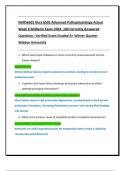
NURS6501 / NURS 6501: Advanced
Pathophysiology Final Exam Version 2
(Latest ) Walden University
1. What is the primary pathophysiological mechanism in type 1 diabetes
mellitus?
Autoimmune destruction of pancreatic beta cells
This leads to absolute insulin deficiency, which is the hallmark of type 1
diabetes.
2. In chronic obstructive pulmonary disease (COPD), what causes airway
obstruction?
Inflammation and remodeling of the airways combined with mucus
hypersecretion
These changes narrow airways, impair airflow, and reduce gas exchange.
3. Which electrolyte imbalance is most commonly associated with diabetic
ketoacidosis (DKA)?
Hyperkalemia
Despite total body potassium depletion, serum potassium is elevated due
to acidosis and insulin deficiency causing potassium shift out of cells.
4. The main pathophysiological change in Alzheimer's disease is characterized
by:
Amyloid-beta plaques and neurofibrillary tangles
These abnormal protein accumulations disrupt neuronal function and
cause neurodegeneration.
,5. What triggers the inflammatory response in rheumatoid arthritis?
Autoimmune attack against synovial membrane antigens
This causes chronic inflammation, leading to joint destruction.
6. In congestive heart failure, what leads to fluid accumulation in the lungs?
Increased hydrostatic pressure in pulmonary capillaries
Left ventricular failure causes blood backup, increasing pressure and
forcing fluid into alveoli.
7. What is the mechanism of ischemic injury to cells?
Lack of oxygen leading to ATP depletion and failure of Na+/K+ pumps
This results in cell swelling, membrane damage, and potential cell death.
8. Which hormone is primarily responsible for sodium retention in heart
failure?
Aldosterone
It promotes sodium and water retention, exacerbating fluid overload.
9. The hallmark of nephrotic syndrome includes:
Massive proteinuria leading to hypoalbuminemia and edema
Loss of plasma proteins in urine lowers oncotic pressure, causing edema.
10.What is the common cause of secondary hypertension?
Renal artery stenosis
Reduced renal perfusion triggers renin release, activating RAAS and
increasing blood pressure.
11.What type of hypersensitivity reaction is involved in contact dermatitis?
Type IV (delayed-type) hypersensitivity
T-cell mediated immune response leads to localized skin inflammation.
, 12.What cellular change characterizes metaplasia?
Reversible replacement of one differentiated cell type with another
This occurs as an adaptive response to chronic irritation.
13.What is the cause of anemia in chronic kidney disease?
Decreased erythropoietin production
Kidneys fail to produce adequate erythropoietin, leading to reduced RBC
production.
14.What is the predominant immune cell in acute bacterial infection?
Neutrophils
They are the first responders and primary phagocytes during acute
bacterial infection.
15.Which virus is most commonly linked to hepatocellular carcinoma?
Hepatitis B virus
Chronic HBV infection leads to liver inflammation and malignant
transformation.
16.What leads to the development of ascites in liver cirrhosis?
Portal hypertension and hypoalbuminemia
Increased pressure and decreased oncotic pressure cause fluid leakage
into the peritoneal cavity.
17.What characterizes the pathophysiology of multiple sclerosis?
Autoimmune demyelination of CNS neurons
Loss of myelin disrupts nerve impulse conduction.
18.What causes gout?
Deposition of monosodium urate crystals in joints
Pathophysiology Final Exam Version 2
(Latest ) Walden University
1. What is the primary pathophysiological mechanism in type 1 diabetes
mellitus?
Autoimmune destruction of pancreatic beta cells
This leads to absolute insulin deficiency, which is the hallmark of type 1
diabetes.
2. In chronic obstructive pulmonary disease (COPD), what causes airway
obstruction?
Inflammation and remodeling of the airways combined with mucus
hypersecretion
These changes narrow airways, impair airflow, and reduce gas exchange.
3. Which electrolyte imbalance is most commonly associated with diabetic
ketoacidosis (DKA)?
Hyperkalemia
Despite total body potassium depletion, serum potassium is elevated due
to acidosis and insulin deficiency causing potassium shift out of cells.
4. The main pathophysiological change in Alzheimer's disease is characterized
by:
Amyloid-beta plaques and neurofibrillary tangles
These abnormal protein accumulations disrupt neuronal function and
cause neurodegeneration.
,5. What triggers the inflammatory response in rheumatoid arthritis?
Autoimmune attack against synovial membrane antigens
This causes chronic inflammation, leading to joint destruction.
6. In congestive heart failure, what leads to fluid accumulation in the lungs?
Increased hydrostatic pressure in pulmonary capillaries
Left ventricular failure causes blood backup, increasing pressure and
forcing fluid into alveoli.
7. What is the mechanism of ischemic injury to cells?
Lack of oxygen leading to ATP depletion and failure of Na+/K+ pumps
This results in cell swelling, membrane damage, and potential cell death.
8. Which hormone is primarily responsible for sodium retention in heart
failure?
Aldosterone
It promotes sodium and water retention, exacerbating fluid overload.
9. The hallmark of nephrotic syndrome includes:
Massive proteinuria leading to hypoalbuminemia and edema
Loss of plasma proteins in urine lowers oncotic pressure, causing edema.
10.What is the common cause of secondary hypertension?
Renal artery stenosis
Reduced renal perfusion triggers renin release, activating RAAS and
increasing blood pressure.
11.What type of hypersensitivity reaction is involved in contact dermatitis?
Type IV (delayed-type) hypersensitivity
T-cell mediated immune response leads to localized skin inflammation.
, 12.What cellular change characterizes metaplasia?
Reversible replacement of one differentiated cell type with another
This occurs as an adaptive response to chronic irritation.
13.What is the cause of anemia in chronic kidney disease?
Decreased erythropoietin production
Kidneys fail to produce adequate erythropoietin, leading to reduced RBC
production.
14.What is the predominant immune cell in acute bacterial infection?
Neutrophils
They are the first responders and primary phagocytes during acute
bacterial infection.
15.Which virus is most commonly linked to hepatocellular carcinoma?
Hepatitis B virus
Chronic HBV infection leads to liver inflammation and malignant
transformation.
16.What leads to the development of ascites in liver cirrhosis?
Portal hypertension and hypoalbuminemia
Increased pressure and decreased oncotic pressure cause fluid leakage
into the peritoneal cavity.
17.What characterizes the pathophysiology of multiple sclerosis?
Autoimmune demyelination of CNS neurons
Loss of myelin disrupts nerve impulse conduction.
18.What causes gout?
Deposition of monosodium urate crystals in joints