CartilagE
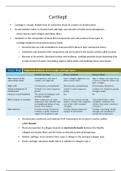
Cartilage is a tough, flexible form of connective tissue (It consists of chondrocytes)
Its extracellular matrix is characterized with high concentration of GAGs and proteoglycans
which interact with collagen and elastic fibers.
Variations in the composition of these ECM components and cells produce three types of
cartilage adapted to local biomechanical needs
o Chondrocytes are cells embedded in extensive ECM (allow to bear mechanical stress)
o Synthesize and maintain ECM components and are located in the matrix cavities called Lacunae
o Because of its smooth, lubricated surface and resiliency, cartilage provides shock absorbing (due
to high content of water) and sliding regions within joints and facilitates bone movements.
Chondrocytes synthesize and maintain ECM components are located in matrix cavities
called lacunae.
Physical properties of collagen depend on electrostatic bonds between the flexible
collagen and elastin fibers and the GAGs on densely packed proteoglycans.
Hyaline cartilage: most common form, type 2 collagen is the principal collagen type.
Elastic cartilage: abundant elastic fibers in addition to collagen type 2.
Cartilage is a tough, flexible form of connective tissue (It consists of chondrocytes)
Its extracellular matrix is characterized with high concentration of GAGs and proteoglycans
which interact with collagen and elastic fibers.
Variations in the composition of these ECM components and cells produce three types of
cartilage adapted to local biomechanical needs
o Chondrocytes are cells embedded in extensive ECM (allow to bear mechanical stress)
o Synthesize and maintain ECM components and are located in the matrix cavities called Lacunae
o Because of its smooth, lubricated surface and resiliency, cartilage provides shock absorbing (due
to high content of water) and sliding regions within joints and facilitates bone movements.
Chondrocytes synthesize and maintain ECM components are located in matrix cavities
called lacunae.
Physical properties of collagen depend on electrostatic bonds between the flexible
collagen and elastin fibers and the GAGs on densely packed proteoglycans.
Hyaline cartilage: most common form, type 2 collagen is the principal collagen type.
Elastic cartilage: abundant elastic fibers in addition to collagen type 2.