S012617 JOSHUA SHARP UNIT 6B
Investigative Procedures, Recourses, and Interviewing
I am on an internship shadowing interviewers and investigators in criminal investigations to learn
about recourses and techniques. I am expected to accurately plan and conduct a mock interview as a
part of my training to prepare me for the professional environment.
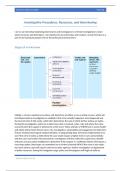
Stages of an Interview
Initially, a crime is reported via a phone call, directly to an officer or via an online service, which will
be followed with an investigation to establish if the crime actually happened, what happened and
the level of crime it falls under, which then determines the rate of which further actions are taken.
During this investigation, police try to determine who is involved, when, why and where the crime
occurred and if the suspect is still present at the scene. Police will take a THRIVE test to assess health
and safety which checks threat, harm, risk, investigation, vulnerability and engagement to determine
if those involved need urgent medical attention, if safeguarding steps need to be implemented or to
see if the crime involves a child where the case would require a higher level of care and sensitivity
and also carry out further risk-assessments. Investigators will also notify their supervisors, identify
witnesses and use police intelligence to determine if the suspect is a reoffender before referring to a
next steps option. Next steps can sometimes be no further actioned (NFA) if the crime is not major,
but more serious cases will require referrals to other agencies, further investigation or deployment
of police resources. During this instigation stage, police and investigators will begin to build an
JOSHUA SHARP (S012617) 1
, S012617 JOSHUA SHARP UNIT 6B
accurate report of all actions taken and information and intelligence gathered. Instigation allows for
the initial information to be gathered and cases to be prioritised, allowing for major crime to be
resolved more often. However, some low-level crimes may be neglected or withheld, causing victims
to lose faith in the police system and suspects to believe they have gotten away with crime,
potentially influencing recidivism in criminals.
Next, the first investigative steps begin, where the investigators will adhere to the golden hour
concept, where evidence needs to be collected in the first hour of a crime happening to prevent
tampering, contamination or the loss of crucial evidence. Police on the scene may call on other
specialists such as forensic analysists, k9 units or drug and substance teams if the evidence being
collected is proportionate. They will use the instigation information and evidence collected to
determine if an arrest is viable or necessary and may deploy other officers to locate and arrest a
suspect. All of the information and evidence gathered must be accurately added to the report and
then passed over to the lead investigative detective on the case. This ensures evidence is not lost
and the detective has all the information available in a timely manner. In some cases, investigations
do not need a investigative team and can be conducted in the station via digital intelligence and
communications but cases of a higher calibre that are classed as major or critical incident will require
a synergistic approach with police officers and liaising companies. Once adequate information is
gathered, cases will be allocated a rate of urgency which will determine how fast the case needs to
be resolved. Typically, higher level crime or cases where more crime is likely to happen if not dealt
with will be prioritised. During the initial investigative actions, the report is turned into a case file
where more information is ready to be documented, and a investigation management document is
set up. Safeguarding is reviewed throughout the investigation and further steps taken are adjusted if
anything changes. Investigators must also check and ensure that the codes of practice for victims of
crime are met. If investigators fail to adhere to these codes of practices, victims can make
complaints, which can lead to the termination of employment for investigators and officers at fault.
Investigators at this stage will gather and document any further evidence. The amount of evidence
needed often depends on the nature and calibre of the crime. If investigators believe the suspect
lives out of the area, they will communicate and work collaboratively with detectives from other
policing jurisdictions to arrest the suspect if necessary. Throughout the investigation, investigations
should refer the case file, and any information found to their supervisor where the supervisor
assesses risk, assess victim handling. tests hypothesis, reviews validity of evidence and aids in a plan
for next steps. The first investigative steps are the most important steps in a crime scene as it is the
window where most evidence can be collected, witnesses and victims remember the details, and the
suspect Is likely to be nearby. Without this stage, evidence may not be gathered correctly, and
crimes may not be able to be charged. It also ensures human rights are followed and regulates the
mental health of those involved, further supporting cases. However, investigations can take time and
are very costly in many cases as they require many recourses and staff involvement, costing the
government a large amount of money.
Next, the investigation is evaluated. Officers will filter and organise the evidence gathered by
admissibility, relevance and reliability before evaluation to increase efficiency. With aid from
analysists, the case is then assessed based on who, what, where, when, why and how is known or
not known, and where inconsistencies may occur. This helps officers determine areas that are not
helpful to the case, as well as areas that may need further investigation. The evaluations aim to
determine who the suspect, witness and victim are, is the incident a crime and if the evidence is
adequate. From this, investigators may also evaluate the hypothesis/es that have been made to see
if evidence deems the ideas likely or unlikely, and which hypothesis seems most accurate to the true
JOSHUA SHARP (S012617) 2
Investigative Procedures, Recourses, and Interviewing
I am on an internship shadowing interviewers and investigators in criminal investigations to learn
about recourses and techniques. I am expected to accurately plan and conduct a mock interview as a
part of my training to prepare me for the professional environment.
Stages of an Interview
Initially, a crime is reported via a phone call, directly to an officer or via an online service, which will
be followed with an investigation to establish if the crime actually happened, what happened and
the level of crime it falls under, which then determines the rate of which further actions are taken.
During this investigation, police try to determine who is involved, when, why and where the crime
occurred and if the suspect is still present at the scene. Police will take a THRIVE test to assess health
and safety which checks threat, harm, risk, investigation, vulnerability and engagement to determine
if those involved need urgent medical attention, if safeguarding steps need to be implemented or to
see if the crime involves a child where the case would require a higher level of care and sensitivity
and also carry out further risk-assessments. Investigators will also notify their supervisors, identify
witnesses and use police intelligence to determine if the suspect is a reoffender before referring to a
next steps option. Next steps can sometimes be no further actioned (NFA) if the crime is not major,
but more serious cases will require referrals to other agencies, further investigation or deployment
of police resources. During this instigation stage, police and investigators will begin to build an
JOSHUA SHARP (S012617) 1
, S012617 JOSHUA SHARP UNIT 6B
accurate report of all actions taken and information and intelligence gathered. Instigation allows for
the initial information to be gathered and cases to be prioritised, allowing for major crime to be
resolved more often. However, some low-level crimes may be neglected or withheld, causing victims
to lose faith in the police system and suspects to believe they have gotten away with crime,
potentially influencing recidivism in criminals.
Next, the first investigative steps begin, where the investigators will adhere to the golden hour
concept, where evidence needs to be collected in the first hour of a crime happening to prevent
tampering, contamination or the loss of crucial evidence. Police on the scene may call on other
specialists such as forensic analysists, k9 units or drug and substance teams if the evidence being
collected is proportionate. They will use the instigation information and evidence collected to
determine if an arrest is viable or necessary and may deploy other officers to locate and arrest a
suspect. All of the information and evidence gathered must be accurately added to the report and
then passed over to the lead investigative detective on the case. This ensures evidence is not lost
and the detective has all the information available in a timely manner. In some cases, investigations
do not need a investigative team and can be conducted in the station via digital intelligence and
communications but cases of a higher calibre that are classed as major or critical incident will require
a synergistic approach with police officers and liaising companies. Once adequate information is
gathered, cases will be allocated a rate of urgency which will determine how fast the case needs to
be resolved. Typically, higher level crime or cases where more crime is likely to happen if not dealt
with will be prioritised. During the initial investigative actions, the report is turned into a case file
where more information is ready to be documented, and a investigation management document is
set up. Safeguarding is reviewed throughout the investigation and further steps taken are adjusted if
anything changes. Investigators must also check and ensure that the codes of practice for victims of
crime are met. If investigators fail to adhere to these codes of practices, victims can make
complaints, which can lead to the termination of employment for investigators and officers at fault.
Investigators at this stage will gather and document any further evidence. The amount of evidence
needed often depends on the nature and calibre of the crime. If investigators believe the suspect
lives out of the area, they will communicate and work collaboratively with detectives from other
policing jurisdictions to arrest the suspect if necessary. Throughout the investigation, investigations
should refer the case file, and any information found to their supervisor where the supervisor
assesses risk, assess victim handling. tests hypothesis, reviews validity of evidence and aids in a plan
for next steps. The first investigative steps are the most important steps in a crime scene as it is the
window where most evidence can be collected, witnesses and victims remember the details, and the
suspect Is likely to be nearby. Without this stage, evidence may not be gathered correctly, and
crimes may not be able to be charged. It also ensures human rights are followed and regulates the
mental health of those involved, further supporting cases. However, investigations can take time and
are very costly in many cases as they require many recourses and staff involvement, costing the
government a large amount of money.
Next, the investigation is evaluated. Officers will filter and organise the evidence gathered by
admissibility, relevance and reliability before evaluation to increase efficiency. With aid from
analysists, the case is then assessed based on who, what, where, when, why and how is known or
not known, and where inconsistencies may occur. This helps officers determine areas that are not
helpful to the case, as well as areas that may need further investigation. The evaluations aim to
determine who the suspect, witness and victim are, is the incident a crime and if the evidence is
adequate. From this, investigators may also evaluate the hypothesis/es that have been made to see
if evidence deems the ideas likely or unlikely, and which hypothesis seems most accurate to the true
JOSHUA SHARP (S012617) 2