, PLEASE USE THIS DOCUMENT AS A GUIDE TO ANSWER YOUR ASSIGNMENT
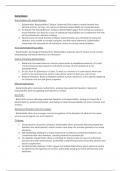
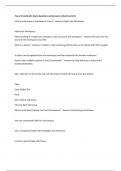
QUESTION 1: READ THE EXTRACT
1. Answer the following questions based on the extract and use your textbook as a guideline:
1.1. Identify and analyse how each of these strategies can address the challenges Mr Moeng and
Mrs Lebepe faced in their respective subjects.
Problem Solving
Problem solving as a strategy focuses on developing knowledge through exploring and addressing
challenges. It encourages learners to reflect on the learning process, think critically, and understand
content in depth. For Mr. Moeng, this strategy helps turn physical science experiments into
opportunities for inquiry rather than routine tasks. By approaching experiments as problems to be
solved, learners are more likely to engage actively and explore scientific concepts with curiosity and
depth. In English, Mrs. Lebepe can use problem solving to help learners interpret texts by guiding
them to explore characters, themes, and meanings as interpretive challenges. This promotes critical
thinking and helps improve comprehension and analytical skills by requiring learners to engage
actively with the text and justify their interpretations.
Flipped Classroom
The flipped classroom approach allows learners to access basic content at home—through videos,
readings, or other media—so classroom time can focus on active learning. For Mr. Moeng, this
means learners arrive in class already familiar with key concepts, which creates more time for
hands-on experiments. With the teacher acting as a facilitator, learners receive real-time support and
guidance, making practical sessions more engaging and productive. In English, Mrs. Lebepe can
assign readings and literary background content for homework, allowing class time to be used for
discussions, group work, and analysis. This creates a more interactive learning environment where
learners can explore texts more deeply, improving comprehension and performance.
Simulation
Simulations replicate real-life scenarios and provide a safe space for learners to explore and test their
understanding. In physical science, simulations can substitute for real experiments when resources
are limited or the experiments are too risky. Learners can manipulate variables and observe outcomes,
developing problem-solving skills in a realistic but controlled environment. This boosts engagement
by offering an interactive alternative to textbook-based learning. In English, simulations such as
role-playing or reenactments of scenes allow learners to experience literature in a vivid, immersive
way. By stepping into characters’ roles or debating themes in context, learners develop a deeper
understanding of the material, making literary analysis more meaningful and accessible.
QUESTION 1: READ THE EXTRACT
1. Answer the following questions based on the extract and use your textbook as a guideline:
1.1. Identify and analyse how each of these strategies can address the challenges Mr Moeng and
Mrs Lebepe faced in their respective subjects.
Problem Solving
Problem solving as a strategy focuses on developing knowledge through exploring and addressing
challenges. It encourages learners to reflect on the learning process, think critically, and understand
content in depth. For Mr. Moeng, this strategy helps turn physical science experiments into
opportunities for inquiry rather than routine tasks. By approaching experiments as problems to be
solved, learners are more likely to engage actively and explore scientific concepts with curiosity and
depth. In English, Mrs. Lebepe can use problem solving to help learners interpret texts by guiding
them to explore characters, themes, and meanings as interpretive challenges. This promotes critical
thinking and helps improve comprehension and analytical skills by requiring learners to engage
actively with the text and justify their interpretations.
Flipped Classroom
The flipped classroom approach allows learners to access basic content at home—through videos,
readings, or other media—so classroom time can focus on active learning. For Mr. Moeng, this
means learners arrive in class already familiar with key concepts, which creates more time for
hands-on experiments. With the teacher acting as a facilitator, learners receive real-time support and
guidance, making practical sessions more engaging and productive. In English, Mrs. Lebepe can
assign readings and literary background content for homework, allowing class time to be used for
discussions, group work, and analysis. This creates a more interactive learning environment where
learners can explore texts more deeply, improving comprehension and performance.
Simulation
Simulations replicate real-life scenarios and provide a safe space for learners to explore and test their
understanding. In physical science, simulations can substitute for real experiments when resources
are limited or the experiments are too risky. Learners can manipulate variables and observe outcomes,
developing problem-solving skills in a realistic but controlled environment. This boosts engagement
by offering an interactive alternative to textbook-based learning. In English, simulations such as
role-playing or reenactments of scenes allow learners to experience literature in a vivid, immersive
way. By stepping into characters’ roles or debating themes in context, learners develop a deeper
understanding of the material, making literary analysis more meaningful and accessible.