ACCURACY IS GUARANTEED
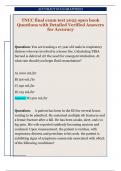
TNCC final exam test 2025 open book
Questions with Detailed Verified Answers
for Accuracy
Question: You are treating a 27-year old male in respiratory
distress who was involved in a house fire. Calculating TBSA
burned is deferred d/t the need for emergent intubation. At
what rate should you begin fluid resuscitation?
A) 1000 mL/hr
B) 500 mL/hr
C) 250 mL/hr
D) 125 mL/hr
Answer: B) 500 mL/hr
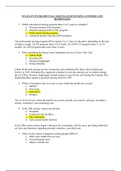
Question: A patient has been in the ED for several hours
waiting to be admitted. He sustained multiple rib fractures and
a femur fracture after a fall. He has been awake, alert, and c/o
leg pain. His wife reported suddenly becoming anxious and
confused. Upon reassessment, the patient is restless, with
respiratory distress and petechiae to his neck. the patient is
exhibiting signs of symptoms commonly associated with which
of the following conditions?
, ACCURACY IS GUARANTEED
A) acute lung injury
B) fat embolism
C) PTX
D) pulmonary contusion
Answer: B) fat embolism
Question: Which pulse pressure description is an indication
of early hypovolemic shock?
A) widened
B) narrowed
C) bounding
D) weak
Answer: B) narrowed
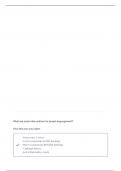
Question: Which of the following considerations is most
important when caring for a geriatric trauma patient?
A) head to to exam
B) medical history
C) incontinence
D) falls
Answer: B) medical history
, ACCURACY IS GUARANTEED
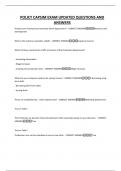
Question: Which of the following assessment findings
differentiates a tension pneumothorax from a simple
pneumothorax?
A) increased work of breathing
B) unilaterally diminished breath sounds
C) pleuritic chest pain
D) hypotension that worsens with inspiration
Answer: D) hypotension that worsens with inspiration.
Assessment findings associated with tension pneumothorax
include anxiety, severe restlessness, severe respiratory distress,
and absent breath sounds on the injured side. Hypotension due
to compression of the heart and great vessels is consistent with
obstructive shock. Hypotension worsens with inspiration due to
increased intrathoracic pressure. Late signs include distended
neck veins, tracheal deviation, and cyanosis.
Question: The nurse is caring for a 120 kg male is brought in
after a warehouse fire and is calculating the patient's fluid
resuscitation needs. He has painful red blistering to the entire
surface of both upper extremities and superficial burns to the
anterior chest. Using the modified Lund and Browder chart to
calculate the total BSA burned, how much IV fluids would be
administered in the first 8 hours?
TNCC final exam test 2025 open book
Questions with Detailed Verified Answers
for Accuracy
Question: You are treating a 27-year old male in respiratory
distress who was involved in a house fire. Calculating TBSA
burned is deferred d/t the need for emergent intubation. At
what rate should you begin fluid resuscitation?
A) 1000 mL/hr
B) 500 mL/hr
C) 250 mL/hr
D) 125 mL/hr
Answer: B) 500 mL/hr
Question: A patient has been in the ED for several hours
waiting to be admitted. He sustained multiple rib fractures and
a femur fracture after a fall. He has been awake, alert, and c/o
leg pain. His wife reported suddenly becoming anxious and
confused. Upon reassessment, the patient is restless, with
respiratory distress and petechiae to his neck. the patient is
exhibiting signs of symptoms commonly associated with which
of the following conditions?
, ACCURACY IS GUARANTEED
A) acute lung injury
B) fat embolism
C) PTX
D) pulmonary contusion
Answer: B) fat embolism
Question: Which pulse pressure description is an indication
of early hypovolemic shock?
A) widened
B) narrowed
C) bounding
D) weak
Answer: B) narrowed
Question: Which of the following considerations is most
important when caring for a geriatric trauma patient?
A) head to to exam
B) medical history
C) incontinence
D) falls
Answer: B) medical history
, ACCURACY IS GUARANTEED
Question: Which of the following assessment findings
differentiates a tension pneumothorax from a simple
pneumothorax?
A) increased work of breathing
B) unilaterally diminished breath sounds
C) pleuritic chest pain
D) hypotension that worsens with inspiration
Answer: D) hypotension that worsens with inspiration.
Assessment findings associated with tension pneumothorax
include anxiety, severe restlessness, severe respiratory distress,
and absent breath sounds on the injured side. Hypotension due
to compression of the heart and great vessels is consistent with
obstructive shock. Hypotension worsens with inspiration due to
increased intrathoracic pressure. Late signs include distended
neck veins, tracheal deviation, and cyanosis.
Question: The nurse is caring for a 120 kg male is brought in
after a warehouse fire and is calculating the patient's fluid
resuscitation needs. He has painful red blistering to the entire
surface of both upper extremities and superficial burns to the
anterior chest. Using the modified Lund and Browder chart to
calculate the total BSA burned, how much IV fluids would be
administered in the first 8 hours?