Hoofdstuk 1: Chemisch rekenen
§1 Atoombouw en periodiek systeem
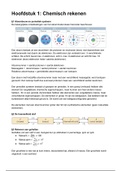
De belangrijkste ontwikkelingen van het atoommodel staan hieronder beschreven.
Een atoom bestaat uit een atoomkern die protonen en neutronen bevat, met daaromheen een
elektronenwolk met daarin de elektronen. De elektronen zijn verdeeld over 3 verschillende
schillen. De schil K bevat max. 2 elektronen, schil L max. 8 elektronen en schil M max. 18
elektronen (deze elektronen heten valentie-elektronen).
Atoomnummer = aantal protonen = aantal elektronen
Massagetal = atoommassa = aantal protonen + aantal neutronen
Relatieve atoommassa = gemiddelde atoommassa’s van isotopen.
Een atoom met hetzelfde atoomnummer maar met een verschillend massagetal, word isotopen
genoemt. Een isotoop heeft dus evenveel protonen maar een verschillend aantal neutronen.
Een periodiek systeem bestaat uit groepen en periodes. In een groep (verticaal) hebben alle
element de vergelijkbare chemische eigenschappen, maar kunnen een heel andere massa
hebben. En in een periode (horizontaal) hebben alle elementen een vergelijkbare massa, maar
verschillende eigenschappen. De elementen in groep 18 zijn de edelgassen. Dat betekent dat de
buitesteschil altijd helemaal gevuld is. Dit wordt ook wel edelgasconfiguratie genoemd.
De elementen met een atoomnummer groter dan 92 zijn synthetische elementen (geen natuurlijke
elementen).
§2 De hoeveelheid stof
§3 Rekenen aan gehaltes
Gehaltes van een stof in een mengsel kun je uitdrukken in percentage, ppm en ppb.
m
● Massa% = m deel x 100
geheel
mdeel 6
● Massa ppm = mgeheel x 10
mdeel 9
● Massa ppb = mgeheel x 10
Een grootheid is iets wat je kunt meten, bijvoorbeeld tijd, afstand of massa. Een grootheid wordt
uitgedrukt n een eenheid.
§1 Atoombouw en periodiek systeem
De belangrijkste ontwikkelingen van het atoommodel staan hieronder beschreven.
Een atoom bestaat uit een atoomkern die protonen en neutronen bevat, met daaromheen een
elektronenwolk met daarin de elektronen. De elektronen zijn verdeeld over 3 verschillende
schillen. De schil K bevat max. 2 elektronen, schil L max. 8 elektronen en schil M max. 18
elektronen (deze elektronen heten valentie-elektronen).
Atoomnummer = aantal protonen = aantal elektronen
Massagetal = atoommassa = aantal protonen + aantal neutronen
Relatieve atoommassa = gemiddelde atoommassa’s van isotopen.
Een atoom met hetzelfde atoomnummer maar met een verschillend massagetal, word isotopen
genoemt. Een isotoop heeft dus evenveel protonen maar een verschillend aantal neutronen.
Een periodiek systeem bestaat uit groepen en periodes. In een groep (verticaal) hebben alle
element de vergelijkbare chemische eigenschappen, maar kunnen een heel andere massa
hebben. En in een periode (horizontaal) hebben alle elementen een vergelijkbare massa, maar
verschillende eigenschappen. De elementen in groep 18 zijn de edelgassen. Dat betekent dat de
buitesteschil altijd helemaal gevuld is. Dit wordt ook wel edelgasconfiguratie genoemd.
De elementen met een atoomnummer groter dan 92 zijn synthetische elementen (geen natuurlijke
elementen).
§2 De hoeveelheid stof
§3 Rekenen aan gehaltes
Gehaltes van een stof in een mengsel kun je uitdrukken in percentage, ppm en ppb.
m
● Massa% = m deel x 100
geheel
mdeel 6
● Massa ppm = mgeheel x 10
mdeel 9
● Massa ppb = mgeheel x 10
Een grootheid is iets wat je kunt meten, bijvoorbeeld tijd, afstand of massa. Een grootheid wordt
uitgedrukt n een eenheid.