Religion in Hamlet
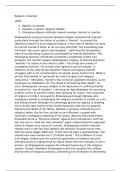
LOAS:
1- Ophelia vs Hamlet
2- Claudius vs ghost, religious debate
3- Changing religious attitudes toward revenge- Hamlet vs Laertes
Shakespeare conveys a tension between religion and personal anguish,
particularly through the notion of suicide in ‘Hamlet’, to present the
repressive nature of such religious dogma. In the case of Hamlet, his want
to commit suicide is futile, as he can only wish that “the Everlasting had
not fixed / His canon ’gainst self-slaughter”, reflecting the Elizabethan
view of suicide being a grave sin punishable by eternal damnation. This
theological doctrine contributes to Hamlet’s existential conflict and
paralysis- the martial imagery Shakespeare employs as Hamlet questions
“whether ’tis nobler in the mind to suffer / The slings and arrows of
outrageous fortune, / Or to take arms against a sea of troubles” is
reflective of the internal war between religion and agency Hamlet
struggles with in his considerations of suicide, giving merit to R.S. White’s
phrase that Hamlet is “paralysed by moral scruples and religious
conscience.” Ultimately, Hamlet’s fear of divine judgment triumphs, as he
expresses his trepidation for “the dread of something after death.” As
such, Shakespeare conveys religion to be repressive in confining Hamlet
to endure his “sea of troubles”, criticising its rigid ideologies for becoming
another source of torment rather than allowing for solace. The constraint
of religion is further conveyed by Shakespeare through Ophelia, who
juxtaposes Hamlet in challenging the religious authority of suicide as a sin
and killing herself. Although this seemingly grants her agency in allowing
her to finally take control of her bodily autonomy and end her anguish
following the death of her father, Ophelia is similarly confined by such
religious taboo- the fact her suicide occurs offscreen, coupled with
Gertrude’s ambiguous reporting of her death, detracts from what Elaine
Showalter terms a “feminine protest” against such entrapment, with the
fact she has to “seek her own salvation” again undermining the supposed
value of religion as a source of comfort. Shakespeare further criticises
religion here in the fact that Ophelia still receives Christian burial rites,
with the grave digger affirming, “if this had not been a gentlewoman, she
should have been buried out o’ Christian burial.” The conflation of class
and religion underscores the selective application of religious doctrine,
whereby purity is underpinned by status rather than the morality of one’s
actions, as Shakespeare exposes the inherent hypocrisy in the religious
system. Overall, therefore, Shakespeare calls into question the validity
and fairness of religious authority, presenting it to be flawed in preventing
LOAS:
1- Ophelia vs Hamlet
2- Claudius vs ghost, religious debate
3- Changing religious attitudes toward revenge- Hamlet vs Laertes
Shakespeare conveys a tension between religion and personal anguish,
particularly through the notion of suicide in ‘Hamlet’, to present the
repressive nature of such religious dogma. In the case of Hamlet, his want
to commit suicide is futile, as he can only wish that “the Everlasting had
not fixed / His canon ’gainst self-slaughter”, reflecting the Elizabethan
view of suicide being a grave sin punishable by eternal damnation. This
theological doctrine contributes to Hamlet’s existential conflict and
paralysis- the martial imagery Shakespeare employs as Hamlet questions
“whether ’tis nobler in the mind to suffer / The slings and arrows of
outrageous fortune, / Or to take arms against a sea of troubles” is
reflective of the internal war between religion and agency Hamlet
struggles with in his considerations of suicide, giving merit to R.S. White’s
phrase that Hamlet is “paralysed by moral scruples and religious
conscience.” Ultimately, Hamlet’s fear of divine judgment triumphs, as he
expresses his trepidation for “the dread of something after death.” As
such, Shakespeare conveys religion to be repressive in confining Hamlet
to endure his “sea of troubles”, criticising its rigid ideologies for becoming
another source of torment rather than allowing for solace. The constraint
of religion is further conveyed by Shakespeare through Ophelia, who
juxtaposes Hamlet in challenging the religious authority of suicide as a sin
and killing herself. Although this seemingly grants her agency in allowing
her to finally take control of her bodily autonomy and end her anguish
following the death of her father, Ophelia is similarly confined by such
religious taboo- the fact her suicide occurs offscreen, coupled with
Gertrude’s ambiguous reporting of her death, detracts from what Elaine
Showalter terms a “feminine protest” against such entrapment, with the
fact she has to “seek her own salvation” again undermining the supposed
value of religion as a source of comfort. Shakespeare further criticises
religion here in the fact that Ophelia still receives Christian burial rites,
with the grave digger affirming, “if this had not been a gentlewoman, she
should have been buried out o’ Christian burial.” The conflation of class
and religion underscores the selective application of religious doctrine,
whereby purity is underpinned by status rather than the morality of one’s
actions, as Shakespeare exposes the inherent hypocrisy in the religious
system. Overall, therefore, Shakespeare calls into question the validity
and fairness of religious authority, presenting it to be flawed in preventing