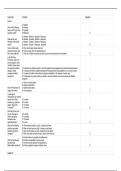
QUESTION OPTIONS ANSWER
Lecture 1
A: Situation
Which of the following B: Feelings
facets is NOT part of the C: Appraisal
cognitive model? D: Behaviour C
A: Situation - Attention - Appraisal - Response
What are the core B: Situation - Appraisal - Attention - Response
elements of the modal C: Attention - Situation - Appraisal - Response
model? D: Attention - Situation - Response - Appraisal A
How do infants apply A: They cannot apply situation selection
situation selection, when B: They look away from the situation/stimulus
then cannot walk yet? C: They cry, so that their parents pick them up and move them away from the situation. C
In the Still-Face
Procedure, what is the
primary objective of the
"still-face" phase where
the caregiver suddenly A: To observe how infants respond to a lack of expected social engagement and emotional responsiveness.
adopts a neutral, B: To measure the infant’s cognitive development through problem-solving abilities in a non-social context.
unresponsive facial C: To assess the infant’s motor skills and physical coordination in the absence of social cues.
expression? D: To determine how quickly infants can adapt to new and unfamiliar social environments with different
caregivers A
A: choice of sexual partner
B: disease contamiation
which of the domains of C: ingesting living things
disgust are innate? D: immoral actions C
At what age of
development can children
express the 6 basic A: 3 months
emotions (joy, sadness, B: 6 months
disgust, anger, fear C: 12 months
+ surprise)? D: 18 months B
According to the mirror
test, at what age do A: 6 months
children recognize B: 12 months
themselves as a C: 18 months
sepperate person? D: 2 years C
Which of the following A: When someone smiles to say hi, I smile back at them
situations accurately B: When my friend gave me a gift, it made me very happy
describes emotional C: When my friend was very sad, I started to feel sad aswell
contagion? D: When I saw that my friend was sad, I tried to cheer them up C
A: Emotions driven by empathy and selflessness.
Which of the following B: Emotions manipulated for personal gain.
best describes C: Emotions that are genuine and spontaneous.
Machiavellian emotions? D: Emotions guided by moral and ethical values. B
Lecture 2:
, A: Emotion goals aim for long-term emotional changes, while affect goals aim for immediate emotional
reactions.
B: Emotion goals are related to personal values, while affect goals are related to social expectations.
what is the difference C: Emotion goals seek to suppress negative emotions, while affect goals seek to enhance positive emotions
between an emotion goal D: Emotion goals focus on specific emotions, while affect goals focus on general feelings of pleasure or pain.
and an affect goals? D
What are the 3 features of A: Content, Structure, Feeling
emotion goals in the goal B: Pysiological, psychological, mental
pursiuit of emotional C: Content, Structure, Operation
regulation model? D: Content, psysiological, opperation C
A: Hedonic benefits focus on experiencing emotions that align with personal beliefs, while nonhedonic benefits
prioritize avoiding pain.
B:Hedonic benefits aim to increase overall pleasure and reduce pain, whereas nonhedonic benefits involve
experiencing specific emotions, whether pleasant or unpleasant, to achieve certain goals.
Which of the following
best illustrates the C: Hedonic benefits are about enhancing performance by increasing specific emotions, while nonhedonic
difference between benefits are about maintaining self-image through typical emotional experiences.
hedonic and nonhedonic
benefits in emotion D: Hedonic benefits seek to manage emotions in line with epistemic beliefs, while nonhedonic benefits
regulation? concentrate on achieving a general state of happiness. B
A: Emotional acceptance involves dismissing negative emotions, leading to a reduction in self-awareness, while
exceedingly positive emotion goals typically increase overall positive feelings.
B: Emotional acceptance means avoiding negative emotions to maintain positivity, whereas exceedingly
positive emotion goals help achieve realistic emotional states.
Which statement best
captures the concept of C: Emotional acceptance entails non-judgmentally engaging with negative emotions, often resulting in reduced
emotional acceptance and negative feelings and greater self-awareness, while overly positive emotion goals can result in disappointment
its effects compared to due to their unrealistic nature.
having exceedingly
positive emotion goals? D: Emotional acceptance focuses on replacing negative emotions with positive ones, leading to enhanced well-
being, whereas exceedingly positive emotion goals ensure constant high levels of happiness. C
What are the main
emotions that arrise when A: motivation, anxiety, depression
there are large B: shame, fear, depression
discrepencies between C: guilt, fear, and anxiety
actual and ideal self? D: disappointment, sadness, depression D
What are the main
emotions that arrise when
there are large A: motivation, anxiety, depression
discrepencies between B: guilt, fear, and anxiety
actual and ought or feared C: disappointment, sadness, depression
self? D: fear, sadness, dissapointment B
Lecture 1
A: Situation
Which of the following B: Feelings
facets is NOT part of the C: Appraisal
cognitive model? D: Behaviour C
A: Situation - Attention - Appraisal - Response
What are the core B: Situation - Appraisal - Attention - Response
elements of the modal C: Attention - Situation - Appraisal - Response
model? D: Attention - Situation - Response - Appraisal A
How do infants apply A: They cannot apply situation selection
situation selection, when B: They look away from the situation/stimulus
then cannot walk yet? C: They cry, so that their parents pick them up and move them away from the situation. C
In the Still-Face
Procedure, what is the
primary objective of the
"still-face" phase where
the caregiver suddenly A: To observe how infants respond to a lack of expected social engagement and emotional responsiveness.
adopts a neutral, B: To measure the infant’s cognitive development through problem-solving abilities in a non-social context.
unresponsive facial C: To assess the infant’s motor skills and physical coordination in the absence of social cues.
expression? D: To determine how quickly infants can adapt to new and unfamiliar social environments with different
caregivers A
A: choice of sexual partner
B: disease contamiation
which of the domains of C: ingesting living things
disgust are innate? D: immoral actions C
At what age of
development can children
express the 6 basic A: 3 months
emotions (joy, sadness, B: 6 months
disgust, anger, fear C: 12 months
+ surprise)? D: 18 months B
According to the mirror
test, at what age do A: 6 months
children recognize B: 12 months
themselves as a C: 18 months
sepperate person? D: 2 years C
Which of the following A: When someone smiles to say hi, I smile back at them
situations accurately B: When my friend gave me a gift, it made me very happy
describes emotional C: When my friend was very sad, I started to feel sad aswell
contagion? D: When I saw that my friend was sad, I tried to cheer them up C
A: Emotions driven by empathy and selflessness.
Which of the following B: Emotions manipulated for personal gain.
best describes C: Emotions that are genuine and spontaneous.
Machiavellian emotions? D: Emotions guided by moral and ethical values. B
Lecture 2:
, A: Emotion goals aim for long-term emotional changes, while affect goals aim for immediate emotional
reactions.
B: Emotion goals are related to personal values, while affect goals are related to social expectations.
what is the difference C: Emotion goals seek to suppress negative emotions, while affect goals seek to enhance positive emotions
between an emotion goal D: Emotion goals focus on specific emotions, while affect goals focus on general feelings of pleasure or pain.
and an affect goals? D
What are the 3 features of A: Content, Structure, Feeling
emotion goals in the goal B: Pysiological, psychological, mental
pursiuit of emotional C: Content, Structure, Operation
regulation model? D: Content, psysiological, opperation C
A: Hedonic benefits focus on experiencing emotions that align with personal beliefs, while nonhedonic benefits
prioritize avoiding pain.
B:Hedonic benefits aim to increase overall pleasure and reduce pain, whereas nonhedonic benefits involve
experiencing specific emotions, whether pleasant or unpleasant, to achieve certain goals.
Which of the following
best illustrates the C: Hedonic benefits are about enhancing performance by increasing specific emotions, while nonhedonic
difference between benefits are about maintaining self-image through typical emotional experiences.
hedonic and nonhedonic
benefits in emotion D: Hedonic benefits seek to manage emotions in line with epistemic beliefs, while nonhedonic benefits
regulation? concentrate on achieving a general state of happiness. B
A: Emotional acceptance involves dismissing negative emotions, leading to a reduction in self-awareness, while
exceedingly positive emotion goals typically increase overall positive feelings.
B: Emotional acceptance means avoiding negative emotions to maintain positivity, whereas exceedingly
positive emotion goals help achieve realistic emotional states.
Which statement best
captures the concept of C: Emotional acceptance entails non-judgmentally engaging with negative emotions, often resulting in reduced
emotional acceptance and negative feelings and greater self-awareness, while overly positive emotion goals can result in disappointment
its effects compared to due to their unrealistic nature.
having exceedingly
positive emotion goals? D: Emotional acceptance focuses on replacing negative emotions with positive ones, leading to enhanced well-
being, whereas exceedingly positive emotion goals ensure constant high levels of happiness. C
What are the main
emotions that arrise when A: motivation, anxiety, depression
there are large B: shame, fear, depression
discrepencies between C: guilt, fear, and anxiety
actual and ideal self? D: disappointment, sadness, depression D
What are the main
emotions that arrise when
there are large A: motivation, anxiety, depression
discrepencies between B: guilt, fear, and anxiety
actual and ought or feared C: disappointment, sadness, depression
self? D: fear, sadness, dissapointment B