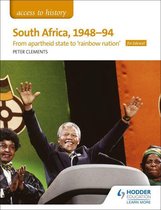
Unit 2F.2 South Africa, 1948 94: from apartheid state to rainbow nation
Notes were made using a combination of the following textbooks:
- Edexcel AS/A Level History, Paper 1&2: Searching for rights and freedoms in the 20th century
- Access to History: South Africa, 1948–94: from apartheid state to ‘rainbow nation’
UNIT 1: The response to apartheid, c1948-59
1. Life in South Africa, c1948
2. Reasons for the National Party victory 1948
3. Codifying and implementing apartheid, 1948-1959
4. African Nationalism, 1948-1959
, Unit 1 : The response to apartheid c1948-59
1. Life in South Africa, c1948
- NP won 79 seats in the 1948 election
- UP won 71 seats
- NP proposed the system of apartheid
- Concepts behind apartheid
- S.A comprised of 4 racial groups
- White people = civilised race and had absolute power over all
- White people = Afrikaners and English people
- Black Africans made up of several different tribes = white majority
- Belief other races were inferior, so didn’t need equal facilities
- Grand Apartheid = overall policy of apartheid, such as living in separated areas
- Petty Apartheid = day to day restrictions, segregated facilities
- Dutch settlers called themselves Boers
- Great Trek = Boers moved away from British rule which began in 1834, the Boers moved into
the hinterland, the area was largely inhabited —the Afrikaners used this to suggest Africans had
no right to the land of South Africa, because they moved into the areas at roughly the same
times as the Boers
- The Covenant of 1938 = alleged agreement made between God and the Boers
- The Battle of Blood River 1938 = Boers won against the Zulus
- Boer War 1899-1902
- Union of South Africa 1910
- 4 main ethnic groups; Coloured & Indian, White (Afrikaner and English speaking) and Black
Africans
- Discriminatory legislation 1910-1936
- 1911 Mines and Works Act: excluded Africans from most skilled jobs in the mines which
were reserved for white people
- 1911 Natives’ Labour Regulation Act: working conditions for Africans, fingerprinted and
issued with pass books that gave them permission to enter their areas of work
- 1913 Natives Land Act: restricted African ownership of land to 7% of South Africa
- 1923 Natives Act: Africans to remain in cities to provide for white inhabitants eg. servants,
and people expected to live in townships not in cities if they worked there
- Industrial Conciliation Act 1924: no rights as employees, no trade unions, no negotiating
- 1927 Native Administration Act: set up Department of Native Affairs, separated in law
- 1936 Native Trust and Land Act: extended 1913 act from 7% to 13.6%, Africans not
allowed to buy any land outside the tribal reserves
Notes were made using a combination of the following textbooks:
- Edexcel AS/A Level History, Paper 1&2: Searching for rights and freedoms in the 20th century
- Access to History: South Africa, 1948–94: from apartheid state to ‘rainbow nation’
UNIT 1: The response to apartheid, c1948-59
1. Life in South Africa, c1948
2. Reasons for the National Party victory 1948
3. Codifying and implementing apartheid, 1948-1959
4. African Nationalism, 1948-1959
, Unit 1 : The response to apartheid c1948-59
1. Life in South Africa, c1948
- NP won 79 seats in the 1948 election
- UP won 71 seats
- NP proposed the system of apartheid
- Concepts behind apartheid
- S.A comprised of 4 racial groups
- White people = civilised race and had absolute power over all
- White people = Afrikaners and English people
- Black Africans made up of several different tribes = white majority
- Belief other races were inferior, so didn’t need equal facilities
- Grand Apartheid = overall policy of apartheid, such as living in separated areas
- Petty Apartheid = day to day restrictions, segregated facilities
- Dutch settlers called themselves Boers
- Great Trek = Boers moved away from British rule which began in 1834, the Boers moved into
the hinterland, the area was largely inhabited —the Afrikaners used this to suggest Africans had
no right to the land of South Africa, because they moved into the areas at roughly the same
times as the Boers
- The Covenant of 1938 = alleged agreement made between God and the Boers
- The Battle of Blood River 1938 = Boers won against the Zulus
- Boer War 1899-1902
- Union of South Africa 1910
- 4 main ethnic groups; Coloured & Indian, White (Afrikaner and English speaking) and Black
Africans
- Discriminatory legislation 1910-1936
- 1911 Mines and Works Act: excluded Africans from most skilled jobs in the mines which
were reserved for white people
- 1911 Natives’ Labour Regulation Act: working conditions for Africans, fingerprinted and
issued with pass books that gave them permission to enter their areas of work
- 1913 Natives Land Act: restricted African ownership of land to 7% of South Africa
- 1923 Natives Act: Africans to remain in cities to provide for white inhabitants eg. servants,
and people expected to live in townships not in cities if they worked there
- Industrial Conciliation Act 1924: no rights as employees, no trade unions, no negotiating
- 1927 Native Administration Act: set up Department of Native Affairs, separated in law
- 1936 Native Trust and Land Act: extended 1913 act from 7% to 13.6%, Africans not
allowed to buy any land outside the tribal reserves