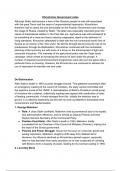
Khrushchev Government notes
Although Stalin had become a hero of the Russian people he was still associated
with the great Terror and the years of unprecedented repression. Khrushchev
therefore had to stamp his own personality on the Russian Government and change
the image of Russia created by Stalin. The latter was especially important given the
nature of international relation in the Post War era. Agriculture was still considered to
be something of a mess but heavy industry progressed, albeit to the detriment of
living standards. Khruschev attempted to deal with the non-communist world view of
Russia as an enemy of the ‘free world. He did this through denouncing the rule of his
predecessor through de-Stalinisation. Khrushchev continued with the centralised
planning of the economy but with more of a focus on the enhancement of light and
consumer industries. The mainstay of his agricultural policy was the Virgin lands
campaign, which aimed at increasing the amount of land under the plough. A
number of important social improvement programmes were also put into place with a
particular focus on housing. However, the Khrushchev era continued to witness the
use of repression to maintain law and order.
De-Stalinisation
After Stalin’s death in 1953 a power struggle ensued. This gathered momentum after
an emergency meeting of the council of ministers, the party central committee and
the supreme soviet of the USSR. A rationalisation of Stalin’s Presidium (small group
of ministers like a cabinet, collectively leading) was agreed with clarification of roles
of leading communists. 4 rivals emerged from this. Initially the intention was to
govern in a collective leadership but this did not work as Malenkov advocated more
consumerism and Westernisation.
1. Georgy Malenkov
● Role: A close Stalin confidant, Malenkov rose to prominence due to his loyalty
and administrative efficiency, and he served as Deputy Premier and then
Deputy General Secretary of the Communist Party.
● Position Post-Stalin: After Stalin’s death in 1953, Malenkov briefly
succeeded him as Chairman of the Council of Ministers (Premier), making him
the head of the Soviet government.
● Policies and Power Struggle: Known for his focus on consumer goods and
easing repression, Malenkov sought to shift away from Stalinist terror.
However, his influence declined as Khrushchev gained support, especially
after he was demoted from party secretary as he was suspected of colluding
with Beria to form a duopoly of power, leading to his eventual ousting in 1955.
2. Lavrentiy Beria
, ● Role: Beria was Stalin’s feared and powerful chief of the NKVD (secret
police), controlling the security apparatus and intelligence services. His
influence extended over internal security, intelligence, and repressive
measures.
● Position Post-Stalin: Beria initially sought to consolidate power by proposing
reforms, such as reducing repression and offering some autonomy to Eastern
European satellite states. However, his ruthless reputation and his power
within the security services made him a threat to the other leaders.
● Downfall: Fearing his control over the security apparatus and believing he
was a traitor, Khrushchev and other Presidium members arrested and
executed Beria in 1953, shortly after Stalin's death.
3. Nikita Khrushchev
● Role: Khrushchev was a high-ranking member of the Presidium who had built
a power base among the regional party leaders. Known for his connections
with Stalin but not considered part of Stalin’s innermost circle, he gained
prominence in his new solutions for agriculture and party matters.
● Rise to Power: After Stalin’s death, Khrushchev quickly manoeuvred to
increase his influence. By 1955, he had marginalised Malenkov and, in 1956,
delivered his famous "Secret Speech" denouncing Stalin's crimes, marking
the start of de-Stalinization.
● Leadership: By 1958, Khrushchev held full control as both the First Secretary
of the Communist Party and Premier, initiating reforms and a more liberal
approach compared to the Stalin era- builds his own support base to identify
flaws with his opponents (associated with Stalin’s regime) as a visible
member of the Presidium
4. Kliment Voroshilov
● Role: A veteran Bolshevik and long-time ally of Stalin, Voroshilov served in
various roles, including as People’s Commissar of Defence and later as a
figurehead of President of the USSR.
● Position and Influence: Voroshilov had a more symbolic presence and was
less influential in policymaking compared to others in the Presidium. He was
seen as a loyal supporter of Stalin, often aligned with the party’s more
conservative elements.
● Post-Stalin Era: After Stalin's death, Voroshilov was part of the collective
leadership but held minimal power compared to Malenkov, Khrushchev, and
Beria. He remained in ceremonial positions, but his influence waned as
Khrushchev consolidated control.
Khrushchev emerges as victor ….
Collective leadership: conflict between Khrushchev and Malenkov who advocated for
consumerism and westernisation which opponents argued reflected the desires of
the administration not the people. Khrushchev offered the Virgin Land campaign as
an alternative. By 1955 Malenkov resigns as he had been under pressure and he
Although Stalin had become a hero of the Russian people he was still associated
with the great Terror and the years of unprecedented repression. Khrushchev
therefore had to stamp his own personality on the Russian Government and change
the image of Russia created by Stalin. The latter was especially important given the
nature of international relation in the Post War era. Agriculture was still considered to
be something of a mess but heavy industry progressed, albeit to the detriment of
living standards. Khruschev attempted to deal with the non-communist world view of
Russia as an enemy of the ‘free world. He did this through denouncing the rule of his
predecessor through de-Stalinisation. Khrushchev continued with the centralised
planning of the economy but with more of a focus on the enhancement of light and
consumer industries. The mainstay of his agricultural policy was the Virgin lands
campaign, which aimed at increasing the amount of land under the plough. A
number of important social improvement programmes were also put into place with a
particular focus on housing. However, the Khrushchev era continued to witness the
use of repression to maintain law and order.
De-Stalinisation
After Stalin’s death in 1953 a power struggle ensued. This gathered momentum after
an emergency meeting of the council of ministers, the party central committee and
the supreme soviet of the USSR. A rationalisation of Stalin’s Presidium (small group
of ministers like a cabinet, collectively leading) was agreed with clarification of roles
of leading communists. 4 rivals emerged from this. Initially the intention was to
govern in a collective leadership but this did not work as Malenkov advocated more
consumerism and Westernisation.
1. Georgy Malenkov
● Role: A close Stalin confidant, Malenkov rose to prominence due to his loyalty
and administrative efficiency, and he served as Deputy Premier and then
Deputy General Secretary of the Communist Party.
● Position Post-Stalin: After Stalin’s death in 1953, Malenkov briefly
succeeded him as Chairman of the Council of Ministers (Premier), making him
the head of the Soviet government.
● Policies and Power Struggle: Known for his focus on consumer goods and
easing repression, Malenkov sought to shift away from Stalinist terror.
However, his influence declined as Khrushchev gained support, especially
after he was demoted from party secretary as he was suspected of colluding
with Beria to form a duopoly of power, leading to his eventual ousting in 1955.
2. Lavrentiy Beria
, ● Role: Beria was Stalin’s feared and powerful chief of the NKVD (secret
police), controlling the security apparatus and intelligence services. His
influence extended over internal security, intelligence, and repressive
measures.
● Position Post-Stalin: Beria initially sought to consolidate power by proposing
reforms, such as reducing repression and offering some autonomy to Eastern
European satellite states. However, his ruthless reputation and his power
within the security services made him a threat to the other leaders.
● Downfall: Fearing his control over the security apparatus and believing he
was a traitor, Khrushchev and other Presidium members arrested and
executed Beria in 1953, shortly after Stalin's death.
3. Nikita Khrushchev
● Role: Khrushchev was a high-ranking member of the Presidium who had built
a power base among the regional party leaders. Known for his connections
with Stalin but not considered part of Stalin’s innermost circle, he gained
prominence in his new solutions for agriculture and party matters.
● Rise to Power: After Stalin’s death, Khrushchev quickly manoeuvred to
increase his influence. By 1955, he had marginalised Malenkov and, in 1956,
delivered his famous "Secret Speech" denouncing Stalin's crimes, marking
the start of de-Stalinization.
● Leadership: By 1958, Khrushchev held full control as both the First Secretary
of the Communist Party and Premier, initiating reforms and a more liberal
approach compared to the Stalin era- builds his own support base to identify
flaws with his opponents (associated with Stalin’s regime) as a visible
member of the Presidium
4. Kliment Voroshilov
● Role: A veteran Bolshevik and long-time ally of Stalin, Voroshilov served in
various roles, including as People’s Commissar of Defence and later as a
figurehead of President of the USSR.
● Position and Influence: Voroshilov had a more symbolic presence and was
less influential in policymaking compared to others in the Presidium. He was
seen as a loyal supporter of Stalin, often aligned with the party’s more
conservative elements.
● Post-Stalin Era: After Stalin's death, Voroshilov was part of the collective
leadership but held minimal power compared to Malenkov, Khrushchev, and
Beria. He remained in ceremonial positions, but his influence waned as
Khrushchev consolidated control.
Khrushchev emerges as victor ….
Collective leadership: conflict between Khrushchev and Malenkov who advocated for
consumerism and westernisation which opponents argued reflected the desires of
the administration not the people. Khrushchev offered the Virgin Land campaign as
an alternative. By 1955 Malenkov resigns as he had been under pressure and he