Introduction
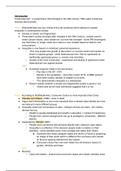
Postmodernism - a social theory that emerged in the 20th century. PMs reject consensus
theories about society.
Point - Postmodernists are very critical of the old narratives which attempt to explain
inequality in contemporary society.
● Society is chaotic and fragmented.
● Postmodern society emerged after changes in the 20th Century - people used to
share cultural values, class values ect. but now has changed - some PM sociologists
say that Class no longer exists and culture is now created based on fashion and
consumerism.
● Inequality is now based on individual, personal experience.
○ -This may explain the growth of discussion on reverse racism and sexism as
those in majority groups - white heterosexual men- feel as oppressed as
traditonally oppressed group i.e. women and minorities.
○ Growth of the Incel Community - resentment and feeling of oppression white
heterosexual men against women.
AO3
● Overstate progress made in the last century
○ Pay Gap in the UK - 8.9%
○ Racism in the workplace - more than a third (37%) of BME workers
have been bullied, abused or singled out at work.
○ This demonstrates inequality is a widespread
● Doesn’t specify whether a chaotic and fragmented society is good or not
○ Violent acts by the Incel community suggests that it is not.
Point - According to PostModernists, Consumer Culture is more important than Class
● Pakulski and Waters (1996) - class is dead.
● Argue that Individualism is now more important than a shared class identity and now
we belong to many different groups
● Inequality exists but not because of class - lifestyle choices we make - the clothes,
devices we buy.
○ Wealth is equally distributed and growth in education = market of meritocracy
○ People from various backgrounds can go to prestigious universities - different
identity
● Supported by Strinati (1995)
○ People more concerned with personal identity than collective class status
○ Inequality is a reflection of the decision people make in relation to their
identities - some identities given more prestige and status than others.
■ Someone who wears designer labels and drives a Ferrari is projecting
an image of their worth which is different from someone who travels
on the bus wearing clothes from the market.
■ Consumer choice has now over ridden the old divisions based on
gender, ethnicity and class.
AO3
● Marxists
○ Class still matters - shared socio-economic status and certain activities show
Postmodernism - a social theory that emerged in the 20th century. PMs reject consensus
theories about society.
Point - Postmodernists are very critical of the old narratives which attempt to explain
inequality in contemporary society.
● Society is chaotic and fragmented.
● Postmodern society emerged after changes in the 20th Century - people used to
share cultural values, class values ect. but now has changed - some PM sociologists
say that Class no longer exists and culture is now created based on fashion and
consumerism.
● Inequality is now based on individual, personal experience.
○ -This may explain the growth of discussion on reverse racism and sexism as
those in majority groups - white heterosexual men- feel as oppressed as
traditonally oppressed group i.e. women and minorities.
○ Growth of the Incel Community - resentment and feeling of oppression white
heterosexual men against women.
AO3
● Overstate progress made in the last century
○ Pay Gap in the UK - 8.9%
○ Racism in the workplace - more than a third (37%) of BME workers
have been bullied, abused or singled out at work.
○ This demonstrates inequality is a widespread
● Doesn’t specify whether a chaotic and fragmented society is good or not
○ Violent acts by the Incel community suggests that it is not.
Point - According to PostModernists, Consumer Culture is more important than Class
● Pakulski and Waters (1996) - class is dead.
● Argue that Individualism is now more important than a shared class identity and now
we belong to many different groups
● Inequality exists but not because of class - lifestyle choices we make - the clothes,
devices we buy.
○ Wealth is equally distributed and growth in education = market of meritocracy
○ People from various backgrounds can go to prestigious universities - different
identity
● Supported by Strinati (1995)
○ People more concerned with personal identity than collective class status
○ Inequality is a reflection of the decision people make in relation to their
identities - some identities given more prestige and status than others.
■ Someone who wears designer labels and drives a Ferrari is projecting
an image of their worth which is different from someone who travels
on the bus wearing clothes from the market.
■ Consumer choice has now over ridden the old divisions based on
gender, ethnicity and class.
AO3
● Marxists
○ Class still matters - shared socio-economic status and certain activities show