Outline and evaluate interference theory as an explanation for forgetting (16
marks)
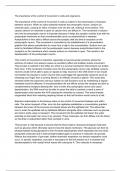
According to interference theory, if one memory gets in the way of another, one or both of
these memories may be forgotten or distorted. The information conflicts each other. There
are two ways this can happen; proactive and retroactive interference. Proactive interference
is when past memories get in the way of present memories so causing you to forget the
recent memory. Retroactive interference is when recent memories get in the way of older
memories, so causing you to forget the older memory. For example, if you have always
painted with acrylic paints from darker to lighter tones, and are now painting with
watercolour, you may forget to paint light to dark tones and leave lighter areas. The
memories of the past interfere with recent memories – this is proactive interference. It
would be retroactive interference if all you could remember was painting light to dark tones
even when using acrylic paint.
A key study for the explanation for forgetting is that of McGeoch and McDonald. Participants
were given a list of 10 similar words and given two minutes to remember them. They then
had to list these without help or prompts. These results were recorded. Next, participants
were put into groups, and each group was given another ten words to remember of either;
synonyms, antonyms, unrelated adjectives, consonant syllables, numbers or nothing. The
results of how these 10 words were remembered was also recalled. Finally, all groups of
participants were then tested on the original word list. The idea is that some of the second
words lists will interfere to varying extents with participants memory of the first word list.
This supports interference theory by showing that learning new, similar information
(synonyms) caused participants to forget previously learned material, demonstrating
retroactive interference. The greater the similarity between the two sets of information, the
more likely interference occurred, leading to poorer recall. This was found to be true and the
most similar material produced the worst recall – this was the first group who were given a
synonyms word list as their second list.
There is strong evidence for this explanation of forgetting in everyday situations. Baddeley
and Hitch (1977) investigated interference theory as they thought that it was a better
explanation than simply the passing of time. They recorded a study where rugby players
were asked to recall the team names of teams they had played so far in the season.
However, not all of the players played every match, some had missed some of the matches
and so the last team that these players were up against could have been a variety of weeks
ago between them. It was found that this is indeed the case. Results showed that the more
teams that were played in the time between the match they were asked to recall, the higher
the chances of interference taking place and so leading to worsened recall due to retroactive
interference. This suggests that interference did occur and meant that some players forgot
at least some of the teams who they played earlier in the season. Further supporting
evidence of the interference explanation is that of Burke and Skrull’s magazine study, where
participants were given a series of magazine adverts and asked to recall what they had seen,
such as brand names and products. It was found that some participants were worse at
recalling later or earlier adverts. But recall was worst when it came to similar adverts. For
example, the same product but different brands. Suggesting that similar memories get in the
way of, or interfere with, one another. Therefore these studies suggest that interference
theory is a good explanation for everyday experiences where we forget memories.
marks)
According to interference theory, if one memory gets in the way of another, one or both of
these memories may be forgotten or distorted. The information conflicts each other. There
are two ways this can happen; proactive and retroactive interference. Proactive interference
is when past memories get in the way of present memories so causing you to forget the
recent memory. Retroactive interference is when recent memories get in the way of older
memories, so causing you to forget the older memory. For example, if you have always
painted with acrylic paints from darker to lighter tones, and are now painting with
watercolour, you may forget to paint light to dark tones and leave lighter areas. The
memories of the past interfere with recent memories – this is proactive interference. It
would be retroactive interference if all you could remember was painting light to dark tones
even when using acrylic paint.
A key study for the explanation for forgetting is that of McGeoch and McDonald. Participants
were given a list of 10 similar words and given two minutes to remember them. They then
had to list these without help or prompts. These results were recorded. Next, participants
were put into groups, and each group was given another ten words to remember of either;
synonyms, antonyms, unrelated adjectives, consonant syllables, numbers or nothing. The
results of how these 10 words were remembered was also recalled. Finally, all groups of
participants were then tested on the original word list. The idea is that some of the second
words lists will interfere to varying extents with participants memory of the first word list.
This supports interference theory by showing that learning new, similar information
(synonyms) caused participants to forget previously learned material, demonstrating
retroactive interference. The greater the similarity between the two sets of information, the
more likely interference occurred, leading to poorer recall. This was found to be true and the
most similar material produced the worst recall – this was the first group who were given a
synonyms word list as their second list.
There is strong evidence for this explanation of forgetting in everyday situations. Baddeley
and Hitch (1977) investigated interference theory as they thought that it was a better
explanation than simply the passing of time. They recorded a study where rugby players
were asked to recall the team names of teams they had played so far in the season.
However, not all of the players played every match, some had missed some of the matches
and so the last team that these players were up against could have been a variety of weeks
ago between them. It was found that this is indeed the case. Results showed that the more
teams that were played in the time between the match they were asked to recall, the higher
the chances of interference taking place and so leading to worsened recall due to retroactive
interference. This suggests that interference did occur and meant that some players forgot
at least some of the teams who they played earlier in the season. Further supporting
evidence of the interference explanation is that of Burke and Skrull’s magazine study, where
participants were given a series of magazine adverts and asked to recall what they had seen,
such as brand names and products. It was found that some participants were worse at
recalling later or earlier adverts. But recall was worst when it came to similar adverts. For
example, the same product but different brands. Suggesting that similar memories get in the
way of, or interfere with, one another. Therefore these studies suggest that interference
theory is a good explanation for everyday experiences where we forget memories.