DIAGNOSIS WITH
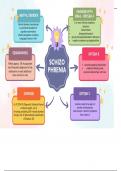
MENTAL DISORDER DSM-5 - CRITERIA A
2 or more of these symptoms:
Mental disorder characterised
delusions
by profound disruption of
hallucinations
cognition and emotion.
disorganised speech
affects perceptions, emotions,
grossly disorganised/catatonic behaviour
language & sense of self
negative symptoms eg alogia/avolition
DEMOGRAPHICS CRITERIA B
Affects approx. 1% of population SCHIZO social/occupational dysfunction
most frequently diagnosed in late problems affecting work,
adolescence or early adulthood
more common in men
PHRENIA personal relationships / self care
DIAGNOSIS CRITERIA C
In US: DSM-5 (Diagnostic Statistical Manual duration needs to be apprx. 6
of Mental Health, vol. 5) months of disturbances
A manual containing 200+ mental disorders with at least 1 month of symptoms
Europe: ICD-10 (International Classification from criteria A
of Diseases 10)
, Alogia Distorted thinking
-ve symptom
poverty of speech -ve
struggle to produce speech inability to form
speak less, say fewer words logical/coherent thoughts
Avolition
SCHZ Affect flattening
-ve
SYMPTOMS -ve
lack of motivation/reduced
lack of emotional
drive to complete goal-
expression
directed activities
Hallucinations Delusions
Positive symptoms: excess or distortion of normal func. +ve
+ve
‘gaining’ rather than ‘losing’ False beliefs firmly held,
any kind of sensory
Negative symptoms: reduction/loss of normal func. Can despite being completely
experience that do not exist persist even in absence of positive symptoms illogical or have no
outside their mind
evidence
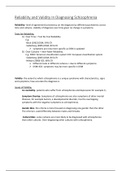
, Reliability of diagnosis
reliability: if we are able to produce consistent diagnosis using DSM
inter-rater reliability: more than one psychologist diagnoses patient – both agree on the diagnosis,
by evaluating separately & a CCR of 0.8
test-retest reliability: a patient is diagnosed by the same psychologist, multiple times and locations w/the same diagnosis
COPELAND 1971 ROSENHAN 1973 WHALEY MOJTABI & NICHOLSON
low test retest reliability
low inter-rater reliability
aim: investigate reliability of schz
aim: difference in consistency of diagnoses low inter rater reliability low inter rater reliability
schz diagnosis in US/UK
method: R sent 8 actors to
Inter rater reliability looked at correlations for
method: gave description of a different hospitals, claiming they
have been hearing voices say correlations of 0.11 for the ‘bizarre’ vs ‘non-bizzare’
patient w/ schz to 134 US & 194 UK
‘empty’ ‘thud’ or ‘hollow’. diagnosis of schz delusions in clinicians
psychiatrist, ask them to look at
the case & provide a diagnosis if all admitted to hospital – 7 standard = 0.8
diagnosed w/ schz + 1 w/ bipolar found that inter rater
appropriate acceptable = 0.6
disorder.
reliability = 0.4
results: 69% US + 2% UK result: R told hospitals he would be
psychiatrist diagnosed the patient sending more fakes (but didn’t
actually), hospital kicked out 41
‘fakes’ when they actually had schz
MENTAL DISORDER DSM-5 - CRITERIA A
2 or more of these symptoms:
Mental disorder characterised
delusions
by profound disruption of
hallucinations
cognition and emotion.
disorganised speech
affects perceptions, emotions,
grossly disorganised/catatonic behaviour
language & sense of self
negative symptoms eg alogia/avolition
DEMOGRAPHICS CRITERIA B
Affects approx. 1% of population SCHIZO social/occupational dysfunction
most frequently diagnosed in late problems affecting work,
adolescence or early adulthood
more common in men
PHRENIA personal relationships / self care
DIAGNOSIS CRITERIA C
In US: DSM-5 (Diagnostic Statistical Manual duration needs to be apprx. 6
of Mental Health, vol. 5) months of disturbances
A manual containing 200+ mental disorders with at least 1 month of symptoms
Europe: ICD-10 (International Classification from criteria A
of Diseases 10)
, Alogia Distorted thinking
-ve symptom
poverty of speech -ve
struggle to produce speech inability to form
speak less, say fewer words logical/coherent thoughts
Avolition
SCHZ Affect flattening
-ve
SYMPTOMS -ve
lack of motivation/reduced
lack of emotional
drive to complete goal-
expression
directed activities
Hallucinations Delusions
Positive symptoms: excess or distortion of normal func. +ve
+ve
‘gaining’ rather than ‘losing’ False beliefs firmly held,
any kind of sensory
Negative symptoms: reduction/loss of normal func. Can despite being completely
experience that do not exist persist even in absence of positive symptoms illogical or have no
outside their mind
evidence
, Reliability of diagnosis
reliability: if we are able to produce consistent diagnosis using DSM
inter-rater reliability: more than one psychologist diagnoses patient – both agree on the diagnosis,
by evaluating separately & a CCR of 0.8
test-retest reliability: a patient is diagnosed by the same psychologist, multiple times and locations w/the same diagnosis
COPELAND 1971 ROSENHAN 1973 WHALEY MOJTABI & NICHOLSON
low test retest reliability
low inter-rater reliability
aim: investigate reliability of schz
aim: difference in consistency of diagnoses low inter rater reliability low inter rater reliability
schz diagnosis in US/UK
method: R sent 8 actors to
Inter rater reliability looked at correlations for
method: gave description of a different hospitals, claiming they
have been hearing voices say correlations of 0.11 for the ‘bizarre’ vs ‘non-bizzare’
patient w/ schz to 134 US & 194 UK
‘empty’ ‘thud’ or ‘hollow’. diagnosis of schz delusions in clinicians
psychiatrist, ask them to look at
the case & provide a diagnosis if all admitted to hospital – 7 standard = 0.8
diagnosed w/ schz + 1 w/ bipolar found that inter rater
appropriate acceptable = 0.6
disorder.
reliability = 0.4
results: 69% US + 2% UK result: R told hospitals he would be
psychiatrist diagnosed the patient sending more fakes (but didn’t
actually), hospital kicked out 41
‘fakes’ when they actually had schz