

1
Pediatric Nursing: Exam 3 Study Guide
Topics
● Cardiac
● Neurological
● Neuromuscular
Nursing Care of The Child With An Alteration In Perfusion/Cardiovascular Disorder
● The fetal heart rate is present on
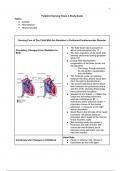
Circulatory Changes From Gestation to about postconceptual day 17
Birth ● The four chambers of the heart and
arteries are formed during gestation
week 2-8
● During fetal development,
oxygenation of the fetus occurs via
the placenta
○ The lungs, though perfused,
do not perform oxygenation
and ventilation
● The foramen ovale, an opening
between the atria, allows blood flow
from the right to the left atrium
● The ductus arteriosus allows blood
floor between the pulmonary artery
and the aorta, shunting blood away
from pulmonary circulation
● Newborn's first breath -> inflates the
lungs and decrease pulmonary
vascular resistance to BF ->
pulmonary artery pressure drops ->
promotes closure of the ductus
arteriosus -> pressure in the right
atrium decreases
● Blood flow to the left side of the heart
increases, left atrium pressure
increases which leads to the closure
of the foramen ovale
● The ventricle walls are similar in
thickness, but with time the left
ventricular wall thickens and it
becomes more dominant over the
next few months
Heart Rate
Cardiovascular Changes in Childhood ● Faster in infancy (120-130 bpm)
● Decreases as the child ages
, 2
Blood Pressure
● Lower in infancy (80-55mmHg)
● Increases as the child ages
Respiratory
● Faster in infancy
● Decreases as the child ages
By adolescence, values approach adult levels
● History of maternal viral illness
Prevalent Past Health History ○ Coxsackie, CMV, influenza,
mumps, rubella
● Problems occur after birth of newborn
○ Associated congenital
malformation
● Birth history
○ Any NICU stays
● Frequent infections
● Chromosomal abnormalities
● Prematurity
● Autoimmune disorders
● Use of medications
○ Especially corticosteroids
● Family history of heart disease or
Family History of Risk Factors for CHD
Cardiovascular Disorders ○ Investigate further if heart
disease occurred in a first
degree relative
● Sudden death in a young family
member
● Hyperlipidemia
● Diabetes mellitus
● Cyanosis
Signs and Symptoms of a Cardiac ● Irregular HR
Disorder ● Edema
● Clubbing of fingertips
● Fever
● Retractions or increases work of
breathing
● Prominence of precordial chest wall
● Visible, engorged, or abnormal
pulsations
● Abdominal distention
● When the symptoms started and how
Health History of Present Illness they progressed
● Any treatments and medications used
, 3
at home
● History of orthopnea, dyspnea, easy
fatigability, growth, delays, squatting,
edema, dizziness, frequent
pneumonia
● Poor feeding, fatigue, lethargy,
vomiting, failure to thrive
● Diaphoresis
● Delays in motor development
● Cyanosis
● Tachypnea
● Activity level compared to peers
● Pulse Ox
Diagnostic Tests ● ECG and Holter Monitoring
● Echocardiogram
● Chest radiograph
○ Chest xrays are helpful
because they can identify
heart enlargement and also
pulmonary abnormalities that
may be associated like
pulmonary edema that is
associated with certain types
of heart defects and heart
failure.
● Exercise stress testing
○ we associate more again with
adult with older children, with
hypothermia, coronary artery
disease
● Laboratory Tests
○ CBC
○ BMP
○ C-Reactive Protein (CRP)
○ Erythrocyte sedimentation rate
■ Markers for
inflammation *** for
acquired heart disease
○ Arteriogram (looks at the
picture of the arteries) and
cardiac catheterization (goes
into an artery into an aorta, an
arterial approach to a cardiac
catheterization)
○ Adults have arterial approach
○ Kids have venous approach
Congenital Heart Disease
Congenital Versus Acquired ● Interference in the development of the
, 4
Cardiovascular Disease heart during fetal life
● Septal walls or valves may fail to
develop
● Vessels or valves may be stenotic,
narrowed, or transposed
● Structural anomalies that are present
at birth
● CHD accounts for the largest
percentage of all birth defects
● Many chromosomal defects are
associated with CHD
○ Downs, Trisomy 13/18,
Williams syndrome
Acquired Heart Disease
● Disorders that occurs after birth
○ HF is the most common
reason
● Develops from a range of causes
● Can occurs as a complication or long
term effect of CHD
Congenital
Risk Factors For Cardiovascular ● Congenital malformations
● Genetic syndromes
● Family history
● Maternal drug or alcohol exposure
● Prematurity
Acquired
● Infections
○ Rheumatic fever
○ Kawasaki disease
○ Endocarditis
○ Obesity
○ Diabetes
○ Drug or alcohol exposure
○ HTN
○ Chemotherapy
○ Other disease
■ Connective tissue
disorders, autoimmune
or endocrine disease
■ Organ transplant
■ Hyperlipidemia
Acyanotic Lesions
Congenital Cardiovascular Lesions ● Left to right aunts
● Increased pulmonary blood flow
○ ASD, VSD, PDA
Pediatric Nursing: Exam 3 Study Guide
Topics
● Cardiac
● Neurological
● Neuromuscular
Nursing Care of The Child With An Alteration In Perfusion/Cardiovascular Disorder
● The fetal heart rate is present on
Circulatory Changes From Gestation to about postconceptual day 17
Birth ● The four chambers of the heart and
arteries are formed during gestation
week 2-8
● During fetal development,
oxygenation of the fetus occurs via
the placenta
○ The lungs, though perfused,
do not perform oxygenation
and ventilation
● The foramen ovale, an opening
between the atria, allows blood flow
from the right to the left atrium
● The ductus arteriosus allows blood
floor between the pulmonary artery
and the aorta, shunting blood away
from pulmonary circulation
● Newborn's first breath -> inflates the
lungs and decrease pulmonary
vascular resistance to BF ->
pulmonary artery pressure drops ->
promotes closure of the ductus
arteriosus -> pressure in the right
atrium decreases
● Blood flow to the left side of the heart
increases, left atrium pressure
increases which leads to the closure
of the foramen ovale
● The ventricle walls are similar in
thickness, but with time the left
ventricular wall thickens and it
becomes more dominant over the
next few months
Heart Rate
Cardiovascular Changes in Childhood ● Faster in infancy (120-130 bpm)
● Decreases as the child ages
, 2
Blood Pressure
● Lower in infancy (80-55mmHg)
● Increases as the child ages
Respiratory
● Faster in infancy
● Decreases as the child ages
By adolescence, values approach adult levels
● History of maternal viral illness
Prevalent Past Health History ○ Coxsackie, CMV, influenza,
mumps, rubella
● Problems occur after birth of newborn
○ Associated congenital
malformation
● Birth history
○ Any NICU stays
● Frequent infections
● Chromosomal abnormalities
● Prematurity
● Autoimmune disorders
● Use of medications
○ Especially corticosteroids
● Family history of heart disease or
Family History of Risk Factors for CHD
Cardiovascular Disorders ○ Investigate further if heart
disease occurred in a first
degree relative
● Sudden death in a young family
member
● Hyperlipidemia
● Diabetes mellitus
● Cyanosis
Signs and Symptoms of a Cardiac ● Irregular HR
Disorder ● Edema
● Clubbing of fingertips
● Fever
● Retractions or increases work of
breathing
● Prominence of precordial chest wall
● Visible, engorged, or abnormal
pulsations
● Abdominal distention
● When the symptoms started and how
Health History of Present Illness they progressed
● Any treatments and medications used
, 3
at home
● History of orthopnea, dyspnea, easy
fatigability, growth, delays, squatting,
edema, dizziness, frequent
pneumonia
● Poor feeding, fatigue, lethargy,
vomiting, failure to thrive
● Diaphoresis
● Delays in motor development
● Cyanosis
● Tachypnea
● Activity level compared to peers
● Pulse Ox
Diagnostic Tests ● ECG and Holter Monitoring
● Echocardiogram
● Chest radiograph
○ Chest xrays are helpful
because they can identify
heart enlargement and also
pulmonary abnormalities that
may be associated like
pulmonary edema that is
associated with certain types
of heart defects and heart
failure.
● Exercise stress testing
○ we associate more again with
adult with older children, with
hypothermia, coronary artery
disease
● Laboratory Tests
○ CBC
○ BMP
○ C-Reactive Protein (CRP)
○ Erythrocyte sedimentation rate
■ Markers for
inflammation *** for
acquired heart disease
○ Arteriogram (looks at the
picture of the arteries) and
cardiac catheterization (goes
into an artery into an aorta, an
arterial approach to a cardiac
catheterization)
○ Adults have arterial approach
○ Kids have venous approach
Congenital Heart Disease
Congenital Versus Acquired ● Interference in the development of the
, 4
Cardiovascular Disease heart during fetal life
● Septal walls or valves may fail to
develop
● Vessels or valves may be stenotic,
narrowed, or transposed
● Structural anomalies that are present
at birth
● CHD accounts for the largest
percentage of all birth defects
● Many chromosomal defects are
associated with CHD
○ Downs, Trisomy 13/18,
Williams syndrome
Acquired Heart Disease
● Disorders that occurs after birth
○ HF is the most common
reason
● Develops from a range of causes
● Can occurs as a complication or long
term effect of CHD
Congenital
Risk Factors For Cardiovascular ● Congenital malformations
● Genetic syndromes
● Family history
● Maternal drug or alcohol exposure
● Prematurity
Acquired
● Infections
○ Rheumatic fever
○ Kawasaki disease
○ Endocarditis
○ Obesity
○ Diabetes
○ Drug or alcohol exposure
○ HTN
○ Chemotherapy
○ Other disease
■ Connective tissue
disorders, autoimmune
or endocrine disease
■ Organ transplant
■ Hyperlipidemia
Acyanotic Lesions
Congenital Cardiovascular Lesions ● Left to right aunts
● Increased pulmonary blood flow
○ ASD, VSD, PDA


