WGU D335 Practice Test 2 With
Questions And 100% SURE ANSWERS
Create a solution that accepts three integer inputs representing the number of times an employee
travels to a job site. Output the total distance traveled to two decimal places given the following miles
per employee commute to the job site. Output the total distance traveled to two decimal places given
the following miles per employee commute to the job site:
Employee A: 15.62 miles
Employee B: 41.85 miles
Employee C: 32.67 miles
times_traveledA = int(input())
times_traveledB = int(input())
times_traveledC = int(input())
employeeA = 15.62 #miles
employeeB = 41.85 #miles
employeeC = 32.67 #miles
distance_traveledA = times_traveledA * employeeA
distance_traveledB = times_traveledB * employeeB
distance_traveledC = times_traveledC * employeeC
total_miles_traveled = distance_traveledA + distance_traveledB + distance_traveledC
print('Distance: {:.2f} miles'.format(total_miles_traveled))
Create a solution that accepts an input identifying the name of a text file, for example,
"WordTextFile1.txt". Each text file contains three rows with one word per row. Using the open() function
and write() and read() methods, interact with the input text file to write a new sentence string
composed of the three existing words to the end of the file contents on a new line. Output the new file
contents.
file_name = input()
with open(file_name, 'r') as f:
word1 = str(f.readline()).strip()
word2 = str(f.readline()).strip()
word3 = str(f.readline()).strip()
, f = open(file_name, 'r')
lines = f.read().splitlines()
lines = ' '.join(lines)
f.close()
print(f'{word1}\n{word2}\n{word3}\n{lines}')
Create a solution that accepts an integer input representing any number of ounces. Output the
converted total number of tons, pounds, and remaining ounces based on the input ounces value. There
are 16 ounces in a pound and 2,000 pounds in a ton.
ounces_per_pound = 16
pounds_per_ton = 2000
number_ounces = int(input())
tons = number_ounces // (ounces_per_pound * pounds_per_ton)
remaining_ounces = number_ounces % (ounces_per_pound * pounds_per_ton)
pounds = remaining_ounces // ounces_per_pound
remaining_ounces = remaining_ounces % ounces_per_pound
print('Tons: {}'.format(tons))
print('Pounds: {}'.format(pounds))
print('Ounces: {}'.format(remaining_ounces))
Create a solution that accepts an input identifying the name of a CSV file, for example, "input1.csv".
Each file contains two rows of comma-separated values. Import the built-in module csv and use
its open() function and reader() method to create a dictionary of key:value pairs for each row of comma-
separated values in the specified file. Output the file contents as two dictionaries.
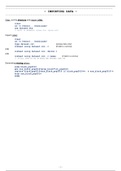
import csv
input1 = input()
with open(input1, "r") as f:
data = [row for row in csv.reader(f)]
for row in data:
even = [row[i].strip() for i in range(0, len(row), 2)]
odd = [row[i].strip() for i in range(1, len(row), 2)]
pair = dict(zip(even, odd))
print(pair)
Create a solution that accepts an integer input representing the index value for any any of the five
elements in the following list:
various_data_types = [516, 112.49, True, "meow", ("Western", "Governors", "University"), {"apple": 1,
"pear": 5}]
Using the built-in function type() and getting its name by using the .name attribute, output data type
(e.g., int”, “float”, “bool”, “str”) based on the input index value of the list element.
Questions And 100% SURE ANSWERS
Create a solution that accepts three integer inputs representing the number of times an employee
travels to a job site. Output the total distance traveled to two decimal places given the following miles
per employee commute to the job site. Output the total distance traveled to two decimal places given
the following miles per employee commute to the job site:
Employee A: 15.62 miles
Employee B: 41.85 miles
Employee C: 32.67 miles
times_traveledA = int(input())
times_traveledB = int(input())
times_traveledC = int(input())
employeeA = 15.62 #miles
employeeB = 41.85 #miles
employeeC = 32.67 #miles
distance_traveledA = times_traveledA * employeeA
distance_traveledB = times_traveledB * employeeB
distance_traveledC = times_traveledC * employeeC
total_miles_traveled = distance_traveledA + distance_traveledB + distance_traveledC
print('Distance: {:.2f} miles'.format(total_miles_traveled))
Create a solution that accepts an input identifying the name of a text file, for example,
"WordTextFile1.txt". Each text file contains three rows with one word per row. Using the open() function
and write() and read() methods, interact with the input text file to write a new sentence string
composed of the three existing words to the end of the file contents on a new line. Output the new file
contents.
file_name = input()
with open(file_name, 'r') as f:
word1 = str(f.readline()).strip()
word2 = str(f.readline()).strip()
word3 = str(f.readline()).strip()
, f = open(file_name, 'r')
lines = f.read().splitlines()
lines = ' '.join(lines)
f.close()
print(f'{word1}\n{word2}\n{word3}\n{lines}')
Create a solution that accepts an integer input representing any number of ounces. Output the
converted total number of tons, pounds, and remaining ounces based on the input ounces value. There
are 16 ounces in a pound and 2,000 pounds in a ton.
ounces_per_pound = 16
pounds_per_ton = 2000
number_ounces = int(input())
tons = number_ounces // (ounces_per_pound * pounds_per_ton)
remaining_ounces = number_ounces % (ounces_per_pound * pounds_per_ton)
pounds = remaining_ounces // ounces_per_pound
remaining_ounces = remaining_ounces % ounces_per_pound
print('Tons: {}'.format(tons))
print('Pounds: {}'.format(pounds))
print('Ounces: {}'.format(remaining_ounces))
Create a solution that accepts an input identifying the name of a CSV file, for example, "input1.csv".
Each file contains two rows of comma-separated values. Import the built-in module csv and use
its open() function and reader() method to create a dictionary of key:value pairs for each row of comma-
separated values in the specified file. Output the file contents as two dictionaries.
import csv
input1 = input()
with open(input1, "r") as f:
data = [row for row in csv.reader(f)]
for row in data:
even = [row[i].strip() for i in range(0, len(row), 2)]
odd = [row[i].strip() for i in range(1, len(row), 2)]
pair = dict(zip(even, odd))
print(pair)
Create a solution that accepts an integer input representing the index value for any any of the five
elements in the following list:
various_data_types = [516, 112.49, True, "meow", ("Western", "Governors", "University"), {"apple": 1,
"pear": 5}]
Using the built-in function type() and getting its name by using the .name attribute, output data type
(e.g., int”, “float”, “bool”, “str”) based on the input index value of the list element.