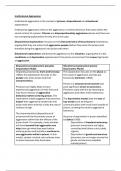
Institutional Aggression
Institutional aggression in the context of prisons: dispositional and situational
explanations
Institutional aggression refers to the aggressive or violent behaviour that exists within the
social context of a prison. Prisons are disproportionately aggressive places and there are
two competing explanations for why this is the case:
Dispositional explanation: focuses on the characteristics of the prisoners themselves,
arguing that they are violent and aggressive people (before they enter the prison) and
therefore bring the aggression into prison with them
Situational explanation: attributes the aggression to the situation, arguing that it is the
conditions and deprivation experienced in the prison environment that cause high levels
of aggression
Dispositional explanation (people) Situational explanation (place)
Importation Model Deprivation Model
Originally proposed by Irwin and Cressey This explanation focuses on the place as
(1962), this explanation focuses on the the cause of aggression and was put
people who enter prison and their forward by Clemmer (1958).
characteristics.
Prison is a stressful environment that
Prisoners are highly likely to have puts significant strain on prisoners.
experienced aggression in their lives and Prisoners cope with this by resorting to
may have a history of aggressive aggressive and often violent behaviour.
behaviour before entering prison. The
importation model suggests that prisoners The deprivation model sees the loss of
import their aggressive tendencies into key needs such as frequent
prison with them and this is why the rate of communication with loved ones outside of
violence is high. prison, as being the route to aggressive
behaviour.
The characteristics (dispositions) of
prisoners will be the primary cause of Sources of deprivation in prison identified
aggression rather than the effects of the by Sykes (1958):
prison itself. For example, many inmates - Deprivation of freedom/autonomy
will have learned that aggression can (prisoner movements are highly
help them get what they want before controlled and follow a strict daily
entering prison and therefore continue to regime)
use aggression while in prison. In this - Deprivation of goods and services
model, certain criminal sub-cultures arise (prisoners can no longer access the
in prison because they have been goods and services available
outside prison)
Institutional aggression in the context of prisons: dispositional and situational
explanations
Institutional aggression refers to the aggressive or violent behaviour that exists within the
social context of a prison. Prisons are disproportionately aggressive places and there are
two competing explanations for why this is the case:
Dispositional explanation: focuses on the characteristics of the prisoners themselves,
arguing that they are violent and aggressive people (before they enter the prison) and
therefore bring the aggression into prison with them
Situational explanation: attributes the aggression to the situation, arguing that it is the
conditions and deprivation experienced in the prison environment that cause high levels
of aggression
Dispositional explanation (people) Situational explanation (place)
Importation Model Deprivation Model
Originally proposed by Irwin and Cressey This explanation focuses on the place as
(1962), this explanation focuses on the the cause of aggression and was put
people who enter prison and their forward by Clemmer (1958).
characteristics.
Prison is a stressful environment that
Prisoners are highly likely to have puts significant strain on prisoners.
experienced aggression in their lives and Prisoners cope with this by resorting to
may have a history of aggressive aggressive and often violent behaviour.
behaviour before entering prison. The
importation model suggests that prisoners The deprivation model sees the loss of
import their aggressive tendencies into key needs such as frequent
prison with them and this is why the rate of communication with loved ones outside of
violence is high. prison, as being the route to aggressive
behaviour.
The characteristics (dispositions) of
prisoners will be the primary cause of Sources of deprivation in prison identified
aggression rather than the effects of the by Sykes (1958):
prison itself. For example, many inmates - Deprivation of freedom/autonomy
will have learned that aggression can (prisoner movements are highly
help them get what they want before controlled and follow a strict daily
entering prison and therefore continue to regime)
use aggression while in prison. In this - Deprivation of goods and services
model, certain criminal sub-cultures arise (prisoners can no longer access the
in prison because they have been goods and services available
outside prison)