
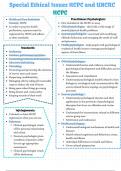
Special Ethical Issues HCPC and UNCRC
HCPC
Health and Care Professions Practitioner Psychologists:
Council - HCPC First included in the HCPC in 2009.
In order to practice health Clinical psychologists - deal with a wide range of
professions, a person must be mental/physical health problems.
registered the HCPC and adhere Forensic psychologists - concerned with modifying
to their standards. offender behaviour and managing the needs of staff
and prisoners.
Health psychologists - help people with psychological
Standards: or physical health issues to manage psychological
Proficiency aspects of their illness.
Conduct, performance and ethics
Continuing professional development
Education and training Clinical psychologists:
Prescribing Understand theories and evidence concerning
Promoting and protecting the interests psychological development and difficulties across
of service users and carers the lifespan
Respecting confidentiality Assessment and remediation
Managing risk by taking all reasonable Understand psychological models related to how
steps to reduce the risk of harm biological, sociological and circumstantial or life
Being open when things go wrong events related factors impinge on psychological
Being honest and trustworthy processes
Keeping records of their work Forensic psychology:
Understand psychological theories and their
application to the provision of psychological
therapies that focus on offenders and victim
offences
Infringements:
Understand the interventions related to different
Criminal to claim HCPC
service group uses
registration when you are not.
Arbitration and medication
Exlusions:
Health psychologists:
Clinical psychologist struck
Understand biological mechanisms of health and
off for personal relationship
diseases
with client
Health related cognitions and behaviour, stress,
Forensic psychologist given
health and illness
‘condition of practice order’
Individual differences in health and illness
for not age appropriate
Cross cultural perspectives
assessments
Clinical psychologist struck
off for dishonesty
HCPC
Health and Care Professions Practitioner Psychologists:
Council - HCPC First included in the HCPC in 2009.
In order to practice health Clinical psychologists - deal with a wide range of
professions, a person must be mental/physical health problems.
registered the HCPC and adhere Forensic psychologists - concerned with modifying
to their standards. offender behaviour and managing the needs of staff
and prisoners.
Health psychologists - help people with psychological
Standards: or physical health issues to manage psychological
Proficiency aspects of their illness.
Conduct, performance and ethics
Continuing professional development
Education and training Clinical psychologists:
Prescribing Understand theories and evidence concerning
Promoting and protecting the interests psychological development and difficulties across
of service users and carers the lifespan
Respecting confidentiality Assessment and remediation
Managing risk by taking all reasonable Understand psychological models related to how
steps to reduce the risk of harm biological, sociological and circumstantial or life
Being open when things go wrong events related factors impinge on psychological
Being honest and trustworthy processes
Keeping records of their work Forensic psychology:
Understand psychological theories and their
application to the provision of psychological
therapies that focus on offenders and victim
offences
Infringements:
Understand the interventions related to different
Criminal to claim HCPC
service group uses
registration when you are not.
Arbitration and medication
Exlusions:
Health psychologists:
Clinical psychologist struck
Understand biological mechanisms of health and
off for personal relationship
diseases
with client
Health related cognitions and behaviour, stress,
Forensic psychologist given
health and illness
‘condition of practice order’
Individual differences in health and illness
for not age appropriate
Cross cultural perspectives
assessments
Clinical psychologist struck
off for dishonesty


