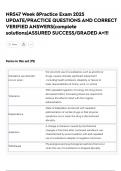
NR547 Week 8Practice Exam 2025
UPDATE/PRACTICE QUESTIONS AND CORRECT
VERIFIED ANSWERS(complete
solutions)ASSURED SUCCESS/GRADED A+!!!
Save
Terms in this set (75)
the recurrent use of a substance, such as alcohol or
Substance use disorder drugs, causes clinically significant impairment
occurs when: -including health problems, disability, or failure to
meet responsibilities at home, work, or school
With repeated ingestion of a drug, the drug shows
decreased effect. Increasing doses are required to
Tolerance
achieve the effects noted with the original
administration
State of adaptation produced with repeated
administration of certain drugs so that physical
Dependence
symptoms occur when the drug is discontinued
abruptly.
A change in behavior caused by biochemical
changes in the brain after continued substance use
Addiction
characterized by preoccupation with and repeated
use of a substance despite of negative outcomes.
Physiological and psychological reactions that occur
Withdrawal
when the use of a substance is stopped abruptly.
, Condition following the ingestion of a substance
Intoxication resulting in changes in level of consciousness,
cognition, perception, judgment, and behavior.
Bernita is a 64-year-old Methadone
who has been using
heroin for 6 years. She is Methadone is a full μ-receptor agonist with a long
currently unemployed half-life, which can prevent withdrawal symptoms for
and lives with her 24 hours and provide steady control of cravings
daughter in the city throughout the day. It is only administered in
center. She does not have methadone federally regulated opioid treatment
health insurance. programs (OTP). Methadone clinics incorporate
psychosocial interventions and require daily
prescribe the proper attendance for the first several months, so this is a
medication: good option for a client that has the flexibility to
Methadone attend daily meetings. Use of methadone in MAT for
Buprenorphine opioid use disorder helps extend client survival.
Buprenorphine plus When patients stop methadone, they have a high
naloxone (Suboxone) likelihood of relapsing, even 10 years after starting
Naltrexone treatment.
, Antoine is a 34-year-old Buprenorphine plus naloxone (Suboxone)
who has been abusing
prescription oxycodone. In combination with naloxone (Suboxone): naloxone
He is employed but is on is a mu opioid receptor antagonist and can therefore
probation at work for block the effects of buprenorphine; however,
increased absenteeism. because naloxone has poor sublingual
He desires MAT but is bioavailability, it does not interfere with
concerned about his buprenorphine's effects when used properly.
roommates stealing his Naloxone does have good parenteral bioavailability;
medication to get high. thus, if one tries to administer the
buprenorphine/naloxone formulation intravenously,
prescribe the proper naloxone will prevent any rewarding effects from
medication: buprenorphine, making this drug a less desirable
Methadone street drug. Suboxone is a good option for a client
Buprenorphine who may not be able to leave work for medication
Buprenorphine plus dosing, as it does not need to be taken under direct
naloxone (Suboxone) observation.
Naltrexone
Lisa is a 29-year-old who Naltrexone
admits to using "pills,
heroin, and booze" Naltrexone blocks mu opioid receptors, preventing
regularly. She lives in a exogenous opioids from binding there and thus
rural area and is preventing the pleasurable effects of opioid
employed part-time. She consumption. This medication also reduces alcohol
has a history of poor consumption through modulation of opioid systems,
compliance with past thereby reducing the reinforcing effects of alcohol.
treatments. For those patients with alcohol use disorder, who
have poor adherence to a regimen, and are unable
prescribe the proper to maintain abstinence, long-acting injection
medication: naltrexone (Vivitrol) administered monthly can be
Methadone efficacious.
Buprenorphine
Buprenorphine plus
naloxone (Suboxone)
Naltrexone
UPDATE/PRACTICE QUESTIONS AND CORRECT
VERIFIED ANSWERS(complete
solutions)ASSURED SUCCESS/GRADED A+!!!
Save
Terms in this set (75)
the recurrent use of a substance, such as alcohol or
Substance use disorder drugs, causes clinically significant impairment
occurs when: -including health problems, disability, or failure to
meet responsibilities at home, work, or school
With repeated ingestion of a drug, the drug shows
decreased effect. Increasing doses are required to
Tolerance
achieve the effects noted with the original
administration
State of adaptation produced with repeated
administration of certain drugs so that physical
Dependence
symptoms occur when the drug is discontinued
abruptly.
A change in behavior caused by biochemical
changes in the brain after continued substance use
Addiction
characterized by preoccupation with and repeated
use of a substance despite of negative outcomes.
Physiological and psychological reactions that occur
Withdrawal
when the use of a substance is stopped abruptly.
, Condition following the ingestion of a substance
Intoxication resulting in changes in level of consciousness,
cognition, perception, judgment, and behavior.
Bernita is a 64-year-old Methadone
who has been using
heroin for 6 years. She is Methadone is a full μ-receptor agonist with a long
currently unemployed half-life, which can prevent withdrawal symptoms for
and lives with her 24 hours and provide steady control of cravings
daughter in the city throughout the day. It is only administered in
center. She does not have methadone federally regulated opioid treatment
health insurance. programs (OTP). Methadone clinics incorporate
psychosocial interventions and require daily
prescribe the proper attendance for the first several months, so this is a
medication: good option for a client that has the flexibility to
Methadone attend daily meetings. Use of methadone in MAT for
Buprenorphine opioid use disorder helps extend client survival.
Buprenorphine plus When patients stop methadone, they have a high
naloxone (Suboxone) likelihood of relapsing, even 10 years after starting
Naltrexone treatment.
, Antoine is a 34-year-old Buprenorphine plus naloxone (Suboxone)
who has been abusing
prescription oxycodone. In combination with naloxone (Suboxone): naloxone
He is employed but is on is a mu opioid receptor antagonist and can therefore
probation at work for block the effects of buprenorphine; however,
increased absenteeism. because naloxone has poor sublingual
He desires MAT but is bioavailability, it does not interfere with
concerned about his buprenorphine's effects when used properly.
roommates stealing his Naloxone does have good parenteral bioavailability;
medication to get high. thus, if one tries to administer the
buprenorphine/naloxone formulation intravenously,
prescribe the proper naloxone will prevent any rewarding effects from
medication: buprenorphine, making this drug a less desirable
Methadone street drug. Suboxone is a good option for a client
Buprenorphine who may not be able to leave work for medication
Buprenorphine plus dosing, as it does not need to be taken under direct
naloxone (Suboxone) observation.
Naltrexone
Lisa is a 29-year-old who Naltrexone
admits to using "pills,
heroin, and booze" Naltrexone blocks mu opioid receptors, preventing
regularly. She lives in a exogenous opioids from binding there and thus
rural area and is preventing the pleasurable effects of opioid
employed part-time. She consumption. This medication also reduces alcohol
has a history of poor consumption through modulation of opioid systems,
compliance with past thereby reducing the reinforcing effects of alcohol.
treatments. For those patients with alcohol use disorder, who
have poor adherence to a regimen, and are unable
prescribe the proper to maintain abstinence, long-acting injection
medication: naltrexone (Vivitrol) administered monthly can be
Methadone efficacious.
Buprenorphine
Buprenorphine plus
naloxone (Suboxone)
Naltrexone