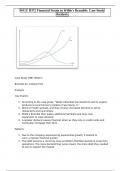
WGU D372 Financial Strain in Wilde's Bramble: Case Study
Analysis.
Case Study ONE: Wilde’s
Bramble A1: Iceberg Tool
Analysis
Key Events:
1. According to the case study, “Wilde’s Bramble has started to sell its organic
products to local farmer’s markets (Case Study 1).”
2. Word of mouth spreads, and they receive increased demand to sell to
restaurants and local shops.
3. Wilde’s Bramble then leases additional farmland and buys new
equipment to meet demand.
4. A greater demand causes financial strain as they rely on credit cards and
eventually mortgage their farm.
Patterns
1. Due to the company experiencing exponential growth, it started to
carry a heavier financial burden.
2. This debt became a recurring issue as Wilde’s Bramble started to scale their
operations. The more demand that came meant, the more debt they needed
to use to support the market.
Analysis.
Case Study ONE: Wilde’s
Bramble A1: Iceberg Tool
Analysis
Key Events:
1. According to the case study, “Wilde’s Bramble has started to sell its organic
products to local farmer’s markets (Case Study 1).”
2. Word of mouth spreads, and they receive increased demand to sell to
restaurants and local shops.
3. Wilde’s Bramble then leases additional farmland and buys new
equipment to meet demand.
4. A greater demand causes financial strain as they rely on credit cards and
eventually mortgage their farm.
Patterns
1. Due to the company experiencing exponential growth, it started to
carry a heavier financial burden.
2. This debt became a recurring issue as Wilde’s Bramble started to scale their
operations. The more demand that came meant, the more debt they needed
to use to support the market.