,LSK2601 Assignment 2 2025 ;100 % TRUSTED
workings, Expert Solved, Explanations and
Solutions
MULTIPLE CHOICE,ASSURED EXCELLENCE
LSK2601 ASSESSMENT 2 LSK2601/ASSESSMENT 2/0/2025
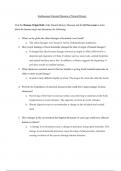
Question 1 Read the background on nutrition before answering
the questions that follow. [25] One of these basic rights is the
child's right to survive, which encompasses the right to life and
the right to health, basic nutrition and health care. This means
that each child should have access to health care through
primary health care services to prevent disease and
malnutrition. 1.1 A Grade 1 learner's parents report their child
often gets sick. Suggest, by providing specific examples, how
they can use the basic food groups to improve their child's
health. (4X2=8) 1.2 Distinguish between the roles of the
Nutrition Society of South Africa (NSSA) and the National School
Nutrition Programme (NSNP) in promoting child health. Your
response should be presented as highlighted in the table below:
(12) Nutrition Society of South Africa Objectives National School
Nutrition Programme (2) (2) Key activities (2) (2) Target groups
(2) (2) 1.3 Identify three symptoms of malnutrition that can
affect the personal and emotional development of a Foundation
Phase learner. 1.4 Why are food hygiene and safe storage
important in maintaining health? Question 2 (3) (2) [25]
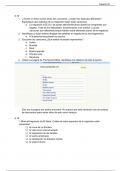
, Question 1 [25 marks]
1.1 A Grade 1 learner’s parents report their child often gets
sick. Suggest, by providing specific examples, how they can
use the basic food groups to improve their child’s health. (4 ×
2 = 8)
To improve the child’s health, parents should ensure their child
eats a balanced diet by including all the basic food groups:
1. Proteins: Helps in building and repairing body tissues.
Example: Include eggs, chicken, beans, or lentils in daily
meals.
2. Carbohydrates: Provides energy for physical and mental
activities.
Example: Serve whole grains like brown bread, maize meal,
and oats.
3. Fruits and Vegetables: Rich in vitamins and minerals that
boost the immune system.
Example: Add spinach, carrots, bananas, or apples to
school lunch and dinner.
4. Dairy Products: Contains calcium and vitamin D for strong
bones and teeth.
Example: Include milk, yoghurt, or cheese in the child’s
breakfast or snacks.
workings, Expert Solved, Explanations and
Solutions
MULTIPLE CHOICE,ASSURED EXCELLENCE
LSK2601 ASSESSMENT 2 LSK2601/ASSESSMENT 2/0/2025
Question 1 Read the background on nutrition before answering
the questions that follow. [25] One of these basic rights is the
child's right to survive, which encompasses the right to life and
the right to health, basic nutrition and health care. This means
that each child should have access to health care through
primary health care services to prevent disease and
malnutrition. 1.1 A Grade 1 learner's parents report their child
often gets sick. Suggest, by providing specific examples, how
they can use the basic food groups to improve their child's
health. (4X2=8) 1.2 Distinguish between the roles of the
Nutrition Society of South Africa (NSSA) and the National School
Nutrition Programme (NSNP) in promoting child health. Your
response should be presented as highlighted in the table below:
(12) Nutrition Society of South Africa Objectives National School
Nutrition Programme (2) (2) Key activities (2) (2) Target groups
(2) (2) 1.3 Identify three symptoms of malnutrition that can
affect the personal and emotional development of a Foundation
Phase learner. 1.4 Why are food hygiene and safe storage
important in maintaining health? Question 2 (3) (2) [25]
, Question 1 [25 marks]
1.1 A Grade 1 learner’s parents report their child often gets
sick. Suggest, by providing specific examples, how they can
use the basic food groups to improve their child’s health. (4 ×
2 = 8)
To improve the child’s health, parents should ensure their child
eats a balanced diet by including all the basic food groups:
1. Proteins: Helps in building and repairing body tissues.
Example: Include eggs, chicken, beans, or lentils in daily
meals.
2. Carbohydrates: Provides energy for physical and mental
activities.
Example: Serve whole grains like brown bread, maize meal,
and oats.
3. Fruits and Vegetables: Rich in vitamins and minerals that
boost the immune system.
Example: Add spinach, carrots, bananas, or apples to
school lunch and dinner.
4. Dairy Products: Contains calcium and vitamin D for strong
bones and teeth.
Example: Include milk, yoghurt, or cheese in the child’s
breakfast or snacks.