

8/24/17
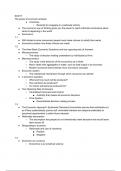
The power of economic analysis
● Incentives
○ Rewards for engaging in a particular activity
● The economic way of thinking gives you the power to reach informed conclusions about
what is happening in the world
● Economics
1.1
● With limited income (resources) people must make choices to satisfy their wants
● Economics studies how these choices are made
1.2
● The three Basic Economic Questions and two opposing sets of Answers
● Microeconomics
○ The study of decision making undertaken by individuals by firms
● Macroeconomics
○ The study of the behavior of the economics as a whole
○ Macro deals with aggregates or totals- such as total output in an economy
○ Modern economic theory blends micro and macro concepts
● Economic system
○ The institutional mechanism through which resources are utilized
● 3 economic question:
○ What and how much will be produced?
○ How will items be produced?
○ For whom will items be produced for?
● Two Opposing Sets of Answers
○ Centralized Command and Control
■ Authority that makes all economic decisions
○ Price System
■ Decentralized decision making process
1.3
● The Economic Approach: Systematic Decisions Economists assume that individuals act
as if they systematically pursue self -motivated interests and respond predictably to
perceived opportunities to attain those interests.
● Rationality assumption
○ The assumption that people do not intentionally make decisions that would leave
them worse off
● Responding to incentive
○ Rationality and Use of incentives
■ Positive
■ Negative
1.4
● Economic as a science
○ Economics is an empirical science
, ■ Real world data is used
● Behavioral Economics
○ Approach to the study of consumer behavior
■ Emphasizes psychological limitation
1.5
● Positive vs. Normative Economics
○ Positive Economics
■ Purely descriptive statements or scientific prediction
○ Normative Economics
■ Analysis involving value judgment
8/31/17
Chapter 1 & 2
1. What is Economics
a. Is the study of how people allocate their limited resources in an attempt to satisfy
unlimited wants
2. Guide to Economic Thinking
a. There are six principles that must be true for economic thinking to world
i. People
ii. People choice’s involve cost
iii. People respond to incentives in predictable
iv. People create economic system (groups) to influence incentives and
choices (rules)
v. People gain when they trade voluntarily (we only make trades when feel
like we will be better off once we have made the trade. Both parties gain.)
vi. Choices have consequences that lie in the future
3. Self-interest
a. Life is about getting stuff!!
b. We want to make the best decisions for our own best interest
c. We want to be as efficient as possible when making these decisions
4. Resources
a. Anything used to satisfy your wants
5. Productive Resources
a. Land- Natural resources used to make things
b. Labor- Human effort used to produce a good or provide a service
c. Capital- Man made things used to make a good or provide a service
d. Entrepreneur- the willingness to risk organizing and running a business
6. The problem
a. Scarcity is when there is not enough of something that we want
b. Scarcity occurs when
i. The amount we want is greater than the amount available
ii. Something has more than one valuable use
iii. Availability if you can’t get to the item or resource you want then it is
scarce
The power of economic analysis
● Incentives
○ Rewards for engaging in a particular activity
● The economic way of thinking gives you the power to reach informed conclusions about
what is happening in the world
● Economics
1.1
● With limited income (resources) people must make choices to satisfy their wants
● Economics studies how these choices are made
1.2
● The three Basic Economic Questions and two opposing sets of Answers
● Microeconomics
○ The study of decision making undertaken by individuals by firms
● Macroeconomics
○ The study of the behavior of the economics as a whole
○ Macro deals with aggregates or totals- such as total output in an economy
○ Modern economic theory blends micro and macro concepts
● Economic system
○ The institutional mechanism through which resources are utilized
● 3 economic question:
○ What and how much will be produced?
○ How will items be produced?
○ For whom will items be produced for?
● Two Opposing Sets of Answers
○ Centralized Command and Control
■ Authority that makes all economic decisions
○ Price System
■ Decentralized decision making process
1.3
● The Economic Approach: Systematic Decisions Economists assume that individuals act
as if they systematically pursue self -motivated interests and respond predictably to
perceived opportunities to attain those interests.
● Rationality assumption
○ The assumption that people do not intentionally make decisions that would leave
them worse off
● Responding to incentive
○ Rationality and Use of incentives
■ Positive
■ Negative
1.4
● Economic as a science
○ Economics is an empirical science
, ■ Real world data is used
● Behavioral Economics
○ Approach to the study of consumer behavior
■ Emphasizes psychological limitation
1.5
● Positive vs. Normative Economics
○ Positive Economics
■ Purely descriptive statements or scientific prediction
○ Normative Economics
■ Analysis involving value judgment
8/31/17
Chapter 1 & 2
1. What is Economics
a. Is the study of how people allocate their limited resources in an attempt to satisfy
unlimited wants
2. Guide to Economic Thinking
a. There are six principles that must be true for economic thinking to world
i. People
ii. People choice’s involve cost
iii. People respond to incentives in predictable
iv. People create economic system (groups) to influence incentives and
choices (rules)
v. People gain when they trade voluntarily (we only make trades when feel
like we will be better off once we have made the trade. Both parties gain.)
vi. Choices have consequences that lie in the future
3. Self-interest
a. Life is about getting stuff!!
b. We want to make the best decisions for our own best interest
c. We want to be as efficient as possible when making these decisions
4. Resources
a. Anything used to satisfy your wants
5. Productive Resources
a. Land- Natural resources used to make things
b. Labor- Human effort used to produce a good or provide a service
c. Capital- Man made things used to make a good or provide a service
d. Entrepreneur- the willingness to risk organizing and running a business
6. The problem
a. Scarcity is when there is not enough of something that we want
b. Scarcity occurs when
i. The amount we want is greater than the amount available
ii. Something has more than one valuable use
iii. Availability if you can’t get to the item or resource you want then it is
scarce


