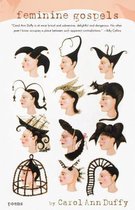
Duff y’s agenda is to challenge the objecti fi cati on of women through
her collecti on Feminine Gospels. 25/25
It is unquestionable that Duffy should touch upon the objectification of women in her anthology
‘Feminine Gospels’; intrinsically involved in the life of every and any woman, this universal concept is
discussed in the modern era especially by female poets with varying degrees of disgust, spite, and
arguably, admiration. In her poem of four parts, ‘Beautiful’, Duffy touches upon the four tragically
afflicted lives of historically iconic figures, reflecting on the idea that beauty is inherently linked to
fame, and objectification to tragedy. Equally, in ‘The Diet’, she is keen to expose the excruciating
pressures that are imposed upon the everyday woman in order to conform to the conventional
standards of beauty.
Certainly, the idea that Duffy’s agenda is to challenge the objectification of women is well-founded
in her poetry; she is critical of society, vocal in her disgust, despising of unreachable expectations
and the notions of male entitlement. As ‘Beautiful’ first begins to unveil the mythologised beauty of
Helen of Troy, ideas of purity, chastity and grace are conveyed through imagery of ‘fair’ innocence:
her untouched sanctity is represented by a ‘pearly’, a ‘peach’, ripe for the male taking. Here, Duffy
comments on the obsessive and condescending patriarchal demand for virginity in women – a
concept born centuries go, and inexplicably relevant today – as Helen is distanced from the bloody
mess of human childbirth, emerging cleanly from an egg (which may also refer to the perceived and
idolised fragility of femininity), and subsequently becomes revered for her purity and ethereal
beauty. Bound by the restricted role of women in society, Helen and the universal woman’s
attributes of intelligence, talent, and personality are disregarded in favour of divine chastity.
This archaic and chivalric description is ‘polluted’ by colloquialisms of modern day – ‘a stunner’,
‘celebrity’, ‘pin up’, ‘superstar’ – aiding the strong links Duffy draws between her beautiful women
across time. Perhaps her primary criticism of the act of objectification is that these women (Helen of
Troy, Marilyn Monroe, Princess Diana) discussed in ‘Beautiful’ are adored, but not permitted to
adore; their sexuality is only accepted within the bounds of male fantasy, unable to be claimed as
their own right. There is an inescapable obligation for the public appearance of such famous women,
who become synonymous by their mistreatment and objectification – the use of imperatives ‘Be
mine, ‘put on the mink’, ‘get in the studio car’, ‘Act like a fucking princess’ and ‘Give us a smile cunt’
her collecti on Feminine Gospels. 25/25
It is unquestionable that Duffy should touch upon the objectification of women in her anthology
‘Feminine Gospels’; intrinsically involved in the life of every and any woman, this universal concept is
discussed in the modern era especially by female poets with varying degrees of disgust, spite, and
arguably, admiration. In her poem of four parts, ‘Beautiful’, Duffy touches upon the four tragically
afflicted lives of historically iconic figures, reflecting on the idea that beauty is inherently linked to
fame, and objectification to tragedy. Equally, in ‘The Diet’, she is keen to expose the excruciating
pressures that are imposed upon the everyday woman in order to conform to the conventional
standards of beauty.
Certainly, the idea that Duffy’s agenda is to challenge the objectification of women is well-founded
in her poetry; she is critical of society, vocal in her disgust, despising of unreachable expectations
and the notions of male entitlement. As ‘Beautiful’ first begins to unveil the mythologised beauty of
Helen of Troy, ideas of purity, chastity and grace are conveyed through imagery of ‘fair’ innocence:
her untouched sanctity is represented by a ‘pearly’, a ‘peach’, ripe for the male taking. Here, Duffy
comments on the obsessive and condescending patriarchal demand for virginity in women – a
concept born centuries go, and inexplicably relevant today – as Helen is distanced from the bloody
mess of human childbirth, emerging cleanly from an egg (which may also refer to the perceived and
idolised fragility of femininity), and subsequently becomes revered for her purity and ethereal
beauty. Bound by the restricted role of women in society, Helen and the universal woman’s
attributes of intelligence, talent, and personality are disregarded in favour of divine chastity.
This archaic and chivalric description is ‘polluted’ by colloquialisms of modern day – ‘a stunner’,
‘celebrity’, ‘pin up’, ‘superstar’ – aiding the strong links Duffy draws between her beautiful women
across time. Perhaps her primary criticism of the act of objectification is that these women (Helen of
Troy, Marilyn Monroe, Princess Diana) discussed in ‘Beautiful’ are adored, but not permitted to
adore; their sexuality is only accepted within the bounds of male fantasy, unable to be claimed as
their own right. There is an inescapable obligation for the public appearance of such famous women,
who become synonymous by their mistreatment and objectification – the use of imperatives ‘Be
mine, ‘put on the mink’, ‘get in the studio car’, ‘Act like a fucking princess’ and ‘Give us a smile cunt’