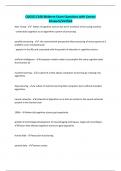
KTERRY EXAM {ch 13-16}
WITH STRAIGHT
FORWARD ANSWERS.
1. susceptibility - ANSWER lack of resistance to a disease
2. Immunity - ANSWER Ability to ward off disease
3. Innate immunity - ANSWER defenses against any pathogen
4. adaptive immunity - ANSWER immunity or resistance to a specific pathogen
5. First line of defense - ANSWER intact skin, mucous membranes and their
secretions, normal microbiota
6. second line of defense - ANSWER phagocytes, inflammation, fever,
antimicrobial substances
7. Third line of defense - ANSWER specialized lymphocytes: T cells and B cells,
antibodies
8. Skin - ANSWER Epidermis consists of tightly packed cells
9. mucus - ANSWER traps microbes
10. ciliary escalator - ANSWER microbes trapped in mucus are transported away
from the lungs
11. Lacrimal apparatus - ANSWER washes eye
12. Saliva - ANSWER washes microbes off
13. Urine - ANSWER flows out
14. vaginal secretions - ANSWER to flow out
15. Chemical factors of first line of defense - ANSWER Skin has a low pH (3-5)
16. Major Histocompatibility Complex (MHC) - ANSWER genes encode
molecules on the cell surface
17. Phagocytosis - ANSWER ingestion of microbes or particles by a cell,
performed by phagocytes
18. Proteins activated, vasodilation, redness, swelling, pain, heat - ANSWER
Inflammation types
19. Fever - ANSWER Abnormally high body temperature
, KTERRY EXAM {ch 13-16}
WITH STRAIGHT
FORWARD ANSWERS.
20. Increases transferrin, produces interferon - ANSWER Advantages of a fevrr
21. Tachycardia, acidosis, dehydration, 44-46 C° is fatal - ANSWER
Disadvantages of a fever
22. The complement system - ANSWER proteins in the blood that help
antibodies kill their target
23. Classical pathway of the complement system - ANSWER Activated by
antigen-antibody complex
24. alternative pathway of complement system - ANSWER is activated on
microbial cell surfaces in the absence of antibodies and is a component of
innate immunity
25. lectin pathway of complement system - ANSWER Lectin and antigen bind to
carbohydrates
26. 3 outcomes of complement system - ANSWER opsonization, inflammatory
response, cytolysis
27. B cells - ANSWER Differentiate in bone marrow (humoral)
28. T cells - ANSWER Differentiate in the thymus (cellular)
29. Antigen - ANSWER a substance that causes the body to produce specific
antibodies or sensitized T cells
30. Antibodies - ANSWER Interact with epitopes or antigenic determinates
31. Opsonization - ANSWER coating antigen with antibody enhances
phagocytosis
32. Serology - ANSWER The study of reactions between antibodies and antigens
33. Antiserum - ANSWER The generic term for serum because it contains Ab
34. Globulins - ANSWER serum proteins
35. Immunoglobulin - ANSWER Antibodies
36. Gamma globulin - ANSWER serum fraction containing antibodies
37. IgG antibodies - ANSWER 80% of serum from antibodies, in blood, lymph &
intestine, cross placenta, protects fetus and newborn
WITH STRAIGHT
FORWARD ANSWERS.
1. susceptibility - ANSWER lack of resistance to a disease
2. Immunity - ANSWER Ability to ward off disease
3. Innate immunity - ANSWER defenses against any pathogen
4. adaptive immunity - ANSWER immunity or resistance to a specific pathogen
5. First line of defense - ANSWER intact skin, mucous membranes and their
secretions, normal microbiota
6. second line of defense - ANSWER phagocytes, inflammation, fever,
antimicrobial substances
7. Third line of defense - ANSWER specialized lymphocytes: T cells and B cells,
antibodies
8. Skin - ANSWER Epidermis consists of tightly packed cells
9. mucus - ANSWER traps microbes
10. ciliary escalator - ANSWER microbes trapped in mucus are transported away
from the lungs
11. Lacrimal apparatus - ANSWER washes eye
12. Saliva - ANSWER washes microbes off
13. Urine - ANSWER flows out
14. vaginal secretions - ANSWER to flow out
15. Chemical factors of first line of defense - ANSWER Skin has a low pH (3-5)
16. Major Histocompatibility Complex (MHC) - ANSWER genes encode
molecules on the cell surface
17. Phagocytosis - ANSWER ingestion of microbes or particles by a cell,
performed by phagocytes
18. Proteins activated, vasodilation, redness, swelling, pain, heat - ANSWER
Inflammation types
19. Fever - ANSWER Abnormally high body temperature
, KTERRY EXAM {ch 13-16}
WITH STRAIGHT
FORWARD ANSWERS.
20. Increases transferrin, produces interferon - ANSWER Advantages of a fevrr
21. Tachycardia, acidosis, dehydration, 44-46 C° is fatal - ANSWER
Disadvantages of a fever
22. The complement system - ANSWER proteins in the blood that help
antibodies kill their target
23. Classical pathway of the complement system - ANSWER Activated by
antigen-antibody complex
24. alternative pathway of complement system - ANSWER is activated on
microbial cell surfaces in the absence of antibodies and is a component of
innate immunity
25. lectin pathway of complement system - ANSWER Lectin and antigen bind to
carbohydrates
26. 3 outcomes of complement system - ANSWER opsonization, inflammatory
response, cytolysis
27. B cells - ANSWER Differentiate in bone marrow (humoral)
28. T cells - ANSWER Differentiate in the thymus (cellular)
29. Antigen - ANSWER a substance that causes the body to produce specific
antibodies or sensitized T cells
30. Antibodies - ANSWER Interact with epitopes or antigenic determinates
31. Opsonization - ANSWER coating antigen with antibody enhances
phagocytosis
32. Serology - ANSWER The study of reactions between antibodies and antigens
33. Antiserum - ANSWER The generic term for serum because it contains Ab
34. Globulins - ANSWER serum proteins
35. Immunoglobulin - ANSWER Antibodies
36. Gamma globulin - ANSWER serum fraction containing antibodies
37. IgG antibodies - ANSWER 80% of serum from antibodies, in blood, lymph &
intestine, cross placenta, protects fetus and newborn