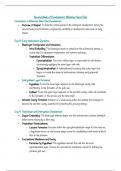
Second Week of Development: Bilaminar Germ Disc
Introduction to Bilaminar Germ Disc Development
• Purpose of Chapter: To detail the critical events in the embryonic development during the
second week post-fertilization, emphasizing variability in development rates even at early
stages.
Day 8: Early Implantation Dynamics
• Blastocyst Configuration and Interaction:
o Initial Embedding: The blastocyst starts to embed into the endometrial stroma, a
crucial step for subsequent implantation and nutrient exchange.
o Trophoblast Differentiation:
§ Cytotrophoblast: This inner cellular layer is responsible for cell division,
continuously supplying the outer layer with cells.
§ Syncytiotrophoblast: A multinucleated, boundary-less outer layer that
begins to invade the maternal endometrium, initiating early placental
formation.
• Embryoblast Layer Formation:
o Hypoblast: Forms the lower layer adjacent to the blastocyst cavity, later
contributing to the formation of the yolk sac.
o Epiblast: Forms the upper layer adjacent to the amniotic cavity, which will contribute
to the formation of the amnion and the fetus itself.
• Amniotic Cavity Formation: Initiation of a small cavity within the epiblast that enlarges to
become the amniotic cavity, essential for protecting the growing embryo.
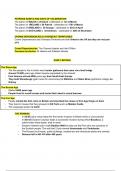
Day 9: Trophoblast and Embryoblast Development
• Deeper Embedding: The blastocyst embeds deeper into the endometrium; surface epithelium
defect starts closing by a fibrin plug.
• Trophoblast Advancements:
o Lacunar Formation: Vacuoles within the syncytiotrophoblast merge to form lacunae,
a key phase known as the lacunar stage crucial for establishing initial maternal blood
flow to the placenta.
• Exocoelomic Membrane and Cavity:
o Formation by Hypoblast: The hypoblast-derived flat cells line the inner
cytotrophoblast layer, forming the exocoelomic membrane crucial for defining the
primitive yolk sac.
Introduction to Bilaminar Germ Disc Development
• Purpose of Chapter: To detail the critical events in the embryonic development during the
second week post-fertilization, emphasizing variability in development rates even at early
stages.
Day 8: Early Implantation Dynamics
• Blastocyst Configuration and Interaction:
o Initial Embedding: The blastocyst starts to embed into the endometrial stroma, a
crucial step for subsequent implantation and nutrient exchange.
o Trophoblast Differentiation:
§ Cytotrophoblast: This inner cellular layer is responsible for cell division,
continuously supplying the outer layer with cells.
§ Syncytiotrophoblast: A multinucleated, boundary-less outer layer that
begins to invade the maternal endometrium, initiating early placental
formation.
• Embryoblast Layer Formation:
o Hypoblast: Forms the lower layer adjacent to the blastocyst cavity, later
contributing to the formation of the yolk sac.
o Epiblast: Forms the upper layer adjacent to the amniotic cavity, which will contribute
to the formation of the amnion and the fetus itself.
• Amniotic Cavity Formation: Initiation of a small cavity within the epiblast that enlarges to
become the amniotic cavity, essential for protecting the growing embryo.
Day 9: Trophoblast and Embryoblast Development
• Deeper Embedding: The blastocyst embeds deeper into the endometrium; surface epithelium
defect starts closing by a fibrin plug.
• Trophoblast Advancements:
o Lacunar Formation: Vacuoles within the syncytiotrophoblast merge to form lacunae,
a key phase known as the lacunar stage crucial for establishing initial maternal blood
flow to the placenta.
• Exocoelomic Membrane and Cavity:
o Formation by Hypoblast: The hypoblast-derived flat cells line the inner
cytotrophoblast layer, forming the exocoelomic membrane crucial for defining the
primitive yolk sac.