

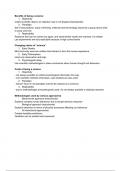
Benefits of being a science
1. Objectivity
Collect scientific data in an objective way to not display bias/prejudice
2. Paradigm
Set of assumptions, ways of thinking, methods and terminology shared by a group about what
to study and how
3. Replicability
Research that can be carried out again, and same/similar results are reached, it’s reliable
Lab experiments are truly replicable because of high control levels
Changing nature of “science”
1. Early Greeks
Mind and body were two entities that interact to form the human experience
2. Early Philosophers
Used only observation and logic
3. Psychologists today
Use scientific methodologies to draw conclusions about human thought and behaviour
Costs of being a science
1. Objectivity
- not always possible to collect psychological information this way
- non scientific methods (interviews, case studies) are also used
2. Paradigm
- doesn’t have on set paradigm (cannot be classed as a science)
3. Replicability
- due to methodologies and participants used, it’s not always possible to replicate research
Methodologies used by various approaches
- Behaviourist approach (reductionist)
Explains complex human behaviour due to simple stimulus response
- Biological approach (reductionist)
Explains behaviour in terms of physical processes affecting our behaviour
- All reductionist approaches
Creates testable predictions
Variables can be isolated and measured
1. Objectivity
Collect scientific data in an objective way to not display bias/prejudice
2. Paradigm
Set of assumptions, ways of thinking, methods and terminology shared by a group about what
to study and how
3. Replicability
Research that can be carried out again, and same/similar results are reached, it’s reliable
Lab experiments are truly replicable because of high control levels
Changing nature of “science”
1. Early Greeks
Mind and body were two entities that interact to form the human experience
2. Early Philosophers
Used only observation and logic
3. Psychologists today
Use scientific methodologies to draw conclusions about human thought and behaviour
Costs of being a science
1. Objectivity
- not always possible to collect psychological information this way
- non scientific methods (interviews, case studies) are also used
2. Paradigm
- doesn’t have on set paradigm (cannot be classed as a science)
3. Replicability
- due to methodologies and participants used, it’s not always possible to replicate research
Methodologies used by various approaches
- Behaviourist approach (reductionist)
Explains complex human behaviour due to simple stimulus response
- Biological approach (reductionist)
Explains behaviour in terms of physical processes affecting our behaviour
- All reductionist approaches
Creates testable predictions
Variables can be isolated and measured


