6 SPACE PHYSICS
6.1 Earth & The Solar System
6.1.1 The Earth, Moon & Sun
The Earth's Axis
The Earth is a rocky planet that rotates in a near circular orbit around the Sun
It rotates on its axis, which is a line through the north and south poles
o The axis is tilted at an angle of approximately 23.4° from the vertical
The Earth completes one full rotation (revolution) in approximately 24 hours (1 day)
This rotation creates the apparent daily motion of the Sun rising and setting
o Rotation of the Earth on its axis is therefore responsible for the periodic cycle of
day and night
Day and Night
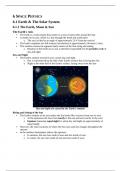
The Earth's rotation around its axis creates day and night
o Day is experienced by the half of the Earth's surface that is facing the Sun
o Night is the other half of the Earth's surface, facing away from the Sun
Day and night are caused by the Earth's rotation
Rising and Setting of the Sun
The Earth's rotation on its axis makes the Sun looks like it moves from east to west
o At the equinoxes the Sun rises exactly in the east and sets exactly in the west
o Equinox (meaning 'equal night') is when day and night are approximately of
equal length
However, the exact locations of where the Sun rises and sets changes throughout the
seasons
In the northern hemisphere (above the equator):
o In summer, the sun rises north of east and sets north of west
o In winter, the sun rises south of east and sets south of west
, The Sun rises in the east and sets in the west. Its approximate area changes throughout the
year
The Sun is highest above the horizon at noon (12 pm)
In the northern hemisphere, the daylight hours are longest up until roughly the 21st June
o This day is known as the Summer Solstice and is where the Sun is at its highest
point in the sky all year
The daylight hours then decrease to their lowest around 21st December
o This is known the Winter Solstice and is where the Sun is at its lowest point in
the sky all year
The Earth's Orbit
The Earth orbits the Sun once in approximately 365 days
o This is 1 year
The combination of the orbiting of the Earth around the Sun and the Earth's tilt creates the
seasons
Seasons in the Northern hemisphere caused by the tilt of the Earth
, Over parts B, C and D of the orbit, the northern hemisphere is tilted towards the Sun
o This means daylight hours are more than hours of darkness
o This is spring and summer
The southern hemisphere is tilted away from the Sun
o This means there are shorter days than night
o This is autumn and winter
Over parts F, G and H of the orbit, the northern hemisphere is tilted away from the Sun
o The situations in both the northern and southern hemisphere are reversed
o It is autumn and winter in the northern hemisphere, but at the same time it is
spring and summer in the southern hemisphere
At C:
o This is the summer solstice
o The northern hemisphere has the longest day, whilst the southern hemisphere has
its shortest day
At G:
o This is the winter solstice
o The northern hemisphere has its shortest day, whilst the southern hemisphere has
its longest day
At A and D:
o Night and day are equal in both hemispheres
o These are the equinoxes
Moon & Earth
The Moon is a satellite around the Earth
It travels around the Earth in roughly a circular orbit once a month
o This takes 27-28 days
The Moon revolves around its own axis in a month so always has the same side facing the
Earth
o We never see the hemisphere that is always facing away from Earth, although
astronauts have orbited the Moon and satellite have photographed it
The Moon shines with reflected light from the Sun, it does not produce its own light
Phases of the Moon
The way the Moon's appearance changes across a month, as seen from Earth, is called its
periodic cycle of phases
, Phases of the Moon as it orbits around Earth
In the image above, the inner circle shows that exactly half of the Moon is illuminated by
the Sun at all times
The outer circle shows how the Moon looks like from the Earth at its various positions
In the New Moon phase:
o The Moon is between the Earth and the Sun
o Therefore, the sunlight is only on the opposite face of the Moon to the Earth
o This means the Moon is unlit as seen from Earth, so it is not visible
At the Full Moon phase:
o The Earth is between the Moon and the Sun
o The side of the Moon that is facing the Earth is completely lit by the sunlight
o This means the Moon is fully lit as seen from Earth
In between, a crescent can be seen where the Moon is partially illuminated from sunlight
6.1.2 Calculating Orbital Speeds
Orbital Speed
When planets move around the Sun, or a moon moves around a planet, they orbit
in circular motion
o This means that in one orbit, a planet travels a distance equal to the circumference
of a circle (the shape of the orbit)
o This is equal to 2πr where r is the radius a circle
The relationship between speed, distance and time is:
distance
Speed=
time
the average orbital speed of an object can be defined by the equation:
2 πr
ν=
T
Where:
o v = orbital speed in metres per second (m/s)
o r = average radius of the orbit in metres (m)
o T = orbital period in seconds (s)
This orbital period (or time period) is defined as:
The time taken for an object to complete one orbit
6.1 Earth & The Solar System
6.1.1 The Earth, Moon & Sun
The Earth's Axis
The Earth is a rocky planet that rotates in a near circular orbit around the Sun
It rotates on its axis, which is a line through the north and south poles
o The axis is tilted at an angle of approximately 23.4° from the vertical
The Earth completes one full rotation (revolution) in approximately 24 hours (1 day)
This rotation creates the apparent daily motion of the Sun rising and setting
o Rotation of the Earth on its axis is therefore responsible for the periodic cycle of
day and night
Day and Night
The Earth's rotation around its axis creates day and night
o Day is experienced by the half of the Earth's surface that is facing the Sun
o Night is the other half of the Earth's surface, facing away from the Sun
Day and night are caused by the Earth's rotation
Rising and Setting of the Sun
The Earth's rotation on its axis makes the Sun looks like it moves from east to west
o At the equinoxes the Sun rises exactly in the east and sets exactly in the west
o Equinox (meaning 'equal night') is when day and night are approximately of
equal length
However, the exact locations of where the Sun rises and sets changes throughout the
seasons
In the northern hemisphere (above the equator):
o In summer, the sun rises north of east and sets north of west
o In winter, the sun rises south of east and sets south of west
, The Sun rises in the east and sets in the west. Its approximate area changes throughout the
year
The Sun is highest above the horizon at noon (12 pm)
In the northern hemisphere, the daylight hours are longest up until roughly the 21st June
o This day is known as the Summer Solstice and is where the Sun is at its highest
point in the sky all year
The daylight hours then decrease to their lowest around 21st December
o This is known the Winter Solstice and is where the Sun is at its lowest point in
the sky all year
The Earth's Orbit
The Earth orbits the Sun once in approximately 365 days
o This is 1 year
The combination of the orbiting of the Earth around the Sun and the Earth's tilt creates the
seasons
Seasons in the Northern hemisphere caused by the tilt of the Earth
, Over parts B, C and D of the orbit, the northern hemisphere is tilted towards the Sun
o This means daylight hours are more than hours of darkness
o This is spring and summer
The southern hemisphere is tilted away from the Sun
o This means there are shorter days than night
o This is autumn and winter
Over parts F, G and H of the orbit, the northern hemisphere is tilted away from the Sun
o The situations in both the northern and southern hemisphere are reversed
o It is autumn and winter in the northern hemisphere, but at the same time it is
spring and summer in the southern hemisphere
At C:
o This is the summer solstice
o The northern hemisphere has the longest day, whilst the southern hemisphere has
its shortest day
At G:
o This is the winter solstice
o The northern hemisphere has its shortest day, whilst the southern hemisphere has
its longest day
At A and D:
o Night and day are equal in both hemispheres
o These are the equinoxes
Moon & Earth
The Moon is a satellite around the Earth
It travels around the Earth in roughly a circular orbit once a month
o This takes 27-28 days
The Moon revolves around its own axis in a month so always has the same side facing the
Earth
o We never see the hemisphere that is always facing away from Earth, although
astronauts have orbited the Moon and satellite have photographed it
The Moon shines with reflected light from the Sun, it does not produce its own light
Phases of the Moon
The way the Moon's appearance changes across a month, as seen from Earth, is called its
periodic cycle of phases
, Phases of the Moon as it orbits around Earth
In the image above, the inner circle shows that exactly half of the Moon is illuminated by
the Sun at all times
The outer circle shows how the Moon looks like from the Earth at its various positions
In the New Moon phase:
o The Moon is between the Earth and the Sun
o Therefore, the sunlight is only on the opposite face of the Moon to the Earth
o This means the Moon is unlit as seen from Earth, so it is not visible
At the Full Moon phase:
o The Earth is between the Moon and the Sun
o The side of the Moon that is facing the Earth is completely lit by the sunlight
o This means the Moon is fully lit as seen from Earth
In between, a crescent can be seen where the Moon is partially illuminated from sunlight
6.1.2 Calculating Orbital Speeds
Orbital Speed
When planets move around the Sun, or a moon moves around a planet, they orbit
in circular motion
o This means that in one orbit, a planet travels a distance equal to the circumference
of a circle (the shape of the orbit)
o This is equal to 2πr where r is the radius a circle
The relationship between speed, distance and time is:
distance
Speed=
time
the average orbital speed of an object can be defined by the equation:
2 πr
ν=
T
Where:
o v = orbital speed in metres per second (m/s)
o r = average radius of the orbit in metres (m)
o T = orbital period in seconds (s)
This orbital period (or time period) is defined as:
The time taken for an object to complete one orbit