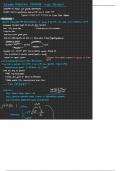
Embden-Meyerhof Pathway >
- aka Glycolysis
Oxidation of Acetyl CoA
provides intermediates
-
electron carriers
pass through Series of Vedox UXns to Create ATP
>
is major course of Acetyl from Glycolysis
-
pyruvate
a
CoA ecomes
* key concept a
generates energy (some ATP) through breakdown of Glucose to pyruvate and under certain Conditions , L Lactate
-
Carbohydrate Metabolism begins and ends with gloose metabolism
-
need 120g glucose/day ↳ center part of Carb metabolism
↳ fuels the brain
inner-tissue systems provide glucose
levels are tightly regulated and there is a narrow window in blood (hyper/hypoglycemia
Overviewinanimaa
-
Gluconeogenesis
glucose 7
lactate
7 glycolysis
Skycogenolysis
ancient through life
Glycolysis is an process that is extremely common
a can be
performed in anaerobic conditions/sometimes aembic
I
↳ tissue activate of it grows
oxygen can
suppress glycolysis malignant in
presence oxygen so
rapidly
* Full use of pathway ,
Nol of glucose that is fully converted
to two moles 2 mol of At and generate 4 mols of ATPA
of pyruvate will consume
theoretically oxysen present 32 ATP/Glucose and 2 absent
some cells
only glycolysis
·
use
↳ RBC >
-
no mitochondria
of retinae no mitochondria
↳ Cornea lens
, , part
↳
Kidney Medulla , testis , Leukocytes , White Muscle fibers
~ THE PATHWAY-
this
two mols of stage
3 main stages :
to un
sohe
have
trice
= YATP
Stage 1: Priming of Glucosee requires 2 ATP
-
of
Stage 2
Splitting
:
the intermediate - creates 2 molecules Glyceraldehyde-3-phosphate
Stage 3 : oxidoreduction -
phosphorylation e substrate level phosphorylation
Stage I Glucose CH2OH
Hexokinase
ADP
At oft &
, >
V
CH2OPOzz- one molecule of glucose
⑧
investment to be
Glucose-6-phosphate energy
phosphoglucose 4 & dit
recouped later
I somerase
2-
bit
POHz
O
,
O 2H > Ol
↑
Fructose
6-phosphate
H9dH
phosphofructokinase ATP oit
-ADP
203POHiC
CHzOPO"-
V O
↓
Stage 2 Fructose 1
6-Biphosphate
I
,
Dihydroxyacetoneriosephosphate L
3
Adler Cleavage of 6-carbon
Ha
Phosphate
0
=
to tu-3 Carbon
Glyceraldehyde 3-phosphate sugar sugars
H--
CHOH
-
-
o= 1
Glyceraldehyde Pi NADT
CH2OPOga-
-
,
3-phosphateale -
NADI 2
Oz
poro
Stage 3 1,
3-Biphosphoglycerate -I- oh
14
phosphoslycerate
(AD
00032-
,
ninale
o
D
!
H -
c - OH
3,
-phosphoglycerate
Hypo
phosphoglycerate
mutase
.... o
0
-
2 phosphoglycerate energy generation
2-
H-c-
, OPO
C40H
enolace f He
phosphoenopyruvate
op
ADP H -
pyruvate kinace CSATP
V
pyruvate =
citz
steps in depth
Step 1
priming glucose
:
Hexokinase -allosterically inhibited by its own
product
-requires ATP
makes a
phosphate -
ester which cannot cross cell membrane
-
irreversible under cellular conditions
Phosphoglucose Isomerate
yields Fructose-6-phosphate
·
Freely Reversible
·
not regulated
- aka Glycolysis
Oxidation of Acetyl CoA
provides intermediates
-
electron carriers
pass through Series of Vedox UXns to Create ATP
>
is major course of Acetyl from Glycolysis
-
pyruvate
a
CoA ecomes
* key concept a
generates energy (some ATP) through breakdown of Glucose to pyruvate and under certain Conditions , L Lactate
-
Carbohydrate Metabolism begins and ends with gloose metabolism
-
need 120g glucose/day ↳ center part of Carb metabolism
↳ fuels the brain
inner-tissue systems provide glucose
levels are tightly regulated and there is a narrow window in blood (hyper/hypoglycemia
Overviewinanimaa
-
Gluconeogenesis
glucose 7
lactate
7 glycolysis
Skycogenolysis
ancient through life
Glycolysis is an process that is extremely common
a can be
performed in anaerobic conditions/sometimes aembic
I
↳ tissue activate of it grows
oxygen can
suppress glycolysis malignant in
presence oxygen so
rapidly
* Full use of pathway ,
Nol of glucose that is fully converted
to two moles 2 mol of At and generate 4 mols of ATPA
of pyruvate will consume
theoretically oxysen present 32 ATP/Glucose and 2 absent
some cells
only glycolysis
·
use
↳ RBC >
-
no mitochondria
of retinae no mitochondria
↳ Cornea lens
, , part
↳
Kidney Medulla , testis , Leukocytes , White Muscle fibers
~ THE PATHWAY-
this
two mols of stage
3 main stages :
to un
sohe
have
trice
= YATP
Stage 1: Priming of Glucosee requires 2 ATP
-
of
Stage 2
Splitting
:
the intermediate - creates 2 molecules Glyceraldehyde-3-phosphate
Stage 3 : oxidoreduction -
phosphorylation e substrate level phosphorylation
Stage I Glucose CH2OH
Hexokinase
ADP
At oft &
, >
V
CH2OPOzz- one molecule of glucose
⑧
investment to be
Glucose-6-phosphate energy
phosphoglucose 4 & dit
recouped later
I somerase
2-
bit
POHz
O
,
O 2H > Ol
↑
Fructose
6-phosphate
H9dH
phosphofructokinase ATP oit
-ADP
203POHiC
CHzOPO"-
V O
↓
Stage 2 Fructose 1
6-Biphosphate
I
,
Dihydroxyacetoneriosephosphate L
3
Adler Cleavage of 6-carbon
Ha
Phosphate
0
=
to tu-3 Carbon
Glyceraldehyde 3-phosphate sugar sugars
H--
CHOH
-
-
o= 1
Glyceraldehyde Pi NADT
CH2OPOga-
-
,
3-phosphateale -
NADI 2
Oz
poro
Stage 3 1,
3-Biphosphoglycerate -I- oh
14
phosphoslycerate
(AD
00032-
,
ninale
o
D
!
H -
c - OH
3,
-phosphoglycerate
Hypo
phosphoglycerate
mutase
.... o
0
-
2 phosphoglycerate energy generation
2-
H-c-
, OPO
C40H
enolace f He
phosphoenopyruvate
op
ADP H -
pyruvate kinace CSATP
V
pyruvate =
citz
steps in depth
Step 1
priming glucose
:
Hexokinase -allosterically inhibited by its own
product
-requires ATP
makes a
phosphate -
ester which cannot cross cell membrane
-
irreversible under cellular conditions
Phosphoglucose Isomerate
yields Fructose-6-phosphate
·
Freely Reversible
·
not regulated