DLA 112
Chapter 1: AN OVERVIEW OF INFORMATION SYSTEMS
Why do companies use computers and information systems?
= Reduce cost
= Competitive advantage in the marketplace
How does a computer and information systems help an organization?
= Assist employees to complete tasks more efficiently
= Increases the productivity of employees
Computer literacy vs Information literacy:
Computer literacy
= Using computers to increase productivity
Information literacy:
= Understanding information to generate business intelligence
TRANSACTION PROCESSING SYSTEMS (TPS)
Definition:
= Focus on data collection and processing data
Applied to structured tasks:
= Record keeping
= Simple clerical operations
= Inventory control
,When is it used:
= When operations are repetitive
= Minimal human involvement
= Automated systems are in place
Benefits:
= Reduces costs
MANAGEMENT INFORMATION SYSTEMS (MIS)
Definition:
= MIS is an organized integration of items to produce timely + integrated + relevant
+ accurate and useful information for decision making
Elements of MIS:
= Hardware [Input + Output + Memory devices]
= Software [In-house development or purchase]
= Data
= Processes [Methods used to execute a task]
= Human intervention [User + programmers + system analysts]
4 Major Components of Information Systems
1. DATA
Definition:
= Considered the input to the system
= Consists of raw facts
, 2 sources of data:
= Internal data: Information obtained from WITHIN the organisation
- Sales records + Personnel records
= External data: Information obtained from OUTSIDE the organisation
- Customers + suppliers + government + economic conditions
[The information which users need impacts the type of data which is collected
and used]
2. DATABASE
Definition:
= Collection of all relevant data organised in a series of files
What is a database management system used for?
= Create + organise + management of a database
3. PROCESSING
Definition: Process generates the most useful type of information for making
decisions from the data
Information which can be generated:
= Transaction processing reports
= Models for decision analysis
A good information system has models which support all levels of decision-
making
An information system should be able to grow with the business
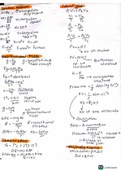
Chapter 1: AN OVERVIEW OF INFORMATION SYSTEMS
Why do companies use computers and information systems?
= Reduce cost
= Competitive advantage in the marketplace
How does a computer and information systems help an organization?
= Assist employees to complete tasks more efficiently
= Increases the productivity of employees
Computer literacy vs Information literacy:
Computer literacy
= Using computers to increase productivity
Information literacy:
= Understanding information to generate business intelligence
TRANSACTION PROCESSING SYSTEMS (TPS)
Definition:
= Focus on data collection and processing data
Applied to structured tasks:
= Record keeping
= Simple clerical operations
= Inventory control
,When is it used:
= When operations are repetitive
= Minimal human involvement
= Automated systems are in place
Benefits:
= Reduces costs
MANAGEMENT INFORMATION SYSTEMS (MIS)
Definition:
= MIS is an organized integration of items to produce timely + integrated + relevant
+ accurate and useful information for decision making
Elements of MIS:
= Hardware [Input + Output + Memory devices]
= Software [In-house development or purchase]
= Data
= Processes [Methods used to execute a task]
= Human intervention [User + programmers + system analysts]
4 Major Components of Information Systems
1. DATA
Definition:
= Considered the input to the system
= Consists of raw facts
, 2 sources of data:
= Internal data: Information obtained from WITHIN the organisation
- Sales records + Personnel records
= External data: Information obtained from OUTSIDE the organisation
- Customers + suppliers + government + economic conditions
[The information which users need impacts the type of data which is collected
and used]
2. DATABASE
Definition:
= Collection of all relevant data organised in a series of files
What is a database management system used for?
= Create + organise + management of a database
3. PROCESSING
Definition: Process generates the most useful type of information for making
decisions from the data
Information which can be generated:
= Transaction processing reports
= Models for decision analysis
A good information system has models which support all levels of decision-
making
An information system should be able to grow with the business