Democracy = rule by the demos = people
Five measures of democracy
1. Participation – before a decision is made all have a equal and effective
opportunity to make their opinions known to others about which choice
should be made
2. Voting equality – when a decision is to be made,all have a equal and
effective opportunity to vote and all votes must be of equal weight
3. Understanding – each person must have equal and effective
opportunities for learning about the relevant alternative choices and
their likely outcomes
4. Agenda setting – each person must have the opportunity to decide how
to set and what to place on the agenda so past decisions are always
open to be revisited
5. Universal – all adults should have the saem rights as citizens that are
necessary for 1,2,3 and 4
Key terminology: Do I know the definitions? Can I use them confidently in an appropriate way in an
essay?
Legitimacy – the right to rule. The issue of legitimacy raises two important questions. What makes the
powers exercised by a govt legitimate and why should citizens obey the laws of the state?
Direct democracy – participation of all citizens in making decisions (not just who rules), immediate
meaning that the people are the govt, it is regular and people engage with politics on a regular and
ongoing basis
Representative democracy – those who win elections can claim to ‘represent’ the people and the
legitimate right to govern. It is… indirect (people do not exercise power themselves), mediated (links
through institutions) and it is limited (only involvement in votes every few years)
Pluralist democracy – a system where there is more than one centre of power
Democratic deficit – a flaw in the democratic process whereby decisions are taken by people who lack
legitimacy
Participation crisis – the ides that there is a crisis in citizen involvement in the processes aimed at
influencing and shaping politics due to a lack of interest by a significant number of citizens. Creates a
serious issue for democracy as it undermined the legitimacy of elected institutions
Franchise/suffrage – the right to vote
Think tanks – body of experts giving advice and ideas in specific political or economic problems
Lobbyists – people who take part in an organised attempt to influence the legislature
Political participation – the involvement of citizens in politics through, for example, voting, membership
of a political party of they activities or pressure groups, in order to shape policy making
, Wider franchise and debates over suffrage
Key milestones
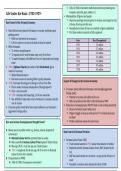
Great reform act 1832 – increase of people voting from 4% to 6%, addressed the issue of ‘rotten
boroughs’; constituencies where very few voters (sometimes single figures) returned MPs.
Representation of the People Act (Second Reform Act) 1867 – extends right to vote by around
x2, gave the vote to working-class men for the first time.
Ballot act 1872 – voted changed to secret ballot
Third reform act 1884 – extend to most working men (60% of men)
Representation of the people act 1918 – more men and certain women (following pressure from
the Suffragettes, and the success of working women during World War One, the right to vote
was granted to women over the age of 30 who met a property qualification, and all men over
the age of 21.)
Representation of the people act (equal franchise act) 1928 – extended votes to all adults over
21
Representation of the people act 1948 – principle of ‘one person, one vote’ established
Representation of the people act 1969 – voting age reduced from 21 to 18
Sottish elections (reduction of voting age) act 2016 – 16-17 years old are allowed to voted in
Scottish ref
The work of suffragists/suffragettes to extend the franchise
Female suffrage was achieved in 1918, and on an equal basis to men in
1928, following years of campaigning by figures such as Emmeline Pankhurst
to gain the right to vote.
It was thought that women did not need the right to vote as they were
naturally uninterested in politics (politics being a ‘public’ activity and women
being largely confined to the domestic sphere), and their husbands would
vote in their best interests anyway (the wife being seen as the ‘property’ of
the husband).
Women’s rights campaigners recognised that this was an injustice and put
forward arguments in favour of female suffrage based on equal rights.
Five measures of democracy
1. Participation – before a decision is made all have a equal and effective
opportunity to make their opinions known to others about which choice
should be made
2. Voting equality – when a decision is to be made,all have a equal and
effective opportunity to vote and all votes must be of equal weight
3. Understanding – each person must have equal and effective
opportunities for learning about the relevant alternative choices and
their likely outcomes
4. Agenda setting – each person must have the opportunity to decide how
to set and what to place on the agenda so past decisions are always
open to be revisited
5. Universal – all adults should have the saem rights as citizens that are
necessary for 1,2,3 and 4
Key terminology: Do I know the definitions? Can I use them confidently in an appropriate way in an
essay?
Legitimacy – the right to rule. The issue of legitimacy raises two important questions. What makes the
powers exercised by a govt legitimate and why should citizens obey the laws of the state?
Direct democracy – participation of all citizens in making decisions (not just who rules), immediate
meaning that the people are the govt, it is regular and people engage with politics on a regular and
ongoing basis
Representative democracy – those who win elections can claim to ‘represent’ the people and the
legitimate right to govern. It is… indirect (people do not exercise power themselves), mediated (links
through institutions) and it is limited (only involvement in votes every few years)
Pluralist democracy – a system where there is more than one centre of power
Democratic deficit – a flaw in the democratic process whereby decisions are taken by people who lack
legitimacy
Participation crisis – the ides that there is a crisis in citizen involvement in the processes aimed at
influencing and shaping politics due to a lack of interest by a significant number of citizens. Creates a
serious issue for democracy as it undermined the legitimacy of elected institutions
Franchise/suffrage – the right to vote
Think tanks – body of experts giving advice and ideas in specific political or economic problems
Lobbyists – people who take part in an organised attempt to influence the legislature
Political participation – the involvement of citizens in politics through, for example, voting, membership
of a political party of they activities or pressure groups, in order to shape policy making
, Wider franchise and debates over suffrage
Key milestones
Great reform act 1832 – increase of people voting from 4% to 6%, addressed the issue of ‘rotten
boroughs’; constituencies where very few voters (sometimes single figures) returned MPs.
Representation of the People Act (Second Reform Act) 1867 – extends right to vote by around
x2, gave the vote to working-class men for the first time.
Ballot act 1872 – voted changed to secret ballot
Third reform act 1884 – extend to most working men (60% of men)
Representation of the people act 1918 – more men and certain women (following pressure from
the Suffragettes, and the success of working women during World War One, the right to vote
was granted to women over the age of 30 who met a property qualification, and all men over
the age of 21.)
Representation of the people act (equal franchise act) 1928 – extended votes to all adults over
21
Representation of the people act 1948 – principle of ‘one person, one vote’ established
Representation of the people act 1969 – voting age reduced from 21 to 18
Sottish elections (reduction of voting age) act 2016 – 16-17 years old are allowed to voted in
Scottish ref
The work of suffragists/suffragettes to extend the franchise
Female suffrage was achieved in 1918, and on an equal basis to men in
1928, following years of campaigning by figures such as Emmeline Pankhurst
to gain the right to vote.
It was thought that women did not need the right to vote as they were
naturally uninterested in politics (politics being a ‘public’ activity and women
being largely confined to the domestic sphere), and their husbands would
vote in their best interests anyway (the wife being seen as the ‘property’ of
the husband).
Women’s rights campaigners recognised that this was an injustice and put
forward arguments in favour of female suffrage based on equal rights.