

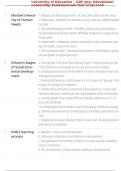
1. Maslow's Hierar- 1. Biological and Physiological needs - air, food, drink, shelter, warmth, sleep.
chy of Human 2. Safety needs - protection from elements, security, order, law, stability, freedom
Needs from fear.
3. Love and belongingness needs - friendship, intimacy, trust and acceptance,
receiving and giving a�ection and love. A liating, being part of a group (family,
friends, work).
4. Esteem needs - achievement, mastery, independence, status, dominance, pres-
tige, self-respect, respect from others.
5. Self-Actualization needs - realizing personal potential, self-ful llment, seeking
personal growth and peak experiences.
2. Erikson's Stages a. Learning Basic Trust Versus Basic Mistrust (Hope) • infancy through year two
of Social-Emo- of life; child learns trust through the care, love and nurture he receives
tional Develop- b. Learning Autonomy Versus Shame (Will) • 18 months until about 4 years old;
ment child expresses autonomy
c. Learning Initiative Versus Guilt (Purpose) • 3 ½ to 5 years old; "play age;" child
engages in creativity and imagination
d. Industry Versus Inferiority (Competence) • school aged (5 to 12 years old);
interaction with peers; understands rules and procedures; learns self-discipline
e. Learning Identity Versus Identity Di�usion (Fidelity) • adolescence (13 - 20
years old); self identity
f. Learning Intimacy Versus Isolation (Love) • long lasting friendships; marriage
g. Learning Generativity Versus Self-Absorption (Care) • Work, parenthood, mar-
riage
h. Integrity Versus Despair (Wisdom) • Able to look at one's life and be proud of
what one has accomplished
3. Kolb's learning a. Experience: having a concrete experience
process b. Observation: observation of and re ection on that experience
c. Conceptualization: the formation of abstract concepts (analysis) and general-
izations (conclusions)
d. Test: test hypothesis in future situations, resulting in new experiences
,4. Jean Pi- a. Sensorimotor - The idea that an object is still present, even if hidden.
aget's develop- b. Preoperational - Children are able to think about things symbolically and given
mental stages for a meaning to an object.
children c. Concrete Operational - Concrete Thinking is thinking about actual experiences
and tangible things.
d. Formal Operational - Abstract Thinking is thinking about ideas and concepts
apart from their concrete existence.
5. Vygotsky's learn- Based on the social experiences a person has; learning from others, a more
ing theories knowledgeable adult; and interaction with peers.
6. B.F. Skinner This theorist found that when you have a pleasant experience, such as receiving
(1904-1990) a compliment you internalize the experience as positive. This is known as operant
conditioning, or the theory of behaviorism. They used rewards and punishments
to control students, because they believed that by controlling the environment,
they would produce well‐educated students.
7. Sensorimotor In Piaget's theory, the stage (from birth to about 2 years of age) during which
Stage infants know the world mostly in terms of their sensory impressions and motor
activities
8. Preoperational In Piaget's theory, the stage (from about 2 to 6 or 7 years of age) during which a
Stage child learns to use language but does not yet comprehend the mental operations
of concrete logic
9. Concrete Opera- In Piaget's theory, the stage of cognitive development (from about 6 or 7 to 11
tional Stage years of age) during which children gain the mental operations that enable them
to think logically about concrete events
10. Formal Opera- In Piaget's theory, the stage of cognitive development (normally beginning about
tional Stage age 12) during which people begin to think logically about abstract concepts
11.
, Kohlberg's Theo- Stage 1: Obedience and punishment.
ry of Moral Devel- Stage 2: Self-interest.
opment Stage 3: Interpersonal accord and conformity.
Stage 4: Authority and maintaining social order.
Stage 5: Social contract.
Stage 6: Universal ethical principles.
12. Froebel This theorist developed the idea for kindergarten based on the belief that children
learned best through play. He is credited with creating the rst kindergarten.
13. Alfred Adler This theorist stressed the importance of nurturing feelings of belonging and
striving for superiority.
14. cognitive devel- development of a child's thinking and reasoning ability.
opment
15. Physical develop- development based on growth of the body
ment
16. Social develop- development based on the environment and relationships
ment
17. Emotional devel- development of feelings about oneself and other people. It is also about the
opment growth of con dence and independence.
18. Characteristics of 1. Infancy (0-1 year)
Di�erent Devel- 2. Early Childhood (1-3 years)
opmental Stages 3. Preschool (3-6 years)
4. School Age (6-12 years)
5. Adolescence and early adulthood - Social and emotional issues
1) Adolescence is a roller coaster of a time, and these di culties often manifest
themselves in various ways in the classroom.
2) Sexism, racism, and homophobia will often appear in many ways as the
chy of Human 2. Safety needs - protection from elements, security, order, law, stability, freedom
Needs from fear.
3. Love and belongingness needs - friendship, intimacy, trust and acceptance,
receiving and giving a�ection and love. A liating, being part of a group (family,
friends, work).
4. Esteem needs - achievement, mastery, independence, status, dominance, pres-
tige, self-respect, respect from others.
5. Self-Actualization needs - realizing personal potential, self-ful llment, seeking
personal growth and peak experiences.
2. Erikson's Stages a. Learning Basic Trust Versus Basic Mistrust (Hope) • infancy through year two
of Social-Emo- of life; child learns trust through the care, love and nurture he receives
tional Develop- b. Learning Autonomy Versus Shame (Will) • 18 months until about 4 years old;
ment child expresses autonomy
c. Learning Initiative Versus Guilt (Purpose) • 3 ½ to 5 years old; "play age;" child
engages in creativity and imagination
d. Industry Versus Inferiority (Competence) • school aged (5 to 12 years old);
interaction with peers; understands rules and procedures; learns self-discipline
e. Learning Identity Versus Identity Di�usion (Fidelity) • adolescence (13 - 20
years old); self identity
f. Learning Intimacy Versus Isolation (Love) • long lasting friendships; marriage
g. Learning Generativity Versus Self-Absorption (Care) • Work, parenthood, mar-
riage
h. Integrity Versus Despair (Wisdom) • Able to look at one's life and be proud of
what one has accomplished
3. Kolb's learning a. Experience: having a concrete experience
process b. Observation: observation of and re ection on that experience
c. Conceptualization: the formation of abstract concepts (analysis) and general-
izations (conclusions)
d. Test: test hypothesis in future situations, resulting in new experiences
,4. Jean Pi- a. Sensorimotor - The idea that an object is still present, even if hidden.
aget's develop- b. Preoperational - Children are able to think about things symbolically and given
mental stages for a meaning to an object.
children c. Concrete Operational - Concrete Thinking is thinking about actual experiences
and tangible things.
d. Formal Operational - Abstract Thinking is thinking about ideas and concepts
apart from their concrete existence.
5. Vygotsky's learn- Based on the social experiences a person has; learning from others, a more
ing theories knowledgeable adult; and interaction with peers.
6. B.F. Skinner This theorist found that when you have a pleasant experience, such as receiving
(1904-1990) a compliment you internalize the experience as positive. This is known as operant
conditioning, or the theory of behaviorism. They used rewards and punishments
to control students, because they believed that by controlling the environment,
they would produce well‐educated students.
7. Sensorimotor In Piaget's theory, the stage (from birth to about 2 years of age) during which
Stage infants know the world mostly in terms of their sensory impressions and motor
activities
8. Preoperational In Piaget's theory, the stage (from about 2 to 6 or 7 years of age) during which a
Stage child learns to use language but does not yet comprehend the mental operations
of concrete logic
9. Concrete Opera- In Piaget's theory, the stage of cognitive development (from about 6 or 7 to 11
tional Stage years of age) during which children gain the mental operations that enable them
to think logically about concrete events
10. Formal Opera- In Piaget's theory, the stage of cognitive development (normally beginning about
tional Stage age 12) during which people begin to think logically about abstract concepts
11.
, Kohlberg's Theo- Stage 1: Obedience and punishment.
ry of Moral Devel- Stage 2: Self-interest.
opment Stage 3: Interpersonal accord and conformity.
Stage 4: Authority and maintaining social order.
Stage 5: Social contract.
Stage 6: Universal ethical principles.
12. Froebel This theorist developed the idea for kindergarten based on the belief that children
learned best through play. He is credited with creating the rst kindergarten.
13. Alfred Adler This theorist stressed the importance of nurturing feelings of belonging and
striving for superiority.
14. cognitive devel- development of a child's thinking and reasoning ability.
opment
15. Physical develop- development based on growth of the body
ment
16. Social develop- development based on the environment and relationships
ment
17. Emotional devel- development of feelings about oneself and other people. It is also about the
opment growth of con dence and independence.
18. Characteristics of 1. Infancy (0-1 year)
Di�erent Devel- 2. Early Childhood (1-3 years)
opmental Stages 3. Preschool (3-6 years)
4. School Age (6-12 years)
5. Adolescence and early adulthood - Social and emotional issues
1) Adolescence is a roller coaster of a time, and these di culties often manifest
themselves in various ways in the classroom.
2) Sexism, racism, and homophobia will often appear in many ways as the


