Impact of Berlin Crisis:
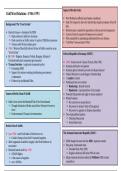
Cold War Relations : 1946-1991
West Berliners suffered near famine conditions
Only 2% tempted to leave for East Berlin, despite promises of food &
Background: The “Iron Curtain”
fuel
Berlin became a symbol of opposition to the spread of communism
Eastern Europe = dominated by USSR
At end of crisis 2 separate Germanys were created
Stalin refused to hold free elections
USA committed to maintaining substantial forces in Europe
Used countries as ‘buffer states’ to protect USSR from invasion
“Cold War” between East & West
Tension with Western Allies grew
1946 - Winston Churchill referred to line of buffer countries as an
“Iron Curtain” Federal Republic of Germany (WEST):
By 1948 - Bulgaria, Romania, Poland, Hungary, Albania &
Czechoslovakia had communist governments 1949 - formed out of 3 zones (French, USA & UK)
Truman Doctrine - tough anti-communist policy Germany still under occupation
Containing USSR Germans given extensive powers of self-government
Support for nations resisting totalitarian governments Federal Structure to avid danger of dictatorship
(communist) 11 Lander created
Followed up by Marshall Plan Parliament has two sections
Bundestag - directly elected
Bundesrat - representatives of the Lander
Causes of Berlin Crisis & Airlift: Powerful Chancellor with right to chose ministers
Weak President
Stalin’s fears about the Marshall Plan & the Deutschmark No control over armed forces
Thought blockade of Berlin would force Western Powers to No power to declare ‘State of Emergency’
leave No power to appoint or dismiss chancellors
Underestimated Truman’s determination Two main political parties:
Christian Democrats
Social Democrats
Berlin Crisis & Airlift:
June 1948 - road & rail links to Berlin were cut The German Democratic Republic (EAST):
Couldn’t bring in food, fuel & essential supplies
Allies organised an airlift to supply 2.4m West Berliners w/ USSR changed its zone into the GDR - separate country
necessities One party, communist state
Blockade lasted until May 1949 Socialist Unity Part (SED)
278,000 flights Regular elections; SED wins 99% of votes
2.3m tonnes of supplies All government decisions taken by Politburo (SED central
cost > $200m committee)
Cold War Relations : 1946-1991
West Berliners suffered near famine conditions
Only 2% tempted to leave for East Berlin, despite promises of food &
Background: The “Iron Curtain”
fuel
Berlin became a symbol of opposition to the spread of communism
Eastern Europe = dominated by USSR
At end of crisis 2 separate Germanys were created
Stalin refused to hold free elections
USA committed to maintaining substantial forces in Europe
Used countries as ‘buffer states’ to protect USSR from invasion
“Cold War” between East & West
Tension with Western Allies grew
1946 - Winston Churchill referred to line of buffer countries as an
“Iron Curtain” Federal Republic of Germany (WEST):
By 1948 - Bulgaria, Romania, Poland, Hungary, Albania &
Czechoslovakia had communist governments 1949 - formed out of 3 zones (French, USA & UK)
Truman Doctrine - tough anti-communist policy Germany still under occupation
Containing USSR Germans given extensive powers of self-government
Support for nations resisting totalitarian governments Federal Structure to avid danger of dictatorship
(communist) 11 Lander created
Followed up by Marshall Plan Parliament has two sections
Bundestag - directly elected
Bundesrat - representatives of the Lander
Causes of Berlin Crisis & Airlift: Powerful Chancellor with right to chose ministers
Weak President
Stalin’s fears about the Marshall Plan & the Deutschmark No control over armed forces
Thought blockade of Berlin would force Western Powers to No power to declare ‘State of Emergency’
leave No power to appoint or dismiss chancellors
Underestimated Truman’s determination Two main political parties:
Christian Democrats
Social Democrats
Berlin Crisis & Airlift:
June 1948 - road & rail links to Berlin were cut The German Democratic Republic (EAST):
Couldn’t bring in food, fuel & essential supplies
Allies organised an airlift to supply 2.4m West Berliners w/ USSR changed its zone into the GDR - separate country
necessities One party, communist state
Blockade lasted until May 1949 Socialist Unity Part (SED)
278,000 flights Regular elections; SED wins 99% of votes
2.3m tonnes of supplies All government decisions taken by Politburo (SED central
cost > $200m committee)