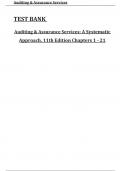
Auditing & Assurance Services
c c c
TEST BANK c c
Auditing & Assurance Services: A Systematic
c c c c c
c Approach, 11th Edition Chapters 1 - 21
c c c c c c c
,Auditing & Assurance Services c c c
Chapter 1: An Introduction to Assurance and Financial Statement Auditing
c c c c c c c c c
Chapter 2: The Financial Statement Auditing Environment
c c c c c c
Chapter 3: Audit Planning, Types of Audit Tests, and Materiality
c c c c c c c c c
Chapter 4: Risk Assessment
c c c
Chapter 5: Evidence and Documentation
c c c c
Chapter 6: Internal Control in a Financial Statement Audit
c c c c c c c c
Chapter 7: Auditing Internal Control over Financial Reporting
c c c c c c c
Chapter 8: Audit Sampling: An Overview and Application to Tests of Controls
c c c c c c c c c c c
Chapter 9: Audit Sampling: An Application to Substantive Tests of Account Balances
c c c c c c c c c c c
Chapter 10: Auditing the Revenue Process
c c c c c
Chapter 11: Auditing the Purchasing Process
c c c c c
Chapter 12: Auditing the Human Resource Management Process
c c c c c c c
Chapter 13: Auditing the Inventory Management Process
c c c c c c
Chapter 14: Auditing the Financing/Investing Process: Prepaid Expenses, Intangible Assets, and
c c c c c c c c c c
Property, Plant, and Equipment
c c c c
Chapter 15: Auditing the Financing/Investing Process: Long-Term Liabilities, Stockholders’
c c c c c c c c
Equity, and Income Statement Accounts
c c c c c
Chapter 16: Auditing the Financing/Investing Process: Cash and Investments
c c c c c c c c
Chapter 17: Completing the Audit Engagement
c c c c c
Chapter 18: Reports on Audited Financial Statements
c c c c c c
Chapter 19: Professional Conduct, Independence, and Quality Management
c c c c c c c
Chapter 20: Legal Liability
c c c
Chapter 21: Assurance, Attestation, and Internal Auditing Services
c c c c c c c
,Auditing & Assurance Services c c c
Chapter 01 c c
An Introduction to Assurance and Financial Statement Auditing
c c c c c c c
True / False Questions
c c c
1. Independence standards are required for audits of public companies, but not for auditsof
c c c c c c c c c c c c c
private companies.
c c
True False
2. Decision makers demand reliable information that is provided by accountants.
c c c c c c c c c
True False
3. Information asymmetry seldom occurs. c c c
True False
4. Conflicts of interest often occur between absentee owners and managers.
c c c c c c c c c
True False
5. Auditing services and attestation services are the same.
c c c c c c c
True False
6. Auditing is a type of attest service.
c c c c c c
True False
7. Testing all transactions that occurred during the period is cost prohibitive.
c c c c c c c c c c
True False
Multiple Choice Questions
c c
, Auditing & Assurance Services c c c
8. Why do auditors generally use a sampling approach to evidence gathering?
c c c c c c c c c c
A. Auditors are experts and do not need to look at much to know whether the c c c c c c c c c c c c c c
financialstatements are correct or not.
c c c c c c
B. Auditors must balance the cost of the audit with the need c c c c c c c c c c
forprecision.
c c
C. Auditors must limit their exposure to their auditee to c c c c c c c c
maintainindependence.
c c
D. The auditor's relationship with the auditee is generally adversarial, so the auditor willnot
c c c c c c c c c c c c c
have access to all of the financial information of the company.
c c c c c c c c c c c
9. Which of the following statements best describes a relationship between sample size
c c c c c c c c c c c
andother elements of auditing?
c c c c c
A. If materiality increases, so will
c c c c
thesample size.
c c c
B. If the desired level of assurance increases, sample sizes can
c c c c c c c c c
besmaller.
c c
C. If materiality decreases, sample size will need
c c c c c c
toincrease.
c c
D. There is no relationship between sample size and materiality or the desired levelof
c c c c c c c c c c c c c
assurance.
c
10. Which of the following statements about the study of auditing is NOT true?
c c c c c c c c c c c c
A. The study of auditing can be valuable to future accountants and business
c c c c c c c c c c c
decision makers whether or not they plan to become auditors.
c c c c c c c c c c
B. The study of auditing focuses on learning the analytical and logical skills necessary
c c c c c c c c c c c c
toevaluate the relevance and reliability of information.
c c c c c c c c
C. The study of auditing focuses on learning the rules, techniques, and
c c c c c c c c c c
computations required to analyze financial statements.
c c c c c c
D. The study of auditing begins with the understanding of a coherent logical framework and
c c c c c c c c c c c c c
techniques useful for gathering and analyzing evidence about others' assertions.
c c c c c c c c c c
11. The basic purpose of a financial statement audit is to
c c c c c c c c c
A. Detect c
fraud.
B. Examine individual transactions so that the auditor may certify as c c c c c c c c c
totheir validity.
c c c
C. Provide assurance regarding whether the auditee's financial statements
c c c c c c c
arefairly stated.
c c c
D. Assure the consistent application of correct c c c c c
accountingprocedures.
c c
c c c
TEST BANK c c
Auditing & Assurance Services: A Systematic
c c c c c
c Approach, 11th Edition Chapters 1 - 21
c c c c c c c
,Auditing & Assurance Services c c c
Chapter 1: An Introduction to Assurance and Financial Statement Auditing
c c c c c c c c c
Chapter 2: The Financial Statement Auditing Environment
c c c c c c
Chapter 3: Audit Planning, Types of Audit Tests, and Materiality
c c c c c c c c c
Chapter 4: Risk Assessment
c c c
Chapter 5: Evidence and Documentation
c c c c
Chapter 6: Internal Control in a Financial Statement Audit
c c c c c c c c
Chapter 7: Auditing Internal Control over Financial Reporting
c c c c c c c
Chapter 8: Audit Sampling: An Overview and Application to Tests of Controls
c c c c c c c c c c c
Chapter 9: Audit Sampling: An Application to Substantive Tests of Account Balances
c c c c c c c c c c c
Chapter 10: Auditing the Revenue Process
c c c c c
Chapter 11: Auditing the Purchasing Process
c c c c c
Chapter 12: Auditing the Human Resource Management Process
c c c c c c c
Chapter 13: Auditing the Inventory Management Process
c c c c c c
Chapter 14: Auditing the Financing/Investing Process: Prepaid Expenses, Intangible Assets, and
c c c c c c c c c c
Property, Plant, and Equipment
c c c c
Chapter 15: Auditing the Financing/Investing Process: Long-Term Liabilities, Stockholders’
c c c c c c c c
Equity, and Income Statement Accounts
c c c c c
Chapter 16: Auditing the Financing/Investing Process: Cash and Investments
c c c c c c c c
Chapter 17: Completing the Audit Engagement
c c c c c
Chapter 18: Reports on Audited Financial Statements
c c c c c c
Chapter 19: Professional Conduct, Independence, and Quality Management
c c c c c c c
Chapter 20: Legal Liability
c c c
Chapter 21: Assurance, Attestation, and Internal Auditing Services
c c c c c c c
,Auditing & Assurance Services c c c
Chapter 01 c c
An Introduction to Assurance and Financial Statement Auditing
c c c c c c c
True / False Questions
c c c
1. Independence standards are required for audits of public companies, but not for auditsof
c c c c c c c c c c c c c
private companies.
c c
True False
2. Decision makers demand reliable information that is provided by accountants.
c c c c c c c c c
True False
3. Information asymmetry seldom occurs. c c c
True False
4. Conflicts of interest often occur between absentee owners and managers.
c c c c c c c c c
True False
5. Auditing services and attestation services are the same.
c c c c c c c
True False
6. Auditing is a type of attest service.
c c c c c c
True False
7. Testing all transactions that occurred during the period is cost prohibitive.
c c c c c c c c c c
True False
Multiple Choice Questions
c c
, Auditing & Assurance Services c c c
8. Why do auditors generally use a sampling approach to evidence gathering?
c c c c c c c c c c
A. Auditors are experts and do not need to look at much to know whether the c c c c c c c c c c c c c c
financialstatements are correct or not.
c c c c c c
B. Auditors must balance the cost of the audit with the need c c c c c c c c c c
forprecision.
c c
C. Auditors must limit their exposure to their auditee to c c c c c c c c
maintainindependence.
c c
D. The auditor's relationship with the auditee is generally adversarial, so the auditor willnot
c c c c c c c c c c c c c
have access to all of the financial information of the company.
c c c c c c c c c c c
9. Which of the following statements best describes a relationship between sample size
c c c c c c c c c c c
andother elements of auditing?
c c c c c
A. If materiality increases, so will
c c c c
thesample size.
c c c
B. If the desired level of assurance increases, sample sizes can
c c c c c c c c c
besmaller.
c c
C. If materiality decreases, sample size will need
c c c c c c
toincrease.
c c
D. There is no relationship between sample size and materiality or the desired levelof
c c c c c c c c c c c c c
assurance.
c
10. Which of the following statements about the study of auditing is NOT true?
c c c c c c c c c c c c
A. The study of auditing can be valuable to future accountants and business
c c c c c c c c c c c
decision makers whether or not they plan to become auditors.
c c c c c c c c c c
B. The study of auditing focuses on learning the analytical and logical skills necessary
c c c c c c c c c c c c
toevaluate the relevance and reliability of information.
c c c c c c c c
C. The study of auditing focuses on learning the rules, techniques, and
c c c c c c c c c c
computations required to analyze financial statements.
c c c c c c
D. The study of auditing begins with the understanding of a coherent logical framework and
c c c c c c c c c c c c c
techniques useful for gathering and analyzing evidence about others' assertions.
c c c c c c c c c c
11. The basic purpose of a financial statement audit is to
c c c c c c c c c
A. Detect c
fraud.
B. Examine individual transactions so that the auditor may certify as c c c c c c c c c
totheir validity.
c c c
C. Provide assurance regarding whether the auditee's financial statements
c c c c c c c
arefairly stated.
c c c
D. Assure the consistent application of correct c c c c c
accountingprocedures.
c c