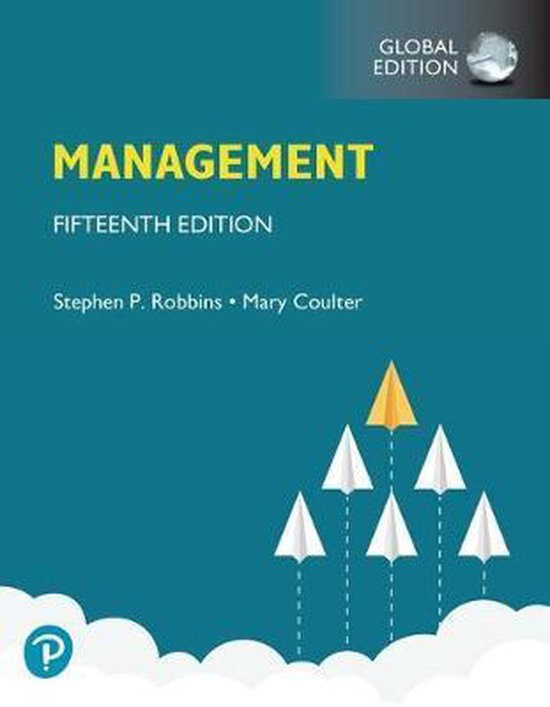
Test Bank For Management Global
15th Edition By Stephen P. Robbins
Chapters 1 - 18, Complete
,Contents
1. Managers and You in the Workplace
2. Making Decisions
3. Influence of the External Environment and the Organization’s Culture
4. Managing in a Global Environment
5. Managing Diversity
6. Managing Social Responsibility and Ethics
7. Managing Change and Disruptive Innovation
8. Foundations of Planning
9. Managing Strategy
10. Entrepreneurial Ventures
11. Designing Organizational Structure
12. Managing Human Resources
13. Managing Groups and Teams
14. Managing Communication
15. Understanding and Managing Individual Behavior
16. Motivating Employees
17. Being an Effective Leader
18. Controlling People and Operations
,Chapter 1 Managers and You in the Workplace
1) Time should be considered a(n) resource.
A) abundant
B) diminishing
C) limited
D) renewable
ANSWER: C
Diff: 2
AACSB: Analytical thinking
Learning Obj: LO 1.1: Tell who managers are and where they work; Know how to manage your
time
Classification: Concept
2) One method to become more efficient in managing your time is to .
A) classify each activity or task as A, B, or C
B) schedule more in one day than you can reasonably expect to finish
C) enlist the aid of a management coach to keep you on task
D) shorten deadlines so you will be pressed to complete tasks early
ANSWER: A
Diff: 2
AACSB: Application of knowledge
Learning Obj: LO 1.1: Tell who managers are and where they work; Know how to manage your
time
Classification: Concept
3) Technology makes it easier to stay connected but .
A) there is always the risk of security breaches and the theft of information necessary for good
time management practices
B) it raises expectations on the part of those to whom we are connected
C) technology fails, batteries lose power, and their effectiveness wanes
D) it also presents constant distractions, making it difficult to stay on task
ANSWER: D
Diff: 2
AACSB: Reflective thinking
Learning Obj: LO 1.1: Tell who managers are and where they work; Know how to manage your
time
Classification: Critical thinking
, 4) In ztoday's zworkplace, .
A) women zare zmore zlikely zthan zmen zto zbe zpromoted zinto zmanagement
B) many zemployees zperform zwork zthat zin zthe zpast zwas zconsidered zmanagerial zactivities
C) women ztend zto zbe zmore zeffective zsupervisors zthan zmen
D) most zorganizations zhave zeliminated zthe ztitle zof
zmanager z ANSWER: z B
Diff: z2
AACSB: z Reflective zthinking
Learning zObj: z LO z1.1: zTell zwho zmanagers zare zand zwhere zthey zwork; zKnow zhow zto zmanage
z your z time
Classification: z Concept
5) Because zthis zis zher zfirst zjob, zMelanie zwas zunclear zabout zwhat zmanagers zactually
zdo. z Fortunately zher ztraining zmaterials zexplained zthat z a zmanager's zjob zfocuses zon .
A) performing zclerical zduties
B) personal zachievement
C) helping zothers zaccomplish ztheir zwork zgoals
D) supervising zgroups zrather zthan zindividual
zemployees z ANSWER: z C
Diff: z2
AACSB: z Analytical zthinking; zApplication zof zknowledge
Learning zObj: z LO z1.1: zTell zwho zmanagers zare zand zwhere zthey zwork; zKnow zhow zto zmanage
z your z time
Classification: z Application
6) An zindividual zwho zworks zwith zand zthrough zother zpeople zby zcoordinating ztheir zwork
zactivities z in zorder zto zaccomplish zorganizational zgoals zis .
A) an zassembly zline zworker
B) a zlaborer
C) a zmanager
D) a
zsalesperson
z ANSWER: z z zC
zDiff: z1
AACSB: z Reflective zthinking
Learning zObj: z LO z1.1: zTell zwho zmanagers zare zand zwhere zthey zwork; zKnow zhow zto zmanage
z your z time
Classification: z Concept
15th Edition By Stephen P. Robbins
Chapters 1 - 18, Complete
,Contents
1. Managers and You in the Workplace
2. Making Decisions
3. Influence of the External Environment and the Organization’s Culture
4. Managing in a Global Environment
5. Managing Diversity
6. Managing Social Responsibility and Ethics
7. Managing Change and Disruptive Innovation
8. Foundations of Planning
9. Managing Strategy
10. Entrepreneurial Ventures
11. Designing Organizational Structure
12. Managing Human Resources
13. Managing Groups and Teams
14. Managing Communication
15. Understanding and Managing Individual Behavior
16. Motivating Employees
17. Being an Effective Leader
18. Controlling People and Operations
,Chapter 1 Managers and You in the Workplace
1) Time should be considered a(n) resource.
A) abundant
B) diminishing
C) limited
D) renewable
ANSWER: C
Diff: 2
AACSB: Analytical thinking
Learning Obj: LO 1.1: Tell who managers are and where they work; Know how to manage your
time
Classification: Concept
2) One method to become more efficient in managing your time is to .
A) classify each activity or task as A, B, or C
B) schedule more in one day than you can reasonably expect to finish
C) enlist the aid of a management coach to keep you on task
D) shorten deadlines so you will be pressed to complete tasks early
ANSWER: A
Diff: 2
AACSB: Application of knowledge
Learning Obj: LO 1.1: Tell who managers are and where they work; Know how to manage your
time
Classification: Concept
3) Technology makes it easier to stay connected but .
A) there is always the risk of security breaches and the theft of information necessary for good
time management practices
B) it raises expectations on the part of those to whom we are connected
C) technology fails, batteries lose power, and their effectiveness wanes
D) it also presents constant distractions, making it difficult to stay on task
ANSWER: D
Diff: 2
AACSB: Reflective thinking
Learning Obj: LO 1.1: Tell who managers are and where they work; Know how to manage your
time
Classification: Critical thinking
, 4) In ztoday's zworkplace, .
A) women zare zmore zlikely zthan zmen zto zbe zpromoted zinto zmanagement
B) many zemployees zperform zwork zthat zin zthe zpast zwas zconsidered zmanagerial zactivities
C) women ztend zto zbe zmore zeffective zsupervisors zthan zmen
D) most zorganizations zhave zeliminated zthe ztitle zof
zmanager z ANSWER: z B
Diff: z2
AACSB: z Reflective zthinking
Learning zObj: z LO z1.1: zTell zwho zmanagers zare zand zwhere zthey zwork; zKnow zhow zto zmanage
z your z time
Classification: z Concept
5) Because zthis zis zher zfirst zjob, zMelanie zwas zunclear zabout zwhat zmanagers zactually
zdo. z Fortunately zher ztraining zmaterials zexplained zthat z a zmanager's zjob zfocuses zon .
A) performing zclerical zduties
B) personal zachievement
C) helping zothers zaccomplish ztheir zwork zgoals
D) supervising zgroups zrather zthan zindividual
zemployees z ANSWER: z C
Diff: z2
AACSB: z Analytical zthinking; zApplication zof zknowledge
Learning zObj: z LO z1.1: zTell zwho zmanagers zare zand zwhere zthey zwork; zKnow zhow zto zmanage
z your z time
Classification: z Application
6) An zindividual zwho zworks zwith zand zthrough zother zpeople zby zcoordinating ztheir zwork
zactivities z in zorder zto zaccomplish zorganizational zgoals zis .
A) an zassembly zline zworker
B) a zlaborer
C) a zmanager
D) a
zsalesperson
z ANSWER: z z zC
zDiff: z1
AACSB: z Reflective zthinking
Learning zObj: z LO z1.1: zTell zwho zmanagers zare zand zwhere zthey zwork; zKnow zhow zto zmanage
z your z time
Classification: z Concept