NCTRC MULTIPLE CHOICE EXAM
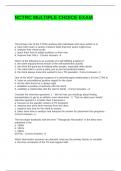
The primary role of the CTRSs working with individuals who have autism is to
a. have them learn a variety of leisure skills that their peers might know
b. improve their visual acuity
c. teach them how to adapt activities on their own
d. improve their ADLs - Correct Answers -A
Which of the following is an example of a self-fulfilling prophecy?
a. the client enjoyed every minute of the self-awareness activity
b. the client felt great joy at helping other people, especially older adults
c. The client fails to score a point, just as he had predicted earlier
d. the client always knew she wanted to be a TR specialist - Correct Answers -C
One of the MOST important aspects of a client/therapist relationship is for the CTRS to
A. have an unconditional positive regard for the client
b. let the client know he is always right
c. establish a position of authority with the client
d. establish a relationship with the client's family - Correct Answers –A
Consider the interview questions. 1 " tell me how you would go about finding
transportation to get to an athletic event downtown." 2. "Tell me about your family"
Interview question 1 is better than 2 because it
a. focuses on the specific content of TR programs
b. requires less short-term memory from the client
c. requires less time for the client to answer
d. takes more time to analyze and interpret the answer for placement into programs -
Correct Answers -a
The first major textbooks with the term "Therapeutic Recreation" in the titles were
published in the
a. 1890s
b. 1910s
c. 1940s
d1970s - Correct Answers -d
When intervention sessions are planned, what are the primary factors to consider
a. the time constraints of the TR and support staff
, b. the number of clients served on the unit and space available
c. the case load and grand founds of the physician on staff
d. the patient's needs and nature of the program - Correct Answers -d
The CTRS wants to start a garden group that clients can independently attend and
organize. The best group format would be
a. instructional class
b. clubs and special interest groups
c. drop-in center
d. out-trips - Correct Answers -b
Which of the following organizations allows for chapter affiliation by local groups of TR
specialists?
a. National Therapeutic Recreation Society (NTRS)
b. ATRA
c. Recreation Therapy Section (RTS)
d. NCTRC - Correct Answers -b
Which of the following is an example of extinction that is meant to reduce a specific
behavior?
a. taking a client to the zoo when they are afraid of animals
b. taking away a toy when the client misbehaves
c. talking to the client about antecedents, behaviors, and consequences
d. applying the principle of negative reinforcement - Correct Answers -b
The CTRS was offered free tickets for patients to attend a special performance of a play
during the afternoon, but instead chose to have the patients pay and attend a night
performance. The CTRS was demonstrating which of the following mainstreaming
principles?
a. integration
b. normalization
c. least restrictive environment
d. deinstitutionalization - Correct Answers -B
The CTRS is working with a group of chemically dependent teenagers. The goal of the
program is "To gain an understanding of the importance of leisure." The CTRS decides
to use an activity called "Twenty things I love to Do." This is an example of
a. reality therapy
b. assertiveness
c. values clarification
d. bibliotherapy - Correct Answers -c
A person who had a brain injury and now has problems speaking is considered to have
a. autism
b. an aneurysm
c. aphasia
The primary role of the CTRSs working with individuals who have autism is to
a. have them learn a variety of leisure skills that their peers might know
b. improve their visual acuity
c. teach them how to adapt activities on their own
d. improve their ADLs - Correct Answers -A
Which of the following is an example of a self-fulfilling prophecy?
a. the client enjoyed every minute of the self-awareness activity
b. the client felt great joy at helping other people, especially older adults
c. The client fails to score a point, just as he had predicted earlier
d. the client always knew she wanted to be a TR specialist - Correct Answers -C
One of the MOST important aspects of a client/therapist relationship is for the CTRS to
A. have an unconditional positive regard for the client
b. let the client know he is always right
c. establish a position of authority with the client
d. establish a relationship with the client's family - Correct Answers –A
Consider the interview questions. 1 " tell me how you would go about finding
transportation to get to an athletic event downtown." 2. "Tell me about your family"
Interview question 1 is better than 2 because it
a. focuses on the specific content of TR programs
b. requires less short-term memory from the client
c. requires less time for the client to answer
d. takes more time to analyze and interpret the answer for placement into programs -
Correct Answers -a
The first major textbooks with the term "Therapeutic Recreation" in the titles were
published in the
a. 1890s
b. 1910s
c. 1940s
d1970s - Correct Answers -d
When intervention sessions are planned, what are the primary factors to consider
a. the time constraints of the TR and support staff
, b. the number of clients served on the unit and space available
c. the case load and grand founds of the physician on staff
d. the patient's needs and nature of the program - Correct Answers -d
The CTRS wants to start a garden group that clients can independently attend and
organize. The best group format would be
a. instructional class
b. clubs and special interest groups
c. drop-in center
d. out-trips - Correct Answers -b
Which of the following organizations allows for chapter affiliation by local groups of TR
specialists?
a. National Therapeutic Recreation Society (NTRS)
b. ATRA
c. Recreation Therapy Section (RTS)
d. NCTRC - Correct Answers -b
Which of the following is an example of extinction that is meant to reduce a specific
behavior?
a. taking a client to the zoo when they are afraid of animals
b. taking away a toy when the client misbehaves
c. talking to the client about antecedents, behaviors, and consequences
d. applying the principle of negative reinforcement - Correct Answers -b
The CTRS was offered free tickets for patients to attend a special performance of a play
during the afternoon, but instead chose to have the patients pay and attend a night
performance. The CTRS was demonstrating which of the following mainstreaming
principles?
a. integration
b. normalization
c. least restrictive environment
d. deinstitutionalization - Correct Answers -B
The CTRS is working with a group of chemically dependent teenagers. The goal of the
program is "To gain an understanding of the importance of leisure." The CTRS decides
to use an activity called "Twenty things I love to Do." This is an example of
a. reality therapy
b. assertiveness
c. values clarification
d. bibliotherapy - Correct Answers -c
A person who had a brain injury and now has problems speaking is considered to have
a. autism
b. an aneurysm
c. aphasia