ALTA certification exam
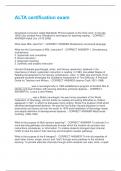
Developed curriculum called Alphabetic Phonics based on the OG's work. In the late
1950's she studied Anna Gillingham's techniques for teaching reading. - CORRECT
ANSWER-Aylett Cox (1915-2006)
What does MSL stand for? - CORRECT ANSWER-Multisensory structured language
What are the 5 principals of MSL instruction? - CORRECT ANSWER-1. Simultaneous,
multisensory
2. Systematic and cumulative
3. Direct instruction
4. Diagnostic teaching
5. Synthetic and analytic instruction
Harvard Graduate psychologist, writer, and literacy researcher, believed in the
importance of direct, systematic instruction in reading. In 1983, she added Stages of
Reading Development to her literacy contributions. Later, in 1996, she and three of her
graduate students developed the Qualitative Assessment of Text Difficulty: A Practical
Guide for Teachers and Writers. - CORRECT ANSWER-Jeanne Chall (1921-1999)
____________ was a neurologist who in 1965 established a program at Scottish Rite to
identify and treat children with learning disorders, primarily dyslexia. - CORRECT
ANSWER-Dr. Lucius (Luke) Waites
_____________ was a British neurologist. He was former president of the World
Federation of Neurology. His first article on reading and writing difficulties in children
appeared in 1927, in which he discusses mirror-writing. Wrote The Dyslexic Child which
identified developmental dyslexia. He was the first Queen Square physician to travel
extensively and lecture all over the world. In 1978 world federation of Neurology meets
and adopts definition of developmental dyslexia. - CORRECT ANSWER-MacDonald
Critchley (1900-1997)
What is the purpose of Multi-sensory teaching? - CORRECT ANSWER-To activate 2 or
more learning pathways simultaneously through which the student can process new
instructions, procedures, or information. To enable students strongest input channel
(VAK) to take the lead in their learning and strengthen weaker pathways.
What is the purpose of the 8 linkages? - CORRECT ANSWER-To link all properties of
each letter (name, shape, sound, and "feel") through every pathway to the students
learning. To provide alternate channels through which students can read, write, or spell.
, What are a letters properties? - CORRECT ANSWER-Name, shape, sound and "feel".
The letters name is the most stable property.
It's sometimes called the Anglo-Saxon language. But usually it's
called_______________. - CORRECT ANSWER-Old English
_____________ has always been the official language of the Catholic Church. -
CORRECT ANSWER-Latin
___________ was once the center of learning for the whole world. But after being
weakened by many wars was finally conquered by Rome. - CORRECT ANSWER-
Greece
_______________ __________ is the name scholars have given to the English
language from 1500 to today. - CORRECT ANSWER-Modern English
Scholars call the period between 1066, when the Normans conquered England, and
1500, when a large number of Latin and Greek words became a part of the English
language, the __________ __________. - CORRECT ANSWER-Middle period
Neuropsychiatrist who coined the word "strephosymbolia" to replace the term "word
blindness". He was an American physician who pioneered the study of learning
disabilities. He examined the causes and treatment of dyslexia. - CORRECT ANSWER-
Samual T. Orton (1879-1948)
Developed the educational remediation side of the Orton-Gillingham approach. She was
an educator and psychologist. Trained Sally Child's. Studied with Aylett Cox. -
CORRECT ANSWER-Anna Gillingham (1878-1963)
Therapist and teacher at Hockaday school in Dallas. Trained under Gillingham. She
was a language training specialist, with an emphasis on furthering the research on
dyslexia and educating dyslexic students. She along with several colleagues, opened
an organization to help create dyslexia awareness called The Orton Society (later
renamed International Dyslexia Association), in 1949. - CORRECT ANSWER-Sally
Childs (1905-1988)
___________ is a research scientist, professor, classroom teacher, special education
teacher, neuropsychologist, school psychologist, and leader in the development of
evidence-based education policy at federal and state levels. Worked closely with the
White House, the U.S. Department of Education, and Congress on the development of
evidence-based education policy. From 2001 until 2005, he served as an advisor on
education research and policies to President George W. Bush - CORRECT ANSWER-
Dr. Reid Lyons
Developed curriculum called Alphabetic Phonics based on the OG's work. In the late
1950's she studied Anna Gillingham's techniques for teaching reading. - CORRECT
ANSWER-Aylett Cox (1915-2006)
What does MSL stand for? - CORRECT ANSWER-Multisensory structured language
What are the 5 principals of MSL instruction? - CORRECT ANSWER-1. Simultaneous,
multisensory
2. Systematic and cumulative
3. Direct instruction
4. Diagnostic teaching
5. Synthetic and analytic instruction
Harvard Graduate psychologist, writer, and literacy researcher, believed in the
importance of direct, systematic instruction in reading. In 1983, she added Stages of
Reading Development to her literacy contributions. Later, in 1996, she and three of her
graduate students developed the Qualitative Assessment of Text Difficulty: A Practical
Guide for Teachers and Writers. - CORRECT ANSWER-Jeanne Chall (1921-1999)
____________ was a neurologist who in 1965 established a program at Scottish Rite to
identify and treat children with learning disorders, primarily dyslexia. - CORRECT
ANSWER-Dr. Lucius (Luke) Waites
_____________ was a British neurologist. He was former president of the World
Federation of Neurology. His first article on reading and writing difficulties in children
appeared in 1927, in which he discusses mirror-writing. Wrote The Dyslexic Child which
identified developmental dyslexia. He was the first Queen Square physician to travel
extensively and lecture all over the world. In 1978 world federation of Neurology meets
and adopts definition of developmental dyslexia. - CORRECT ANSWER-MacDonald
Critchley (1900-1997)
What is the purpose of Multi-sensory teaching? - CORRECT ANSWER-To activate 2 or
more learning pathways simultaneously through which the student can process new
instructions, procedures, or information. To enable students strongest input channel
(VAK) to take the lead in their learning and strengthen weaker pathways.
What is the purpose of the 8 linkages? - CORRECT ANSWER-To link all properties of
each letter (name, shape, sound, and "feel") through every pathway to the students
learning. To provide alternate channels through which students can read, write, or spell.
, What are a letters properties? - CORRECT ANSWER-Name, shape, sound and "feel".
The letters name is the most stable property.
It's sometimes called the Anglo-Saxon language. But usually it's
called_______________. - CORRECT ANSWER-Old English
_____________ has always been the official language of the Catholic Church. -
CORRECT ANSWER-Latin
___________ was once the center of learning for the whole world. But after being
weakened by many wars was finally conquered by Rome. - CORRECT ANSWER-
Greece
_______________ __________ is the name scholars have given to the English
language from 1500 to today. - CORRECT ANSWER-Modern English
Scholars call the period between 1066, when the Normans conquered England, and
1500, when a large number of Latin and Greek words became a part of the English
language, the __________ __________. - CORRECT ANSWER-Middle period
Neuropsychiatrist who coined the word "strephosymbolia" to replace the term "word
blindness". He was an American physician who pioneered the study of learning
disabilities. He examined the causes and treatment of dyslexia. - CORRECT ANSWER-
Samual T. Orton (1879-1948)
Developed the educational remediation side of the Orton-Gillingham approach. She was
an educator and psychologist. Trained Sally Child's. Studied with Aylett Cox. -
CORRECT ANSWER-Anna Gillingham (1878-1963)
Therapist and teacher at Hockaday school in Dallas. Trained under Gillingham. She
was a language training specialist, with an emphasis on furthering the research on
dyslexia and educating dyslexic students. She along with several colleagues, opened
an organization to help create dyslexia awareness called The Orton Society (later
renamed International Dyslexia Association), in 1949. - CORRECT ANSWER-Sally
Childs (1905-1988)
___________ is a research scientist, professor, classroom teacher, special education
teacher, neuropsychologist, school psychologist, and leader in the development of
evidence-based education policy at federal and state levels. Worked closely with the
White House, the U.S. Department of Education, and Congress on the development of
evidence-based education policy. From 2001 until 2005, he served as an advisor on
education research and policies to President George W. Bush - CORRECT ANSWER-
Dr. Reid Lyons