SUPER REALISM (1968 - )
SECTION 6 • It is an impersonal and precise
SUPER REALISM style of painting and sculpture that
drew attention to the effect of
WHEN: 1968 – photography on the perception.
WHERE: America and Europe • The artists made large scale
paintings directly from
WHO: Chuck Close, Ralph Goings, Audrey photographs which they often
Flack, Malcolm Morley and Duane Hanson projected onto canvas allowing
images to be replicated with
precision and accuracy.
• The exactness was often aided
further using an airbrush, which
was originally designed to retouch
photographs.
• Super Realism developed from
Pop Art in terms of the choice in
subject matter: ordinary,
mundane objects, places & people
from American urban daily life.
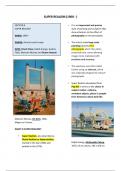
Malcolm Morley, On Deck, 1966.
Magna on Canvas.
WHAT IS SUPER REALISM?
• Super Realism, also described as
Photo Realism or Hyperrealism,
started in the late 1960s and Ralph Goings, McDonalds Pickup,
peaked in the 1970s. 1970, oil on canvas, 104 x 104 cm
, • The paintings showed a cold - it is at the same time one-stage
objectivity and lacked emotion, an away from reality
attitude associated with - by its dependence on the
Minimalism. reproduced image.
• As with Pop Art, Super Realism was
popular with the uninformed These works therefore question
public who easily understood and o traditional artistic methods
interpreted the exact replication o as well as the differences
of photographs. between reality and artificiality.
• Super Realism also hinted at the
fascination of the public with
images in the media, especially
films and advertisements.
THE ROLE OF PHOTOGRAPHY IN SUPER
REALISM
Since the start of photography in the
early 19th-century, artists have used
Ralph Goings, Paul’s Corner Cushion,
the camera as a tool in picture making.
1970, oil on canvas.
However, artists would never reveal in
paint their dependency on photographs
SUBJECT MATTER
as to do so was seen as "cheating".
• Ordinary, mundane objects,
In contrast, Photorealists / Super places & people from American
Realists acknowledged the modern urban daily life were captured in
world's mass production and rapid photographs that were then
growth of photographs, and they did replicated as closely and
not deny their dependence on realisXcally as possible.
photographs.
• They worked with the concepts of
In fact, several artists attempted to reality and arVficially as they
imitate the affects of photography, replicated an image that was
such as blurriness because they liked already replicated from real life as
the aesthetic and look. a photograph. The result of
Therefore, while the Super Realism copying a photograph as a painXng
artwork is realistic, /sculpture was an important part
of the subject maYer.
SECTION 6 • It is an impersonal and precise
SUPER REALISM style of painting and sculpture that
drew attention to the effect of
WHEN: 1968 – photography on the perception.
WHERE: America and Europe • The artists made large scale
paintings directly from
WHO: Chuck Close, Ralph Goings, Audrey photographs which they often
Flack, Malcolm Morley and Duane Hanson projected onto canvas allowing
images to be replicated with
precision and accuracy.
• The exactness was often aided
further using an airbrush, which
was originally designed to retouch
photographs.
• Super Realism developed from
Pop Art in terms of the choice in
subject matter: ordinary,
mundane objects, places & people
from American urban daily life.
Malcolm Morley, On Deck, 1966.
Magna on Canvas.
WHAT IS SUPER REALISM?
• Super Realism, also described as
Photo Realism or Hyperrealism,
started in the late 1960s and Ralph Goings, McDonalds Pickup,
peaked in the 1970s. 1970, oil on canvas, 104 x 104 cm
, • The paintings showed a cold - it is at the same time one-stage
objectivity and lacked emotion, an away from reality
attitude associated with - by its dependence on the
Minimalism. reproduced image.
• As with Pop Art, Super Realism was
popular with the uninformed These works therefore question
public who easily understood and o traditional artistic methods
interpreted the exact replication o as well as the differences
of photographs. between reality and artificiality.
• Super Realism also hinted at the
fascination of the public with
images in the media, especially
films and advertisements.
THE ROLE OF PHOTOGRAPHY IN SUPER
REALISM
Since the start of photography in the
early 19th-century, artists have used
Ralph Goings, Paul’s Corner Cushion,
the camera as a tool in picture making.
1970, oil on canvas.
However, artists would never reveal in
paint their dependency on photographs
SUBJECT MATTER
as to do so was seen as "cheating".
• Ordinary, mundane objects,
In contrast, Photorealists / Super places & people from American
Realists acknowledged the modern urban daily life were captured in
world's mass production and rapid photographs that were then
growth of photographs, and they did replicated as closely and
not deny their dependence on realisXcally as possible.
photographs.
• They worked with the concepts of
In fact, several artists attempted to reality and arVficially as they
imitate the affects of photography, replicated an image that was
such as blurriness because they liked already replicated from real life as
the aesthetic and look. a photograph. The result of
Therefore, while the Super Realism copying a photograph as a painXng
artwork is realistic, /sculpture was an important part
of the subject maYer.