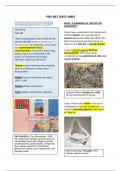
POP ART (1955-1966)
https://www.youtube.com/watch?v=HmZNi4EZ5QE
https://www.youtube.com/watch?v=r_FGcnR6EUY
WHAT: A SUMMARY OF THE POP ART
MOVEMENT:
SECTION 4
POP ART Pop art was a movement that started with
artists in Britain, but soon spread to
“Pop is everything art hasn't been for the America during the 1950s and 1960s. The
last two decades [referencing Abstract Pop Art movement wanted to bring art
Expressionism]. It's basically a U-turn back back into the daily life of average people.
to a representational visual
communication, moving at a break-away It was a reaction against Abstract
speed...Pop is a re-enlistment in the Expressionism, which pop artists
world...It is the American Dream, considered as too sophisticated, elite and
optimistic, generous and naïve." inward looking.
“Buying is more American than thinking,
and I’m as American as they come.” –
Andy Warhol
WHEN: Pop Art developed from about
1955 – 1966
WHERE: Britain and America
WHO: Warhol, Lichtenstein, Hamilton. Jackson Pollock, Number 1A, 1948,
oil and enamel paint on canvas.
It was influenced by Dada in the way it
challenged the concept of what art is by
elevating everyday objects to the status
of “high art’.
Still Life #30 by Tom Wesselman, 1963,
Oil, enamel and synthetic polymer paint on
composition board with collage of printed
advertisements, plastic flowers, refrigerator
door, plastic replicas of 7-UP bottles,
glazed and framed colour reproduction and
stamped metal. Marcel Duchamp, Fountain, 1917,
ceramic, glazed ceramic.
,The post-war era saw a huge boom in by the mass media, from ideas related to
mass-produced good and mass femininity and domesticity (family life) to
entertainment, which gave rise to a new consumerism and patriotism.
popular culture – or “pop” culture. Pop
artists responded by borrowing imagery However, it was never a hostile
from popular culture, such as showing movement and did not aim to address
everyday life objects, e.g., Campbell’s deeper/darker issues.
soup cans; or borrowing from sources like
television, comic books, magazines and They undermined the idea of “high art”
print advertising. by appropriating (borrowing) imagery
from popular culture, and also by using
commercial materials and production
methods, e.g., screen printing. In this way
they broke with the preconceived ideas of
“high art” and “low art/culture”.
For Warhol, who made artworks using
screen printing, art was no longer about
Lichtenstein, Whaam, 1963, acrylic and creating something unique. He even
oil paint on two canvases 1,8 m by 4,6 m. named his studio “The Factory”,
comparing his work to mass production.
Many pop artists used repetition of
images, similar to the way consumer
products were mass-produced and
advertised. This repetition often conveyed
a sense of consumerism and mass
manufacturing.
(“high art” – expensive artworks which are only
seen and understood by a small elite group of
people. It was often seen as exclusive or irrelevant
to the everyday person)
Andy Warhol, Campbell’s Soup Cans,
1962, acrylic with metallic enamel paint
on canvas, 32 panels.
Their intention at times seemed twofold:
at times they appear to glorify/celebrate
popular culture. Artists tried to get people
to look at the new consumer world
around them, paying attention to
everyday objects that might not normally
be noticed.
While at other times they seem to Andy Warhol, Shot Sage Blue Marilyn,
ridicule / criticise popular culture or 1964, acrylic and silkscreen on linen
question the conventional values spread
, THE ORIGINS OF POP ART IN BRITAIN Technological advancements:
Although Pop Art is normally thought of as The 1950s Cold War (Western capitalism
an American movement it was actually in America [the West] against Communist
born in England in the mid 1950's, Soviet Union [the East]) dominated world
referring to the interest of a number of politics until the Communist Soviet Union
artists in images of mass media, collapsed in 1991.
advertising, comics and consumer
products. In light of the Cold War, the US
government spent half of the budget on
Early pop art in Britain was fuelled by
defense forces in the 1950s and 1960s
American popular culture viewed from a
causing industrial growth and
distance, while the American artists were
technological advances which also
inspired by what they saw and
contributed towards the consumer boom.
experienced living within that culture.
One of the earliest pop images made in Technological innovations such as new
1956 was by Richard Hamilton, entitled materials, production techniques, and
“Just what is it that makes today’s homes electronic devices revolutionised
so different, so appealing? industries, making products more
accessible and affordable. Companies
THE INFLUENCE OF THE POST WAR were now able to produce goods on a
CONTEXT ON POP ART IN BRITAIN & larger scale and at a lower cost, creating
AMERICA: various consumer choices.
Pop Art was a post-World War 2 The influence of technology and its
Movement (after WW2). In the 1950s relationship to consumerism also
following World War II, America and influenced Pop artists who used
England enjoyed a time of prosperity and commercial production techniques such
economic and political growth after years as screen printing to create artworks that
of war-time rationing. This booming referenced the consumer culture and
economy led to a shift towards advertising aesthetic.
consumerism.
The consumer boom was fuelled by
several factors: technological
advancements, a rise in advertising, the
creation of suburbia and a growing
middle class.
https://www.youtube.com/watch?v=HmZNi4EZ5QE
https://www.youtube.com/watch?v=r_FGcnR6EUY
WHAT: A SUMMARY OF THE POP ART
MOVEMENT:
SECTION 4
POP ART Pop art was a movement that started with
artists in Britain, but soon spread to
“Pop is everything art hasn't been for the America during the 1950s and 1960s. The
last two decades [referencing Abstract Pop Art movement wanted to bring art
Expressionism]. It's basically a U-turn back back into the daily life of average people.
to a representational visual
communication, moving at a break-away It was a reaction against Abstract
speed...Pop is a re-enlistment in the Expressionism, which pop artists
world...It is the American Dream, considered as too sophisticated, elite and
optimistic, generous and naïve." inward looking.
“Buying is more American than thinking,
and I’m as American as they come.” –
Andy Warhol
WHEN: Pop Art developed from about
1955 – 1966
WHERE: Britain and America
WHO: Warhol, Lichtenstein, Hamilton. Jackson Pollock, Number 1A, 1948,
oil and enamel paint on canvas.
It was influenced by Dada in the way it
challenged the concept of what art is by
elevating everyday objects to the status
of “high art’.
Still Life #30 by Tom Wesselman, 1963,
Oil, enamel and synthetic polymer paint on
composition board with collage of printed
advertisements, plastic flowers, refrigerator
door, plastic replicas of 7-UP bottles,
glazed and framed colour reproduction and
stamped metal. Marcel Duchamp, Fountain, 1917,
ceramic, glazed ceramic.
,The post-war era saw a huge boom in by the mass media, from ideas related to
mass-produced good and mass femininity and domesticity (family life) to
entertainment, which gave rise to a new consumerism and patriotism.
popular culture – or “pop” culture. Pop
artists responded by borrowing imagery However, it was never a hostile
from popular culture, such as showing movement and did not aim to address
everyday life objects, e.g., Campbell’s deeper/darker issues.
soup cans; or borrowing from sources like
television, comic books, magazines and They undermined the idea of “high art”
print advertising. by appropriating (borrowing) imagery
from popular culture, and also by using
commercial materials and production
methods, e.g., screen printing. In this way
they broke with the preconceived ideas of
“high art” and “low art/culture”.
For Warhol, who made artworks using
screen printing, art was no longer about
Lichtenstein, Whaam, 1963, acrylic and creating something unique. He even
oil paint on two canvases 1,8 m by 4,6 m. named his studio “The Factory”,
comparing his work to mass production.
Many pop artists used repetition of
images, similar to the way consumer
products were mass-produced and
advertised. This repetition often conveyed
a sense of consumerism and mass
manufacturing.
(“high art” – expensive artworks which are only
seen and understood by a small elite group of
people. It was often seen as exclusive or irrelevant
to the everyday person)
Andy Warhol, Campbell’s Soup Cans,
1962, acrylic with metallic enamel paint
on canvas, 32 panels.
Their intention at times seemed twofold:
at times they appear to glorify/celebrate
popular culture. Artists tried to get people
to look at the new consumer world
around them, paying attention to
everyday objects that might not normally
be noticed.
While at other times they seem to Andy Warhol, Shot Sage Blue Marilyn,
ridicule / criticise popular culture or 1964, acrylic and silkscreen on linen
question the conventional values spread
, THE ORIGINS OF POP ART IN BRITAIN Technological advancements:
Although Pop Art is normally thought of as The 1950s Cold War (Western capitalism
an American movement it was actually in America [the West] against Communist
born in England in the mid 1950's, Soviet Union [the East]) dominated world
referring to the interest of a number of politics until the Communist Soviet Union
artists in images of mass media, collapsed in 1991.
advertising, comics and consumer
products. In light of the Cold War, the US
government spent half of the budget on
Early pop art in Britain was fuelled by
defense forces in the 1950s and 1960s
American popular culture viewed from a
causing industrial growth and
distance, while the American artists were
technological advances which also
inspired by what they saw and
contributed towards the consumer boom.
experienced living within that culture.
One of the earliest pop images made in Technological innovations such as new
1956 was by Richard Hamilton, entitled materials, production techniques, and
“Just what is it that makes today’s homes electronic devices revolutionised
so different, so appealing? industries, making products more
accessible and affordable. Companies
THE INFLUENCE OF THE POST WAR were now able to produce goods on a
CONTEXT ON POP ART IN BRITAIN & larger scale and at a lower cost, creating
AMERICA: various consumer choices.
Pop Art was a post-World War 2 The influence of technology and its
Movement (after WW2). In the 1950s relationship to consumerism also
following World War II, America and influenced Pop artists who used
England enjoyed a time of prosperity and commercial production techniques such
economic and political growth after years as screen printing to create artworks that
of war-time rationing. This booming referenced the consumer culture and
economy led to a shift towards advertising aesthetic.
consumerism.
The consumer boom was fuelled by
several factors: technological
advancements, a rise in advertising, the
creation of suburbia and a growing
middle class.