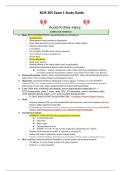
NUR 265 Exam 1 Study Guide
Acute Kidney Injury ● Risks: REDUCED PERFUSION (reduced blood flow to the kidneys) ○ blood/fluid loss ○ Blood pressure drugs resulting in hypotension ○ Heart attack/heart failure (low ejection fraction and low cardiac output) ○ Infection (sepsis/septic shock) ○ Liver failure ○ Use of aspirin, NSAIDs (advil, motrin, naproxen) ○ Severe allergic reactions (anaphylaxis) ○ Severe burns ○ Severe dehydration ○ Renal artery stenosis ○ bleeding/clotting in the kidney blood vessels (coagulopathy) ○ atherosclerosis/cholesterol deposits (block blood flow to the kidney) ■ Get history ^ (surgery, transfusions, meds), recent contrast dye (damaging to kidneys), coexisting conditions (hypertension, diabetes, pre-existing lower GFR), acute illnesses ● Signs and Symptoms: oliguria, anuria, increased creatinine and BUN, urine concentrated (specific gravity greater than 1.030), azotemia (retention of nitrogenous wastes) ● Diagnostics: ultrasound of kidneys (obstruction of stones, patency of ureters), CT scan WITHOUT contrast, KUB X-ray, nuclear medicine -MAG3 (measures GFR), cystoscopy or retrograde pyelography (obstruction of lower tract), biopsy (prepare patient for hypotension/hypertension) ● Labs: BUN and creatinine (increased), serum electrolytes (especially K+→ ECG=bradycardia, peak T wave, wide QRS, ST elevation), serum osmolarity (low), urine specific gravity (high), GFR (not accurate during acute) ○ IF ONLY BUN ELEVATED=DEHYDRATION →creatinine=#1 lab for kidney function ● Meds: ○ Diuretics- increase UOP, get rid of retained fluid and electrolytes (used in the beginning, does not preserve kidney function or stop AKI) ○ Fluid challenge: 500-1000 mL of N.S. bolus (to see how the kidneys are functioning) MONITOR FOR FLUID OVERLOAD (ESPECIALLY RESPIRATORY DISTRESS) ● Nursing interventions: ○ PRIORITY= PREVENTING AKI (promoting daily hydration) ■ Evaluate fluid status ■ Strict I&O ■ Body weight ■ Characteristics of urine ■ REPORT IF UOP 0.5 mL/kg/hour (especially if persisting over 2 hours) ○ Monitor MAP (maintain 80 mmHG in high-risk or critically ill) ○ Reduce risk factors (nephrotoxic agents, contrast media) ○ Diuretic and fluid challenge, hemodynamic monitoring (if fluid volume overload do not use) ● Diet: catabolism=protein breakdown=breakdown of muscle protein and increased azotemia ○ NO dialysis: 0.6 g/kg of body weight or 40 g/day of protein ○ Dialysis: 1-1.5 g/kg of protein UNEXPECTED →INTERVENE ○ Sodium: 60-90 mEq/kg ○ If high K+: restricted to 60-70 mEq/kg ○ Fluid: urine output + 500 mL Fluid volume overload ○ Crackles ○ Anasarca (swelling all over body) ○ Decreased O2 sat ○ Increased RR ○ LOC changes (confusion) ○ Restlessness (not normal to be restless for no reason) ■ Treated with: diuretics, dialysis, or paracentesis (removal of excess fluids), fluid and sodium restrictions Hypoperfusion/hypoxia →reduced blood volume ○ MAP 65 mmHg ○ Tachycardiac ○ Thready peripheral pulses ○ Decreased cognition ■ Treated with: IV fluids and possible blood transfusion EXPECTED FINDINGS Chronic Kidney Disease ● Risks: diabetes, hypertension, glomerulonephritis, PKD, gout, lupus, lead poisoning, pyelonephritis ● Signs and Symptoms: (CKD affect entire body →TOXINS LEFT IN BLOOD ) ○ Reduced GFR ○ Uremia (azotemia with symptoms)- metallic taste, anorexia, N/V, muscle cramps (hyperkalemia), uremic frost, pruritus, fatigue, hiccups, edema, dyspnea, paresthesia (gabapentin given) →end-stage (stage 4 and 5/maybe severe AKI) ○ Metabolic: buildup of urea and creatinine (expected=increased BUN & creatinine), Na+ issues (hyponatremia=early polyuria, later=hypernatremia & oliguria/anuria), hyperkalemia (always monitored) →metabolic acidosis →pH and HCO3 decrease (WATCH RR- COMPENSATION=KUSSMAUL’S), Ca+/phosphorus/vitamin D concerns (phosphorus increase=Ca+ and vitamin D decrease= osteoporosis (fracture/cramps) →FALL RISK ○ Cardiac changes: hyperlipidemia, hypertension, H.F.(F.V.O.)/S3 (S3=first sign of H.F.), crackles, pulmonary edema (pink frothy sputum=medical emergency), tachypnea, hyperpnea, peripheral edema, JVD, pericarditis, cardiac tamponade BP★ aldosterone= increase Na+ and fluid=increase ○ Hematologic: anemia, low iron & folic acid, decreased immunity (erythropoietin made in the kidneys. EPO=stimulates production of RBC=H&H decreased=anemia) ○ GI: uremic fetor (ammonia smelling bad breath), stomatitis, PUD →uremia symptoms (can cause constipation and diarrhea) ○ Neurological: ataxia, peripheral neuropathy, tremors, seizure, coma ○ Musculoskeletal: bone pain, muscle weakness, pathological fractures (decreased Ca+ and vitamin D)
Written for
- Institution
-
Galen College Of Nursing
- Course
-
NUR 265 (NUR265)
Document information
- Uploaded on
- May 6, 2025
- Number of pages
- 9
- Written in
- 2024/2025
- Type
- Exam (elaborations)
- Contains
- Questions & answers
Subjects
- nur 265
- nur 265 exam 1
-
nur 265 exam 1 study guide

Also available in package deal