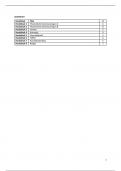
Found in Notes
Not Found in Notes
Researched Answers
5 Chapters 1-5
10 questions per chapter
Multiple choice + true or false
Juleen Lak
Chapter 1 - Understanding Wellness and Fitness
- Definition of Wellness
A state of optimal health the ecompasses all the dimesions of well-being
Can be achieved by practicing a healthy lifestyle that includes
- Regular physical activity
- Proper nutrition
- emotional/ spiritual balance
- Eliminating unhealthy behaviors
- Healthy People 2020 Mission and Objectives
Promote health, prevent disease, and improve the well-being of individuals
- Eight Dimensions/ Components of Wellness( definitions, differences, examples)
1. Physical wellness - includes maintaining a healthy body weight and achieving physical
fitness. Also includes proper nutrition, performing self- exams, and practicing personal
safety
2. Emotional wellness( mental health) - includes social skills, positive interpersonal
relationships, self-esteem, and the ability to cope with stress. The ability to response to
life situations in an appropriate manner
3. Intellectual wellness - keeping your mind active through life-long learning
4. Spiritual wellness - having a sense of meaning and purpose in life; for us is found
through our relationship with God
5. Social wellness - developing and maintaining meaningful interpersonal relationships
6. Environmental wellness - includes the influence of the environment on your health as
well as your behaviors that affect the environment
7. Occupational wellness- a high level of satisfaction in your job or chosen career
8. Financial wellness - the ability to live comfortably on your income and have the means to
save and manage money responsibly
- Health benefits of exercise
Reduces risk of cardiovascular disease, cancer, and diabetes, increased bone mass, delayed
aging, increased longevity, improves psychological well-being
- Definition differences between physical activity and exercise
Physical activity- al physical movement, regardless of the level of energy expended or the
reason you do it can involve occupational lifestyle or leisure activities
Exercise - a type of leisure time physical activity. Performed specifically to enhance health and
fitness. Involves planned structured and relatively high-intensity activities like fitness/
conditioning activities and sports
, - Health related measures of physical fitness( i.e. flexibility, cardiorespiratory, endurance,
muscular strength/endurance, body composition
Cardiorespiratory endurance -( aerobic fitness) indicates hearts ability to pump blood to muscles
during physical activity
Indicates muscles ability to utilize oxygen in the blood
Muscle strength
- How much force a muscle ( or muscle group) generates during a single maximal
contraction)
Muscular endurance
- Ability of muscle to generate a submaximal force repeatedly
- Related to but not the same as, muscular strength
- Gains in strength can improve endurance but gains in endurance does not improve
strength
Flexibility
- Ability to move joints freely through full range of motion
- - without regular stretching, muscles and tendons shorten and become tight
- Everyone needs some degree of flexibility for their daily activities
Body compositions
- Relative amounts of fat and lean tissue in your body
- High percentage of body fat ( obesity)
- Is associated with increased risk of developing CVD
- Type 2 diabetes
- Some cancers
- Stage of change from the 6 phases of the transtheoretical model of change (know
definitions, and identify examples that fall into each stage)
Transtheoretical model - the transtheoretical (stages of change) model is based on the theory
that individuals follow a circular rather than linear path as they flow through a series of stages to
modify behavior.
precontemplation(not ready) ->contemplation (getting ready) -> preparation with plan (ready)
->action ( moving forward) -> maintenance (managing and preventing drift) -> termination(when
appropriate) ->
- SMART model for goal setting (definition of each)
Behavior Modification Strategies
Setting realistic short-term and long-term goals
SMART goals
Specific - Do: Set real numbers with real deadlines. Dont: say I want more visitors
Measurable- Do: Make sure your goal is trackable. Dont: Hide behind buzzwords like “brand
engagement” or “social influence”
Attainable - Do: Work towards a goal that is challenging but possible Dont: try to take over the
world in one night
Realistic - Do: Be honest with yourself you know what you and your team are capable of. Dont:
forget any hurdles you may have to overcome
Not Found in Notes
Researched Answers
5 Chapters 1-5
10 questions per chapter
Multiple choice + true or false
Juleen Lak
Chapter 1 - Understanding Wellness and Fitness
- Definition of Wellness
A state of optimal health the ecompasses all the dimesions of well-being
Can be achieved by practicing a healthy lifestyle that includes
- Regular physical activity
- Proper nutrition
- emotional/ spiritual balance
- Eliminating unhealthy behaviors
- Healthy People 2020 Mission and Objectives
Promote health, prevent disease, and improve the well-being of individuals
- Eight Dimensions/ Components of Wellness( definitions, differences, examples)
1. Physical wellness - includes maintaining a healthy body weight and achieving physical
fitness. Also includes proper nutrition, performing self- exams, and practicing personal
safety
2. Emotional wellness( mental health) - includes social skills, positive interpersonal
relationships, self-esteem, and the ability to cope with stress. The ability to response to
life situations in an appropriate manner
3. Intellectual wellness - keeping your mind active through life-long learning
4. Spiritual wellness - having a sense of meaning and purpose in life; for us is found
through our relationship with God
5. Social wellness - developing and maintaining meaningful interpersonal relationships
6. Environmental wellness - includes the influence of the environment on your health as
well as your behaviors that affect the environment
7. Occupational wellness- a high level of satisfaction in your job or chosen career
8. Financial wellness - the ability to live comfortably on your income and have the means to
save and manage money responsibly
- Health benefits of exercise
Reduces risk of cardiovascular disease, cancer, and diabetes, increased bone mass, delayed
aging, increased longevity, improves psychological well-being
- Definition differences between physical activity and exercise
Physical activity- al physical movement, regardless of the level of energy expended or the
reason you do it can involve occupational lifestyle or leisure activities
Exercise - a type of leisure time physical activity. Performed specifically to enhance health and
fitness. Involves planned structured and relatively high-intensity activities like fitness/
conditioning activities and sports
, - Health related measures of physical fitness( i.e. flexibility, cardiorespiratory, endurance,
muscular strength/endurance, body composition
Cardiorespiratory endurance -( aerobic fitness) indicates hearts ability to pump blood to muscles
during physical activity
Indicates muscles ability to utilize oxygen in the blood
Muscle strength
- How much force a muscle ( or muscle group) generates during a single maximal
contraction)
Muscular endurance
- Ability of muscle to generate a submaximal force repeatedly
- Related to but not the same as, muscular strength
- Gains in strength can improve endurance but gains in endurance does not improve
strength
Flexibility
- Ability to move joints freely through full range of motion
- - without regular stretching, muscles and tendons shorten and become tight
- Everyone needs some degree of flexibility for their daily activities
Body compositions
- Relative amounts of fat and lean tissue in your body
- High percentage of body fat ( obesity)
- Is associated with increased risk of developing CVD
- Type 2 diabetes
- Some cancers
- Stage of change from the 6 phases of the transtheoretical model of change (know
definitions, and identify examples that fall into each stage)
Transtheoretical model - the transtheoretical (stages of change) model is based on the theory
that individuals follow a circular rather than linear path as they flow through a series of stages to
modify behavior.
precontemplation(not ready) ->contemplation (getting ready) -> preparation with plan (ready)
->action ( moving forward) -> maintenance (managing and preventing drift) -> termination(when
appropriate) ->
- SMART model for goal setting (definition of each)
Behavior Modification Strategies
Setting realistic short-term and long-term goals
SMART goals
Specific - Do: Set real numbers with real deadlines. Dont: say I want more visitors
Measurable- Do: Make sure your goal is trackable. Dont: Hide behind buzzwords like “brand
engagement” or “social influence”
Attainable - Do: Work towards a goal that is challenging but possible Dont: try to take over the
world in one night
Realistic - Do: Be honest with yourself you know what you and your team are capable of. Dont:
forget any hurdles you may have to overcome