©FYNDLAY 2025 ALL RIGHTS RESERVED
Nursing 6001 Exam 1 Questions and Answers
100% Pass
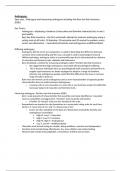
Infection - ANS disease state resulting from pathogens in or on the body
health promotion and nursing assessment - ANS nurses assess health-promotion activities
introduce screening questions
collaboration
body's defense against infection - ANS body's normal flora
inflammatory response
immune response
factors affecting host susceptibility - ANS intact skin and mucous membranes
normal ph levels
body's white blood cells
©FYNDLAY 1
, ©FYNDLAY 2025 ALL RIGHTS RESERVED
age, sex, race, hereditary factors
immunization, natural or acquired
fatigue, climate, nutritional and general health status
stress
use of invasive or indwelling medical device
nosocomial infections - ANS use of invasive medical devices
antibiotic-resistant organisms developed in hospitals
components of infection - ANS infectious agent
reservoir
portal of exit
means of transmission
portals of entry
susceptible host
pathogens - ANS disease-producing microorganism
bacteria - ANS the most significant and most commonly observed infection-causing agents
©FYNDLAY 2
, ©FYNDLAY 2025 ALL RIGHTS RESERVED
cocci, bacilli, or spirochetes
gram-positive - ANS have a thick cell wall that resists decolorization and are stained violet
gram-negative - ANS have chemically more complex cell was and can be decolorized by
alcohol thus they do not stain
virus - ANS is the smallest of all microorganism, visible only with an electron microscope
fungi - ANS plant like organisms that also can cause infection, are present in the air soil and
water
parasites - ANS are organisms that live on or in a host and rely on it for nourishment
virulence - ANS it's ability to cause disease
an organisms potential to produce disease depends on a variety of factors - ANS number of
organism
virulence
competence of the person's immune system
length and intimacy of the contact between the person and the microorganism
Colonization - ANS presence of an organism residing in an individual's body with no clinical
signs of infection
if person's defense mechanism are ineffective in responding to the bacterial invasion
(colonization), infection will result
©FYNDLAY 3
, ©FYNDLAY 2025 ALL RIGHTS RESERVED
Reservoir - ANS natural habitat for the growth and multiplication of microorganisms
ex:
-other humans
-animals
-soil
-food, water, milk
-inanmate objects
portal of exit - ANS is the point of escape for the organism from the reservoir
organism cannot extend its influence unless it moves away from its original reservoir
ex:
-gastrointestinal
-genitourinary
-breaks in skin
-blood and tissue
How do you know I have an infection - ANS complete blood count
elevated erythrocyte sedimentation rate, c-reactive protein level
presence of pathogens in urine, blood, sputum, or draining wounds
means of transmission - ANS direct contact- close proximity between susceptible host and
infected person or carrier
©FYNDLAY 4
Nursing 6001 Exam 1 Questions and Answers
100% Pass
Infection - ANS disease state resulting from pathogens in or on the body
health promotion and nursing assessment - ANS nurses assess health-promotion activities
introduce screening questions
collaboration
body's defense against infection - ANS body's normal flora
inflammatory response
immune response
factors affecting host susceptibility - ANS intact skin and mucous membranes
normal ph levels
body's white blood cells
©FYNDLAY 1
, ©FYNDLAY 2025 ALL RIGHTS RESERVED
age, sex, race, hereditary factors
immunization, natural or acquired
fatigue, climate, nutritional and general health status
stress
use of invasive or indwelling medical device
nosocomial infections - ANS use of invasive medical devices
antibiotic-resistant organisms developed in hospitals
components of infection - ANS infectious agent
reservoir
portal of exit
means of transmission
portals of entry
susceptible host
pathogens - ANS disease-producing microorganism
bacteria - ANS the most significant and most commonly observed infection-causing agents
©FYNDLAY 2
, ©FYNDLAY 2025 ALL RIGHTS RESERVED
cocci, bacilli, or spirochetes
gram-positive - ANS have a thick cell wall that resists decolorization and are stained violet
gram-negative - ANS have chemically more complex cell was and can be decolorized by
alcohol thus they do not stain
virus - ANS is the smallest of all microorganism, visible only with an electron microscope
fungi - ANS plant like organisms that also can cause infection, are present in the air soil and
water
parasites - ANS are organisms that live on or in a host and rely on it for nourishment
virulence - ANS it's ability to cause disease
an organisms potential to produce disease depends on a variety of factors - ANS number of
organism
virulence
competence of the person's immune system
length and intimacy of the contact between the person and the microorganism
Colonization - ANS presence of an organism residing in an individual's body with no clinical
signs of infection
if person's defense mechanism are ineffective in responding to the bacterial invasion
(colonization), infection will result
©FYNDLAY 3
, ©FYNDLAY 2025 ALL RIGHTS RESERVED
Reservoir - ANS natural habitat for the growth and multiplication of microorganisms
ex:
-other humans
-animals
-soil
-food, water, milk
-inanmate objects
portal of exit - ANS is the point of escape for the organism from the reservoir
organism cannot extend its influence unless it moves away from its original reservoir
ex:
-gastrointestinal
-genitourinary
-breaks in skin
-blood and tissue
How do you know I have an infection - ANS complete blood count
elevated erythrocyte sedimentation rate, c-reactive protein level
presence of pathogens in urine, blood, sputum, or draining wounds
means of transmission - ANS direct contact- close proximity between susceptible host and
infected person or carrier
©FYNDLAY 4