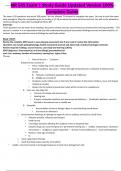
,TPN3704 Assignment 1 Memo | Due 28 May 2025.
All questions fully answered.
MULTIPLE CHOICE,ASSURED EXCELLENCE
Question 1: Multicultural Classrooms 1. Refer to the URL link
one and respond to the following questions: 1.1. Define
"modelling" as an instructional strategy. 1.2. List three
techniques mentioned in the chapter that enhance modelling in
multilingual classrooms. 1.3. Explain how scaffolding supports
language learning in multilingual classrooms. Use examples
from the chapter. 1.4. Imagine you are teaching a class with
diverse linguistic backgrounds. Design a short activity that
incorporates explicit vocabulary instruction. 1.5. Compare and
contrast the roles of contextualised learning and collaborative
activities in supporting English First Additional Language (EFAL)
learners. 1.6. Assess the effectiveness of using flipped
classrooms as a strategy in EFAL classrooms. What are its
potential advantages and limitations, according to the chapter?
1.7. Propose a lesson plan segment that integrates multimedia
texts and group work to teach a specific English language
concept in a multilingual classroom. Provide details on
resources and the steps of the activity. Question 2: Classroom
Libraries 2. Refer to the URL link one and respond to the
following questions: 2.1. Define the purpose of the study. 2.2.
Where was the study conducted? 2.3. Name the research
approach used in this study. 2.4. Indicate the data collection
, method used in the study. 2.5. Discuss the role of classroom
libraries in enhancing literacy, providing three reasons. 2.6.
Analyse Bandura’s (1977) self-efficacy theory and its relevance
to developing classroom libraries. 2.7. Which data analysis
method was used in this publication? 2.8. Identify two
challenges teachers face when establishing classroom libraries.
2.9. Summarise two recommendations made by the authors.
Question 3: Integrating Technology in Rural Primary Schools 3.
Refer to the URL link 2 and respond to the following questions:
3.1. Name the theoretical framework used in this research
paper. 3.2. Identify technological resources or tools that
enhance teaching and learning. 3.3. Explain how participant
confidentiality was maintained in this study. 3.4. Identify the
instrument used to collect data. 3.5. Summarise the findings of
this study and discuss their implications for rural education. 3.6.
Discuss the challenges of technology integration challenges
indicated in the study. Question 4: Differentiation Strategies
in a Multicultural Classroom 4. Refer to the URL link 3 and
respond to the following questions: 4.1. State the journal's
name. 4.2. Which research design has been used for this study?
4.3. Identify three differentiation strategies emerging from the
data and critically assess their effectiveness in promoting
engagement. 4.4. Discuss how each differentiation strategy
accommodates diverse learning preferences and learners’
cultural backgrounds. 4.5. Select two differentiation strategies
All questions fully answered.
MULTIPLE CHOICE,ASSURED EXCELLENCE
Question 1: Multicultural Classrooms 1. Refer to the URL link
one and respond to the following questions: 1.1. Define
"modelling" as an instructional strategy. 1.2. List three
techniques mentioned in the chapter that enhance modelling in
multilingual classrooms. 1.3. Explain how scaffolding supports
language learning in multilingual classrooms. Use examples
from the chapter. 1.4. Imagine you are teaching a class with
diverse linguistic backgrounds. Design a short activity that
incorporates explicit vocabulary instruction. 1.5. Compare and
contrast the roles of contextualised learning and collaborative
activities in supporting English First Additional Language (EFAL)
learners. 1.6. Assess the effectiveness of using flipped
classrooms as a strategy in EFAL classrooms. What are its
potential advantages and limitations, according to the chapter?
1.7. Propose a lesson plan segment that integrates multimedia
texts and group work to teach a specific English language
concept in a multilingual classroom. Provide details on
resources and the steps of the activity. Question 2: Classroom
Libraries 2. Refer to the URL link one and respond to the
following questions: 2.1. Define the purpose of the study. 2.2.
Where was the study conducted? 2.3. Name the research
approach used in this study. 2.4. Indicate the data collection
, method used in the study. 2.5. Discuss the role of classroom
libraries in enhancing literacy, providing three reasons. 2.6.
Analyse Bandura’s (1977) self-efficacy theory and its relevance
to developing classroom libraries. 2.7. Which data analysis
method was used in this publication? 2.8. Identify two
challenges teachers face when establishing classroom libraries.
2.9. Summarise two recommendations made by the authors.
Question 3: Integrating Technology in Rural Primary Schools 3.
Refer to the URL link 2 and respond to the following questions:
3.1. Name the theoretical framework used in this research
paper. 3.2. Identify technological resources or tools that
enhance teaching and learning. 3.3. Explain how participant
confidentiality was maintained in this study. 3.4. Identify the
instrument used to collect data. 3.5. Summarise the findings of
this study and discuss their implications for rural education. 3.6.
Discuss the challenges of technology integration challenges
indicated in the study. Question 4: Differentiation Strategies
in a Multicultural Classroom 4. Refer to the URL link 3 and
respond to the following questions: 4.1. State the journal's
name. 4.2. Which research design has been used for this study?
4.3. Identify three differentiation strategies emerging from the
data and critically assess their effectiveness in promoting
engagement. 4.4. Discuss how each differentiation strategy
accommodates diverse learning preferences and learners’
cultural backgrounds. 4.5. Select two differentiation strategies