PSYC 388 - PART 1 (UNIT 1-4)
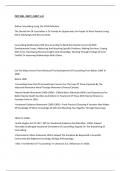
Define Counselling Using The CCPA Definition
The Overall Aim Of Counsellors Is To Provide An Opportunity For People To Work Towards Living
More Satisfyingly And Resourcefully.
Counselling Relationships Will Vary According To Need But May Be Concerned With
Developmental Issues, Addressing And Resolving Specific Problems, Making Decisions, Coping
With Crisis, Developing Personal Insights And Knowledge, Working Through Feelings Of Inner
Conflict Or Improving Relationships With Others.
List The Major Events That Influenced The Development Of Counselling From Before 1900 To
2000.
Before 1900
-Counselling Grew Out Of Humanitarian Concern For The Lives Of Those Impacted By The
Industrial Revolution Moral Therapy Movement (France/Canada)
-Mental Health Movement (1900-1909) + Clifford Beers (Advocate (With Lived Experience) For
Better Mental Health Facilities And Reform In Treatment Of Those With Mental Illness) Co-
Founded Cmha In 1918.
-Vocational Guidance Movement (1900-1909) + Frank Parsons (Choosing A Vocation Was Matter
Of Knowledge Of Work, Knowledge Of Self, And Matching Two Together Through Reasoning)
1910s To 1940s.
-Smith-Hughes Act Of 1917: $$$ For Vocational Guidance And Education. 1920s: Edward
Thorndike Challenged Vocational Orientation Of Counselling, Argued For The Broadening Of
Counselling.
-Psychometrics Were Embraced, Which Helped The Discipline Be Respected In Scientific
Community But Neglected Sociology, Biology, Anthropology.
-1931: First Mention Of "Counselling" In Literature.E.G. Williamson In 1930s:
, -First Counselling Theory, Which Emphasized Direct, Counsellor-Centered Approach And The
Counsellor's Teaching, Mentoring, And Influencing Skills. Premise: Individuals Had Traits That
Could Be Integrated In Variety Of Ways To Form Factors (Constellations Of Individual
Characteristics). Counsellor Must Ascertain A Deficiency In The Client And Then Prescribe A
Procedure To Rectify The Problem.
-Late 1930s: WWII Created Role For Psychologists And Counsellors In Both Us And Canada: Test
Construction, Administration, Scoring For Selecting And Classifying Military Personnel.
-1939: Cpa Formed By E.A. Bott, George Humphrey, Roy Liddy.
-1942: Carl Rogers Published Counselling And Psychotherapy, Which Challenged The Counsellor-
Centered Approach Of Williamson As Well As Major Tenets Of Freudian Psychoanalysis. He Also
Emphasized The Importance Of The Client And Gave Them Responsibility For Their Own
Growth. With Rogers, New Emphasis On Therapeutic Alliance, Counselling Techniques, Etc.Four
Main Theories Existed Before
-1950: Psychoanalysis, Trait-Factor/Directive Theories, Humanistic/Client-Centered Theories,
Behavioural Theories
1950s To 1980s:
-1950s: Applied Behavioural And Cognitive Therapies Emerge As Influencers: Wolpe's Systematic
Desensitization; Ellis' Rational-Emotive Therapy; Beck's Cognitive Therapy.
- 1960s: Humanistic Counselling Theories Became Influential. Maslow, Jourard, Arbuckle.
- The Cornucopia Of Competing Counselling Methodologies Presented To Counsellors Reached
An All-Time High In The Late 1960s
- 1965: Canadian Guidance Counsellors Association Formed
-1970s: Rapid Growth Of Counselling Outside Of Educational Institutions When Mental Health
Centres And Community Agencies Began To Employ Counsellors. Focus On Prevention
Grew.Development Of Helping Skills Concentrated On Relationship And Communication Skills
-1980s: Standardization Of Training And Certification Of Counsellors; Recognition Of Distinct
Profession; Increase Diversification Of Counsellor Specialties; New Emphasis On Human
Growth/Development. Exploration Of Impact Of Culture/Diversity.
-1990s: Counselling Issues Related To The Whole Person.
Define Counselling Using The CCPA Definition
The Overall Aim Of Counsellors Is To Provide An Opportunity For People To Work Towards Living
More Satisfyingly And Resourcefully.
Counselling Relationships Will Vary According To Need But May Be Concerned With
Developmental Issues, Addressing And Resolving Specific Problems, Making Decisions, Coping
With Crisis, Developing Personal Insights And Knowledge, Working Through Feelings Of Inner
Conflict Or Improving Relationships With Others.
List The Major Events That Influenced The Development Of Counselling From Before 1900 To
2000.
Before 1900
-Counselling Grew Out Of Humanitarian Concern For The Lives Of Those Impacted By The
Industrial Revolution Moral Therapy Movement (France/Canada)
-Mental Health Movement (1900-1909) + Clifford Beers (Advocate (With Lived Experience) For
Better Mental Health Facilities And Reform In Treatment Of Those With Mental Illness) Co-
Founded Cmha In 1918.
-Vocational Guidance Movement (1900-1909) + Frank Parsons (Choosing A Vocation Was Matter
Of Knowledge Of Work, Knowledge Of Self, And Matching Two Together Through Reasoning)
1910s To 1940s.
-Smith-Hughes Act Of 1917: $$$ For Vocational Guidance And Education. 1920s: Edward
Thorndike Challenged Vocational Orientation Of Counselling, Argued For The Broadening Of
Counselling.
-Psychometrics Were Embraced, Which Helped The Discipline Be Respected In Scientific
Community But Neglected Sociology, Biology, Anthropology.
-1931: First Mention Of "Counselling" In Literature.E.G. Williamson In 1930s:
, -First Counselling Theory, Which Emphasized Direct, Counsellor-Centered Approach And The
Counsellor's Teaching, Mentoring, And Influencing Skills. Premise: Individuals Had Traits That
Could Be Integrated In Variety Of Ways To Form Factors (Constellations Of Individual
Characteristics). Counsellor Must Ascertain A Deficiency In The Client And Then Prescribe A
Procedure To Rectify The Problem.
-Late 1930s: WWII Created Role For Psychologists And Counsellors In Both Us And Canada: Test
Construction, Administration, Scoring For Selecting And Classifying Military Personnel.
-1939: Cpa Formed By E.A. Bott, George Humphrey, Roy Liddy.
-1942: Carl Rogers Published Counselling And Psychotherapy, Which Challenged The Counsellor-
Centered Approach Of Williamson As Well As Major Tenets Of Freudian Psychoanalysis. He Also
Emphasized The Importance Of The Client And Gave Them Responsibility For Their Own
Growth. With Rogers, New Emphasis On Therapeutic Alliance, Counselling Techniques, Etc.Four
Main Theories Existed Before
-1950: Psychoanalysis, Trait-Factor/Directive Theories, Humanistic/Client-Centered Theories,
Behavioural Theories
1950s To 1980s:
-1950s: Applied Behavioural And Cognitive Therapies Emerge As Influencers: Wolpe's Systematic
Desensitization; Ellis' Rational-Emotive Therapy; Beck's Cognitive Therapy.
- 1960s: Humanistic Counselling Theories Became Influential. Maslow, Jourard, Arbuckle.
- The Cornucopia Of Competing Counselling Methodologies Presented To Counsellors Reached
An All-Time High In The Late 1960s
- 1965: Canadian Guidance Counsellors Association Formed
-1970s: Rapid Growth Of Counselling Outside Of Educational Institutions When Mental Health
Centres And Community Agencies Began To Employ Counsellors. Focus On Prevention
Grew.Development Of Helping Skills Concentrated On Relationship And Communication Skills
-1980s: Standardization Of Training And Certification Of Counsellors; Recognition Of Distinct
Profession; Increase Diversification Of Counsellor Specialties; New Emphasis On Human
Growth/Development. Exploration Of Impact Of Culture/Diversity.
-1990s: Counselling Issues Related To The Whole Person.