IGCSE Physics\Nuclear Physics\Important Concepts
IGCSE PHYSICS
NUCLEAR PHYSICS: IMPORTANT CONCEPTS
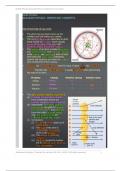
THE STRUCTURE OF AN ATOM
The atom has long been known as the
smallest unit that makes up a matter.
The electron cloud model describes an atom
being consist of a nucleus which virtually
carries all the mass of the atom with
electrons orbiting around the nucleus.
The nucleus of an atom consists of protons
and neutrons. Protons are positively charged,
while neutrons are uncharged. Both of them
have about the same mass. Collectively,
protons and neutrons are known as nucleons
(the constituents of the nucleus).
Electrons are negatively charged with the mass of about the mass of a
proton. Therefore the mass of electrons is usually neglected when determining
the mass of an atom.
Property Charge Relative charge Relative mass
Proton
Electron
Neutron
The alpha particle scattering experiment:
(a) Positively charged alpha particles
from a radioactive source are
directed into a thin piece of gold foil.
(b) Observation: Most alpha particles
pass through the gold foil without
any deviation; some are deflected
from their paths by small angles;
only very small amounts are
deflected through large angles.
(c) Conclusions:
(i) An atom is mostly made up of
empty space.
(ii) The mass of the atom is
concentrated at its centre,
which is the nucleus.
(iii) The nucleus is positively
charged.
(iv) Electrons around the nucleus
are at relatively large distances
from one another.
___________________________________________________________________________
Nakazawa EduServ. Created by Jackson Tik, B.Sc. (NUS). ©All rights reserved. 1
, IGCSE Physics\Nuclear Physics\Important Concepts
Nuclide notation: indicates the number of protons and nucleons in the nucleus
of an atom.
X: symbol of the atom
Z: proton number (number of protons in the nucleus)
A: nucleon number (total number of protons and neutrons
in the nucleus)
From the nuclide notation,
(a) the proton number also gives the number of electrons because the number
of protons and electrons in the atom are equal
(b) the number of neutrons in the nucleus can be determined by finding the
difference between the nucleon number and the proton number (A Z)
All atoms of the same element have the same of number of protons, but the
number of neutrons in the nucleus can be different, resulting in different
masses. Atoms of the same element with the same number of protons but
different number of neutrons are isotopes of one another.
Example: isotopes of hydrogen
Name Protium Deuterium Tritium
Proton number
Nucleon number
Nuclide notation
Isotopes have the same chemical properties due to the identical arrangement of
electrons around the nucleus, but their physical properties are slightly different
due to the difference in mass of each isotope.
Test Yourself:
Fill in the blanks in the table below:
Nuclide Number of Number of Number of
Element
notation protons neutrons electrons
Calcium 20
8 9
235
92 U
___________________________________________________________________________
Nakazawa EduServ. Created by Jackson Tik, B.Sc. (NUS). ©All rights reserved. 2
IGCSE PHYSICS
NUCLEAR PHYSICS: IMPORTANT CONCEPTS
THE STRUCTURE OF AN ATOM
The atom has long been known as the
smallest unit that makes up a matter.
The electron cloud model describes an atom
being consist of a nucleus which virtually
carries all the mass of the atom with
electrons orbiting around the nucleus.
The nucleus of an atom consists of protons
and neutrons. Protons are positively charged,
while neutrons are uncharged. Both of them
have about the same mass. Collectively,
protons and neutrons are known as nucleons
(the constituents of the nucleus).
Electrons are negatively charged with the mass of about the mass of a
proton. Therefore the mass of electrons is usually neglected when determining
the mass of an atom.
Property Charge Relative charge Relative mass
Proton
Electron
Neutron
The alpha particle scattering experiment:
(a) Positively charged alpha particles
from a radioactive source are
directed into a thin piece of gold foil.
(b) Observation: Most alpha particles
pass through the gold foil without
any deviation; some are deflected
from their paths by small angles;
only very small amounts are
deflected through large angles.
(c) Conclusions:
(i) An atom is mostly made up of
empty space.
(ii) The mass of the atom is
concentrated at its centre,
which is the nucleus.
(iii) The nucleus is positively
charged.
(iv) Electrons around the nucleus
are at relatively large distances
from one another.
___________________________________________________________________________
Nakazawa EduServ. Created by Jackson Tik, B.Sc. (NUS). ©All rights reserved. 1
, IGCSE Physics\Nuclear Physics\Important Concepts
Nuclide notation: indicates the number of protons and nucleons in the nucleus
of an atom.
X: symbol of the atom
Z: proton number (number of protons in the nucleus)
A: nucleon number (total number of protons and neutrons
in the nucleus)
From the nuclide notation,
(a) the proton number also gives the number of electrons because the number
of protons and electrons in the atom are equal
(b) the number of neutrons in the nucleus can be determined by finding the
difference between the nucleon number and the proton number (A Z)
All atoms of the same element have the same of number of protons, but the
number of neutrons in the nucleus can be different, resulting in different
masses. Atoms of the same element with the same number of protons but
different number of neutrons are isotopes of one another.
Example: isotopes of hydrogen
Name Protium Deuterium Tritium
Proton number
Nucleon number
Nuclide notation
Isotopes have the same chemical properties due to the identical arrangement of
electrons around the nucleus, but their physical properties are slightly different
due to the difference in mass of each isotope.
Test Yourself:
Fill in the blanks in the table below:
Nuclide Number of Number of Number of
Element
notation protons neutrons electrons
Calcium 20
8 9
235
92 U
___________________________________________________________________________
Nakazawa EduServ. Created by Jackson Tik, B.Sc. (NUS). ©All rights reserved. 2