IGCSE Physics\Electromagnetic Induction\Important Concepts
IGCSE PHYSICS
ELECTROMAGNETIC INDUCTION: IMPORTANT CONCEPTS
Electromagnetism involves the passage of electricity in a conductor in the presence
of an external magnetic field to produce a force which generates movement.
On the other hand, electromagnetic induction involves creating a changing
magnetic field around a conductor to produce current in the conductor, hence
generates electricity.
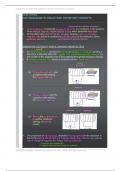
GENERATING ELECTRICITY FROM A CHANGING MAGNETIC FIELD
An electromotive force, and hence a current, is induced in a conductor (a wire, a
flat coil or a solenoid) when the magnetic field around the conductor changes, i.e.
the number of the magnetic lines of force passing through the conductor changes.
A changing magnetic field around a conductor can be created by:
solenoid
Hollow magnet
(a) Moving the conductor near cardboard
cylinder
a magnet while keeping
the magnet stationary
galvanometer
solenoid
Hollow magnet
(b) Moving a magnet near the cardboard
cylinder
conductor while keeping
the conductor stationary
galvanometer
solenoid
(c) Placing the conductor next
to another conductor
carrying alternating
current
a.c. supply
galvanometer
The production of induced e.m.f. (therefore induced current) in the conductor is
due to the varying rate of cutting of magnetic flux by the conductor, i.e. varying
rate of change of magnetic flux linkage with the conductor.
_____________________________________________________________________________
Nakazawa EduServ. Created by Jackson Tik, B.Sc. (NUS). ©All rights reserved. 1
, IGCSE Physics\Electromagnetic Induction\Important Concepts
In a steady magnetic field, no induced e.m.f. (hence induced current) is produced
in the conductor when:
(a) Both the conductor and the magnet remains stationary
(b) The conductor is moved along the magnetic field lines
Test Yourself:
B (a) The section of the wire AB is moved
Wire along the vertical plane (up and down).
Will the pointer of the galvanometer
show a deflection? Why?
Magnet
________________________________
N S
________________________________
A
________________________________
G ________________________________
________________________________
________________________________
________________________________
(b) The section of the wire AB is moved along the horizontal plane (left and right).
Will the pointer of the galvanometer show a deflection? Why?
No. The wire is moving in the direction along the magnetic field lines, resulting in
__________________________________________________________________
no cutting of magnetic flux by the wire, causing no induced e.m.f. and induced
__________________________________________________________________
current to be produced.
__________________________________________________________________
(c) The galvanometer is replaced by a dry cell so that current flows in the direction
AB along wire. What would you think will happen to the wire?
__________________________________________________________________
induced electromotive force is proportional to the rate of change of the magnetic
lines of force linked with the circuit, i.e. the rate of change of cutting of magnetic
flux by the conductor.
In the experimental setup below,
_____________________________________________________________________________
Nakazawa EduServ. Created by Jackson Tik, B.Sc. (NUS). ©All rights reserved. 2
IGCSE PHYSICS
ELECTROMAGNETIC INDUCTION: IMPORTANT CONCEPTS
Electromagnetism involves the passage of electricity in a conductor in the presence
of an external magnetic field to produce a force which generates movement.
On the other hand, electromagnetic induction involves creating a changing
magnetic field around a conductor to produce current in the conductor, hence
generates electricity.
GENERATING ELECTRICITY FROM A CHANGING MAGNETIC FIELD
An electromotive force, and hence a current, is induced in a conductor (a wire, a
flat coil or a solenoid) when the magnetic field around the conductor changes, i.e.
the number of the magnetic lines of force passing through the conductor changes.
A changing magnetic field around a conductor can be created by:
solenoid
Hollow magnet
(a) Moving the conductor near cardboard
cylinder
a magnet while keeping
the magnet stationary
galvanometer
solenoid
Hollow magnet
(b) Moving a magnet near the cardboard
cylinder
conductor while keeping
the conductor stationary
galvanometer
solenoid
(c) Placing the conductor next
to another conductor
carrying alternating
current
a.c. supply
galvanometer
The production of induced e.m.f. (therefore induced current) in the conductor is
due to the varying rate of cutting of magnetic flux by the conductor, i.e. varying
rate of change of magnetic flux linkage with the conductor.
_____________________________________________________________________________
Nakazawa EduServ. Created by Jackson Tik, B.Sc. (NUS). ©All rights reserved. 1
, IGCSE Physics\Electromagnetic Induction\Important Concepts
In a steady magnetic field, no induced e.m.f. (hence induced current) is produced
in the conductor when:
(a) Both the conductor and the magnet remains stationary
(b) The conductor is moved along the magnetic field lines
Test Yourself:
B (a) The section of the wire AB is moved
Wire along the vertical plane (up and down).
Will the pointer of the galvanometer
show a deflection? Why?
Magnet
________________________________
N S
________________________________
A
________________________________
G ________________________________
________________________________
________________________________
________________________________
(b) The section of the wire AB is moved along the horizontal plane (left and right).
Will the pointer of the galvanometer show a deflection? Why?
No. The wire is moving in the direction along the magnetic field lines, resulting in
__________________________________________________________________
no cutting of magnetic flux by the wire, causing no induced e.m.f. and induced
__________________________________________________________________
current to be produced.
__________________________________________________________________
(c) The galvanometer is replaced by a dry cell so that current flows in the direction
AB along wire. What would you think will happen to the wire?
__________________________________________________________________
induced electromotive force is proportional to the rate of change of the magnetic
lines of force linked with the circuit, i.e. the rate of change of cutting of magnetic
flux by the conductor.
In the experimental setup below,
_____________________________________________________________________________
Nakazawa EduServ. Created by Jackson Tik, B.Sc. (NUS). ©All rights reserved. 2