©JN, LE & ME 2019
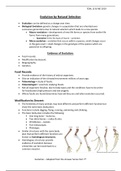
Evolution by Natural Selection
• Evolution: can be defined as a change over time.
• Biological Evolution: genetic changes in a population that are inherited over
successive generations due to natural selection which leads to a new species.
Macro–evolution – development of new life forms or species from earlier life
forms from many generations.
o Speciation forms the basis of macro – evolution.
Micro-evolution – variation that occurs within a species, small changes occur
in the gene pool = small changes in the genotype of the species which are
passed on to offspring.
Evidence of Evolution:
• Fossil records.
• Modification by descent.
• Biogeography.
• Genetics.
Fossil Records:
• Provide evidence of the history of extinct organisms.
• Give an indication of the climate/environment millions of years ago.
• Paleontology = study of fossils.
• Paleontologist = scientists studying fossils.
• Not all organisms fossilize, due to body types and the conditions have to be prime
for fossilization (high pressure and low oxygen).
• Where fossils are found determines how old they are and when evolution occurred.
Modification by Descent:
• The forelimbs of many animals may look different and perform different function but
show the same basic body plans.
• Functions include digging, flying, running, swimming and climbing.
• The basic body plan includes the following:
One long bone – humerus.
Two distal bones – radius & ulna.
Wristbones – carpals.
Five metacarpals.
Phalanges.
• Similar structures with the same body
plan that perform different functions are
known as homologous structures.
• Homologous structures provide
evidence of evolution because
similarities can be traced back to a
common ancestor.
Evolution – Adapted from the Answer Series Part I
, ©JN, LE & ME 2019
• Divergent evolution – organisms develop from a common ancestor but follow
different evolutionary paths. (i.e. moles, bats and horses)
• Convergent evolution – the organisms are not related but develop similar structures
for similar environments, completely independent of each other. These structures
are known as analogous structures.
• Modification within a species:
Species have changes over millions of years.
Modern species are modified descendants of earlier species.
Adaptations occurred due to different environments.
Biogeography:
• The study of the distribution of existing and extinct animals in specific geographical
regions.
• The studies prove that closely related species occur in the same geographical region
and thus may suggest that they share a common ancestor.
• Some regions may be isolated by barriers, preventing species spreading from one
region to another, this may lead to the formation of a new species. Such barriers
include:
Large mountain ranges.
Large masses of water (oceans).
Small land masses.
Deserts.
• Flightless birds show great similarities although they live on separate land masses
and belong to separate species.
Scientists claim that they may have developed from a common ancestor.
The birds were separated geographically when Gondwanaland broke up.
The climates changed due to the continental drift.
Thus, the birds adapted to the environments and new species were
developed due to different mutations and selections in the environments.
Genetics:
• Closely related organisms have similarities in their DNA.
• It shows how changes in genotypes or phenotypes are transferred to successive
generations.
• It explains how the gene pools of populations can change and lead to a new species.
Other forms of Evidence:
• Comparative biochemistry.
• Vestigial organs.
• Comparative embryology.
Development of The Theory of Evolution:
• Three major observations made when studying the natural environment:
1. The rich biodiversity.
2. How living organisms are well adapted to a particular environment.
3. Continuous changes take place in the environment.
• Many ideas about the origin and diversity of species have already been formed.
Evolution – Adapted from the Answer Series Part I
, ©JN, LE & ME 2019
• The views of the following four scientists contributed to the theory of evolution:
1. Erasmus Darwin.
2. Jean Baptiste de Lamarck.
3. Alfred Wallace.
4. Charles Darwin.
Erasmus Darwin:
• Proposed the following ideas about evolution:
Life on earth originated from a single common ancestor.
There are similarities between different organisms which indicate that one
species developed from another over time.
Artificial selection and metamorphosis were used to illustrate how changes
possible occurred over time.
Jean Baptiste de Lamarck:
• His theory was based on two ideas:
1. The use or disuse of organs may cause the organs to increase or decrease in size
or even completely disappear.
2. During an organism life, certain changes in characteristics that are inherited by
their offspring = changes populations and forms new species.
• Lamarck’s Laws:
Law of use and disuse.
Law of inheritance of acquired characteristics.
Applications of Lamarckism:
Reasons for Rejection of Lamarckism:
• Lamarck was the first scientist to propose that the characteristics of a parents would
be passed onto the offspring.
• He had no understanding of genes and mutations.
• The ancestors of the giraffe possessed the gene for long, strong necks and did not
acquire the genes by stretching their necks.
Evolution – Adapted from the Answer Series Part I
Evolution by Natural Selection
• Evolution: can be defined as a change over time.
• Biological Evolution: genetic changes in a population that are inherited over
successive generations due to natural selection which leads to a new species.
Macro–evolution – development of new life forms or species from earlier life
forms from many generations.
o Speciation forms the basis of macro – evolution.
Micro-evolution – variation that occurs within a species, small changes occur
in the gene pool = small changes in the genotype of the species which are
passed on to offspring.
Evidence of Evolution:
• Fossil records.
• Modification by descent.
• Biogeography.
• Genetics.
Fossil Records:
• Provide evidence of the history of extinct organisms.
• Give an indication of the climate/environment millions of years ago.
• Paleontology = study of fossils.
• Paleontologist = scientists studying fossils.
• Not all organisms fossilize, due to body types and the conditions have to be prime
for fossilization (high pressure and low oxygen).
• Where fossils are found determines how old they are and when evolution occurred.
Modification by Descent:
• The forelimbs of many animals may look different and perform different function but
show the same basic body plans.
• Functions include digging, flying, running, swimming and climbing.
• The basic body plan includes the following:
One long bone – humerus.
Two distal bones – radius & ulna.
Wristbones – carpals.
Five metacarpals.
Phalanges.
• Similar structures with the same body
plan that perform different functions are
known as homologous structures.
• Homologous structures provide
evidence of evolution because
similarities can be traced back to a
common ancestor.
Evolution – Adapted from the Answer Series Part I
, ©JN, LE & ME 2019
• Divergent evolution – organisms develop from a common ancestor but follow
different evolutionary paths. (i.e. moles, bats and horses)
• Convergent evolution – the organisms are not related but develop similar structures
for similar environments, completely independent of each other. These structures
are known as analogous structures.
• Modification within a species:
Species have changes over millions of years.
Modern species are modified descendants of earlier species.
Adaptations occurred due to different environments.
Biogeography:
• The study of the distribution of existing and extinct animals in specific geographical
regions.
• The studies prove that closely related species occur in the same geographical region
and thus may suggest that they share a common ancestor.
• Some regions may be isolated by barriers, preventing species spreading from one
region to another, this may lead to the formation of a new species. Such barriers
include:
Large mountain ranges.
Large masses of water (oceans).
Small land masses.
Deserts.
• Flightless birds show great similarities although they live on separate land masses
and belong to separate species.
Scientists claim that they may have developed from a common ancestor.
The birds were separated geographically when Gondwanaland broke up.
The climates changed due to the continental drift.
Thus, the birds adapted to the environments and new species were
developed due to different mutations and selections in the environments.
Genetics:
• Closely related organisms have similarities in their DNA.
• It shows how changes in genotypes or phenotypes are transferred to successive
generations.
• It explains how the gene pools of populations can change and lead to a new species.
Other forms of Evidence:
• Comparative biochemistry.
• Vestigial organs.
• Comparative embryology.
Development of The Theory of Evolution:
• Three major observations made when studying the natural environment:
1. The rich biodiversity.
2. How living organisms are well adapted to a particular environment.
3. Continuous changes take place in the environment.
• Many ideas about the origin and diversity of species have already been formed.
Evolution – Adapted from the Answer Series Part I
, ©JN, LE & ME 2019
• The views of the following four scientists contributed to the theory of evolution:
1. Erasmus Darwin.
2. Jean Baptiste de Lamarck.
3. Alfred Wallace.
4. Charles Darwin.
Erasmus Darwin:
• Proposed the following ideas about evolution:
Life on earth originated from a single common ancestor.
There are similarities between different organisms which indicate that one
species developed from another over time.
Artificial selection and metamorphosis were used to illustrate how changes
possible occurred over time.
Jean Baptiste de Lamarck:
• His theory was based on two ideas:
1. The use or disuse of organs may cause the organs to increase or decrease in size
or even completely disappear.
2. During an organism life, certain changes in characteristics that are inherited by
their offspring = changes populations and forms new species.
• Lamarck’s Laws:
Law of use and disuse.
Law of inheritance of acquired characteristics.
Applications of Lamarckism:
Reasons for Rejection of Lamarckism:
• Lamarck was the first scientist to propose that the characteristics of a parents would
be passed onto the offspring.
• He had no understanding of genes and mutations.
• The ancestors of the giraffe possessed the gene for long, strong necks and did not
acquire the genes by stretching their necks.
Evolution – Adapted from the Answer Series Part I