100% satisfaction guarantee Immediately available after payment Both online and in PDF No strings attached 4.2 TrustPilot
logo-home
Exam (elaborations)

Community Nursing- Exam 1 Questions and Answers correct

Rating
-
Sold
-
Pages
10
Grade
A+
Uploaded on
23-04-2025
Written in
2024/2025

Community Nursing- Exam 1 Questions and Answers correct The three levels of practice of the Minnesota Wheel are: Communities, systems, and individuals/families. Levels of practice, color wedges, and interventions Levels of practice, populations at risk, and populations of interest Levels of practice, public health interventions, and population based Communities, systems, and individuals/families. According to the American Public Health Association (APHA) website, in 2019 the number of cents in a dollar spent on Public Health was: 72 33 9 1 1 Aggregate is a term used in community health, it means: A group within a larger population having some characteristic in common. A geopolitical community A phenomenological community A nuclear community A group within a larger population having some characteristic in common. At the end of 2018, the Food and Drug Administration banned the sale of flavored E-Cigs to kids. Identify the level of prevention the FDA utilized: Primordial Primary Secondary Tertiary Primordial Identify the most challenging ethical principal for a nurse to achieve in the community? Nonmaleficence Beneficence Fidelity Autonomy Principles of totality & integrity Justice Justice Identify the action most likely to result in the most significant change in healthcare outcomes for persons living in the United States: Expand the number of neighborhood health clinics. Shift a significant portion of federal funding from acute care to health promotion activities Dump a significant amount of money into healthcare agencies to improve Electronic Health Records. Increase the number of scholarships provided to healthcare professionals. Shift a significant portion of federal funding from acute care to health promotion activities Match the ethical principles of nursing to their definitions. Question Nonmaleficence Beneficence Fidelity Autonomy . Principles of totality/integrity Justice Definition options: (A) Remain competent in the field and report suspected abuse. (B) Have compassion, take positive actions to help others and follow through on the desire to do good. (C) Keep commitments, based on virtue of caring. (D) Respect patients' wishes, even when you do not agree with them. (E) Consider the entire person when deciding which therapies, medications or procedures a patient should receive. (F) Treat ALL patient's fairly and equally. Nonmaleficence (A) Beneficence (B) Fidelity (C) Autonomy (D) . Principles of totality/integrity (E) Justice (F) Match the item to its description: Microscopic Approach Macroscopic Approach Critical Social Theory Orem's self-care deficit theory of nursing Health Belief Model Milio's Framework Ecological Framework Critical Interactionism Definitions: A. Examines individual and sometimes a families responses to health and illness B. Delineates factors in the population that perpetuate development of illness or foster development of health. Emphasizes social, economic, and environmental precursors of illness (including policy). May involve social or political action - including polices. C. A nurse would use this theory when the goal is to identify the social inequalities surrounding a client's health D. Nursing is a response to the inability to care for oneself E. Motivates people to change behavior to avoid a negative health outcome. F. Stresses the importance of making health-promoting choices readily available and les Microscopic Approach (A) Macroscopic Approach (B) Critical Social Theory (C) Orem's self-care deficit theory of nursing (D) Health Belief Model (E) Milio's Framework (F) Ecological Framework (G) Critical Interactionism (H) Bellack stated that when working in the community, success depends upon ALL of the following, except: Empathy Listening Being patient Providing accurate and scientifically sound information Respecting the experiences of community members Empathy Identify two characteristics that are imperative to a nurse's success when working in the community: Know the communities needs and be very methodical about the care provided. Show respect and listen effectively. At minimum, have a BSN and engage in continuing education frequently. Be an empathetic and caring person. Show respect and listen effectively. A client did not return for a follow-up appointment after having major abdominal surgery. When using a macroscopic theoretical approach, what might the nurse appropriately conclude? The client does not care about his health care needs. The patient does not trust the healthcare system. The healthcare system failed to meet the client's perceived needs. The doctor did not appropriately stress the importance of a follow-up visit. The healthcare system failed to meet the client's perceived needs. Upstream thinking actions are focused on modifying: Levels of water pollution to improve health outcomes Economic, political, and environmental factors Levels of air pollution to improve health outcomes Smoking rates Economic, political, and environmental factors Match the item to its description: Risk Risk factor Risk Assessment Modifiable Risk factor Non-modifiable Risk factor Definitions: A- The probability that a specific event will occur in a given time frame. b- Any attribute, characteristic or exposure of an individual that increases the likelihood of developing a disease or injury. C- A systematic way of distinguishing the risk posed by potentially harmful exposures (or other attributes or characteristics). D- Putting make-up on while driving E- Age Risk (A) Risk factor (B) Risk Assessment (C) Modifiable Risk factor (D) Non-modifiable Risk factor (E) A client had been into the clinic several times for treatment of his elevated blood sugars. Each visit, the nurse spent over 20 minutes sharing patient education, but the client never changed behavior. What had the nurse forgotten? There may be other issues in the client's life that are more important. Information is a component, but will not motivate someone to change behavior. People need to hear a message at least 7 times before they will change behavior. Patient's only listen to MDs, they ignore what nurses say. Information is a component, but will not motivate someone to change behavior. Identify the risk factor least subject to modification: Life style choices Diet Environmental exposure Exercise Environmental exposure A Public Health Department has the funding for one more health promotion program this year. Two topics were selected (healthy eating and activity). Select the group that would benefit the most: Elementary students/invite their parents High school students Young adults at the YMCA/YWCA Senior citizens Elementary students/invite their parents Match the item to the definition: Health Promotion Health Protection Definitions: A) Enable people to exercise control over their own well being. B) Activities that a person engages in to prevent disease, detect disease in early stages, or to maximize their health within the constraints of a disease state. Health Promotion (A) Health Protection (B) Match the Health Promotion Theory to it's definition. Be able to apply these definitions on the exam. Pender's Health Promotion Model (HPM) Health Belief Model (HBM) Transtheoretical Model (TTM) Theory of Reasoned Action (TRA) Nightingale's Environmental Theory Definitions: A) This model cannot predict a a behavior outcome, it is useful to assist the healthcare provider and client determine the barriers and possible assets. B) Driven by the perception of the threat of illness if the behavior is NOT chosen. C) Behavior change takes time, moving through sequential stages. The stages are fluid, so a person may move back and forth among stages. D) Based on the individual's intention to perform or not perform a given activity. The key to this theory is the individuals "INTENT." E) Environment, Person, Health and Nursing Pender's Health Promotion Model (HPM)- A Health Belief Model (HBM)- B Transtheoretical Model (TTM)- C Theory of Reasoned Action (TRA)- D Nightingale's Environmental Theory- E Which of the following definitions is the correct definition for Epidemiology: Epidemiology is the study of the distribution and determinants of health-related states or events in specified populations, and the application of this study to the control of health problems. Epidemiology is a process of collecting data then transforming this data into knowledge, insights, skills and values that helps people to change behavior. Epidemiology is the study of the distribution and determinants of health-related states or events in specified populations, and the application of this study to the control of health problems. Identify the one way Epidemiology is used in Public Health from the below options: Evaluate effectiveness, accessibility, and quality of personal and population-based health services Enforce laws and regulations that protect health and ensure safety Link people to needed personal health services and assure the provision of health care when otherwise unavailable Assure a competent public health and personal health care workforce Evaluate effectiveness, accessibility, and quality of personal and population-based health services In the 20th century, the focus of epidemiology shifted from acute and contagious disease to chronic and non-contagious diseases in developed countries. Identify some of the reasons for this shift: Increased pollution, increased world population, and a decrease in food supply Increased access to clean water, access to birth control, greater access to healthier foods, increase in educational opportunities Increased global conflicts, development of multidrug resistant organisms, less time to spend with family and friends Increased access to clean water, access to birth control, greater access to healthier foods, increase in educational opportunities The purpose of epidemiology is to: To gain immortality To improve man's material existence Develop measures to prevent or control disease in a community Develop measures to prevent or control disease in a community Analytical Epidemiology deals with the questions of who, what, when and where. Descriptive Epidemiology deals with the questions of why and how. True or False False Incidence is defined as: a. # of cases people in the population b. # of new cases of disease over specific time period # of persons at risk of disease over that specific period of time b. # of new cases of disease over specific time period # of persons at risk of disease over that specific period of time Determining the prevalence of disease is useful for determining the likelihood of what caused the disease. Answers: True False False Identify the six criteria that establish the existence of a cause-and-effect relationship: Weak association Dose-response relationship Temporally correct relationship Biological plausibility Inconsistency with other studies Sensitivity Strength of association Dose-response relationship Exposure to causal factor occurred after disease development Biological plausibility Consistent with other studies Sensitivity Fragile association Response independent of dose Exposure to causal factor occurred before disease development Biological unplausable Consistent with other studies Sensitivity Strength of association Dose-response relationship Temporally correct relationship Biological plausibility Consistent with other studies Specificity Strength of association Dose-response relationship Temporally correct relationship Biological plausibility Consistent with other studies Specificity

Show more Read less
Institution
240 Community Nursing
Course
240 Community Nursing


Whoops! We can’t load your doc right now. Try again or contact support.

Written for

Institution
240 Community Nursing
Course
240 Community Nursing

Document information

Uploaded on
April 23, 2025
Number of pages
10
Written in
2024/2025
Type
Exam (elaborations)
Contains
Questions & answers

Subjects

Content preview

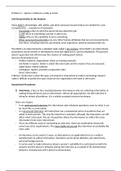
Community Nursing- Exam 1 Questions and
Answers correct
The three levels of practice of the Minnesota Wheel are:
Communities, systems, and individuals/families.
Levels of practice, color wedges, and interventions
Levels of practice, populations at risk, and populations of interest
Levels of practice, public health interventions, and population based - answer
Communities, systems, and individuals/families.

According to the American Public Health Association (APHA) website, in 2019 the
number of cents in a dollar spent on Public Health was:
72
33
9
1 - answer 1

Aggregate is a term used in community health, it means:
A group within a larger population having some characteristic in common.
A geopolitical community
A phenomenological community
A nuclear community - answer A group within a larger population having some
characteristic in common.

At the end of 2018, the Food and Drug Administration banned the sale of flavored E-
Cigs to kids. Identify the level of prevention the FDA utilized:
Primordial
Primary
Secondary
Tertiary - answer Primordial

Identify the most challenging ethical principal for a nurse to achieve in the community?
Nonmaleficence
Beneficence
Fidelity
Autonomy
Principles of totality & integrity
Justice - answer Justice

Identify the action most likely to result in the most significant change in healthcare
outcomes for persons living in the United States:

Expand the number of neighborhood health clinics.

, Shift a significant portion of federal funding from acute care to health promotion
activities

Dump a significant amount of money into healthcare agencies to improve Electronic
Health Records.

Increase the number of scholarships provided to healthcare professionals. - answer
Shift a significant portion of federal funding from acute care to health promotion
activities

Match the ethical principles of nursing to their definitions.
Question

Nonmaleficence

Beneficence

Fidelity

Autonomy
.
Principles of totality/integrity

Justice

Definition options:
(A) Remain competent in the field and report suspected abuse.

(B) Have compassion, take positive actions to help others and follow through on the
desire to do good.

(C) Keep commitments, based on virtue of caring.

(D) Respect patients' wishes, even when you do not agree with them.

(E) Consider the entire person when deciding which therapies, medications or
procedures a patient should receive.

(F) Treat ALL patient's fairly and equally. - answer Nonmaleficence (A)

Beneficence (B)

Fidelity (C)

Autonomy (D)

Get to know the seller

Seller avatar
Reputation scores are based on the amount of documents a seller has sold for a fee and the reviews they have received for those documents. There are three levels: Bronze, Silver and Gold. The better the reputation, the more your can rely on the quality of the sellers work.
Pogba119 Harvard University
View profile
Follow You need to be logged in order to follow users or courses
Sold
48
Member since
1 year
Number of followers
2
Documents
4845
Last sold
3 weeks ago
NURSING TEST

BEST EDUCATIONAL RESOURCES FOR STUDENTS

3.9

9 reviews

5
4
4
2
3
2
2
0
1
1

Recently viewed by you

Why students choose Stuvia

Created by fellow students, verified by reviews

Quality you can trust: written by students who passed their tests and reviewed by others who've used these notes.

Didn't get what you expected? Choose another document

No worries! You can instantly pick a different document that better fits what you're looking for.

Pay as you like, start learning right away

No subscription, no commitments. Pay the way you're used to via credit card and download your PDF document instantly.

Student with book image

“Bought, downloaded, and aced it. It really can be that simple.”

Alisha Student

Frequently asked questions