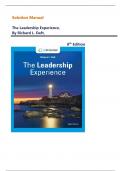
Solution Manual
The Leadership Experience,
By Richard L. Daft,
8th Edition
,Table Of Content
Chapter 1. What Does It Mean To Be A Leader?
Chapter 2. Traits, Behaviors, And Relationships.
Chapter 3. Contingency Approaches To Leadership.
Chapter 4. The Leader As An Individual.
Chapter 5. Leadership Mind And Heart.
Chapter 6. Courage And Moral Leadership.
Chapter 7. Followership.
Chapter 8. Motivation And Empowerment.
Chapter 9. Leadership Communication.
Chapter 10. Leading Teams.
Chapter 11. Developing Leadership Diversity.
Chapter 12. Leadership Power And Influence.
Chapter 13. Creating Vision And Strategic Direction.
Chapter 14. Shaping Culture And Values.
Chapter 15. Leading Change.
,Instructor Manual
The Leadership Experience 8th Edition Daft
Chapter 1-15
Chapter 1
Table Of Contents
Purpose And Perspective Of The Chapter ................................................................................... 2
Chapter Objectives ...................................................................................................................... 2
Key Terms................................................................................................................................... 2
What's New In This Chapter ........................................................................................................ 3
Chapter Outline ........................................................................................................................... 3
Additional Resources................................................................................................................... 7
, Purpose And Perspective Of The Chapter
This Chapter Introduces The Concept Of Leadership And Discuss How Individuals Can Grow
And Become Leaders. First, We Explore The Meaning Of Leadership And The Importance Of
Effective Leadership. We Then Review Leadership Differences From Management And The
Evolution Of Leadership Through Major Researched Theories. Next, We Explore The Biggest
Challenges Facing The Leaders Today By Turning Historical Leadership Theories Into Best
Practices. Finally, We Explore The Making Of A Leader And How One Can Acquire Leadership
Skills Through Development And Experience.
Chapter Objectives
The Following Objectives Are Addressed In This Chapter:
01.01 Explain The Full Meaning Of Leadership And See The Leadership Potential In
Yourself And Others.
01.02 Describe The Five Fundamental Transformations Facing Today‘S
Leaders And Organizations.
01.03 Summarize The Fundamental Differences Between Leadership And Management.
01.04 Explain How Leadership Has Evolved And How Historical Approaches Apply To
The Practice Of Leadership Today.
01.05 Identify The Primary Reasons For Leadership Derailment And The New Paradigm
Skills That Can Help You Avoid It.
01.06 Discover How To Use This Textbook To Learn The Most About Leadership.
[Return To Top]
Key Terms
Leadership: An Influence Relationship Among Leaders And Followers Who Intend Real
Changes And Outcomes That Reflect Their Shared Purposes.
Paradigm: A Shared Mindset That Represents A Fundamental Way Of Thinking About,
Perceiving, And Understanding The World.
Humility: Being Unpretentious And Modest Rather Than Arrogant And Prideful.
Will: Having A Very Strong Intention About The Organziation‘S Future
Management: The Attainment Of Organizational Goals In An Effective And Efficient Manner
Through Planning, Organizing, Staffing, Directing, And Controlling Organizational Resources.
Vision: A Picture Of An Ambitious, Desirable Future For The Organization Or Team.
Enlightened Leadership: Giving Up Control In The Traditional Sense And Encouraging The Growth And
Development Of Others To Ensure Organizational Flexibility, Responsiveness, And Inclusivity.
Derailment: A Phenomenon In Which A Manager With An Impressive Track Record Reaches
A Certain Level But Goes Off Track And Can‘T Advance Because Of A Mismatch Between Job
Needs And Personal Skills And Qualities.
[Return To Top]
The Leadership Experience,
By Richard L. Daft,
8th Edition
,Table Of Content
Chapter 1. What Does It Mean To Be A Leader?
Chapter 2. Traits, Behaviors, And Relationships.
Chapter 3. Contingency Approaches To Leadership.
Chapter 4. The Leader As An Individual.
Chapter 5. Leadership Mind And Heart.
Chapter 6. Courage And Moral Leadership.
Chapter 7. Followership.
Chapter 8. Motivation And Empowerment.
Chapter 9. Leadership Communication.
Chapter 10. Leading Teams.
Chapter 11. Developing Leadership Diversity.
Chapter 12. Leadership Power And Influence.
Chapter 13. Creating Vision And Strategic Direction.
Chapter 14. Shaping Culture And Values.
Chapter 15. Leading Change.
,Instructor Manual
The Leadership Experience 8th Edition Daft
Chapter 1-15
Chapter 1
Table Of Contents
Purpose And Perspective Of The Chapter ................................................................................... 2
Chapter Objectives ...................................................................................................................... 2
Key Terms................................................................................................................................... 2
What's New In This Chapter ........................................................................................................ 3
Chapter Outline ........................................................................................................................... 3
Additional Resources................................................................................................................... 7
, Purpose And Perspective Of The Chapter
This Chapter Introduces The Concept Of Leadership And Discuss How Individuals Can Grow
And Become Leaders. First, We Explore The Meaning Of Leadership And The Importance Of
Effective Leadership. We Then Review Leadership Differences From Management And The
Evolution Of Leadership Through Major Researched Theories. Next, We Explore The Biggest
Challenges Facing The Leaders Today By Turning Historical Leadership Theories Into Best
Practices. Finally, We Explore The Making Of A Leader And How One Can Acquire Leadership
Skills Through Development And Experience.
Chapter Objectives
The Following Objectives Are Addressed In This Chapter:
01.01 Explain The Full Meaning Of Leadership And See The Leadership Potential In
Yourself And Others.
01.02 Describe The Five Fundamental Transformations Facing Today‘S
Leaders And Organizations.
01.03 Summarize The Fundamental Differences Between Leadership And Management.
01.04 Explain How Leadership Has Evolved And How Historical Approaches Apply To
The Practice Of Leadership Today.
01.05 Identify The Primary Reasons For Leadership Derailment And The New Paradigm
Skills That Can Help You Avoid It.
01.06 Discover How To Use This Textbook To Learn The Most About Leadership.
[Return To Top]
Key Terms
Leadership: An Influence Relationship Among Leaders And Followers Who Intend Real
Changes And Outcomes That Reflect Their Shared Purposes.
Paradigm: A Shared Mindset That Represents A Fundamental Way Of Thinking About,
Perceiving, And Understanding The World.
Humility: Being Unpretentious And Modest Rather Than Arrogant And Prideful.
Will: Having A Very Strong Intention About The Organziation‘S Future
Management: The Attainment Of Organizational Goals In An Effective And Efficient Manner
Through Planning, Organizing, Staffing, Directing, And Controlling Organizational Resources.
Vision: A Picture Of An Ambitious, Desirable Future For The Organization Or Team.
Enlightened Leadership: Giving Up Control In The Traditional Sense And Encouraging The Growth And
Development Of Others To Ensure Organizational Flexibility, Responsiveness, And Inclusivity.
Derailment: A Phenomenon In Which A Manager With An Impressive Track Record Reaches
A Certain Level But Goes Off Track And Can‘T Advance Because Of A Mismatch Between Job
Needs And Personal Skills And Qualities.
[Return To Top]