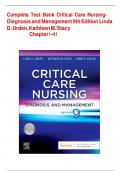
Complete Test Bank Critical Care Nursing-
w l w l w l w l w l
Diagnosis and Management 9th Edition Linda
w
l wl wl wl wl wl wl
D. Urden, Kathleen M. Stacy
wl wl wl wl
Chapter 1-41 wl
,Chapter 01: Critical Care Nursing PracticeUrde
wl wl wl wl wl lw
n: Critical Care Nursing, 9th Edition
wl wl wl wl wl
MULTIPLE CHOICE wl
1. During World War II, what types of wards were developed to care for critically injur
wl wl wl wl wl wl wl wl wl wl wl wl wl wl
edpatients?lw
a. Intensive care wl
b. Triage
c. Shock
d. Postoperative
ANS: C w l
During World War II, shock wards were established to care for critically injured patients.
wl wl wl wl wl wl wl wl wl wl wl wl wl
Triage wards establish the order in which a patient is seen or treated upon arrival to a h
wl wl wl wl wl wl wl wl wl wl wl wl wl wl wl wl wl wl
ospital. Postoperative wards were developed in 1900 and later evolved into intensive careu
wl wl wl wl wl wl wl wl wl wl wl wl lw
nits.
PTS: 1 DIF: Cognitive Level: Remembering REF: wl wl
p. 2 OBJ: Nursing Process Step: N/A TOP:
wl wl wl wl wl
Critical Care Nursing PracticeMSC: NCLEX: Safe and Effective Care E
wl wl wl lw wl wl wl wl wl wl
nvironment
2. What type of practitioner has a broad depth of specialty knowledge and expertise a
wl wl wl wl wl wl wl wl wl wl wl wl wl
ndmanages complex clinical and system issues?
lw wl wl wl wl wl
a. Registered nurses wl
b. Advanced practice nurses wl wl
c. Clinical nurse leaders wl wl
d. Intensivists
ANS: B w l
Advanced practice nurses (APNs) have a broad depth of knowledge and expertise in their
wl wl wl wl wl wl wl wl wl wl wl wl wl
specialty area and manage complex clinical and systems issues. Intensivists are medical
wl wl wl wl wl wl wl wl wl wl wl wl wl
practitioners who manage the critical ill patient. Registered nurses (RNs) are generally dire
wl wl wl wl wl wl wl wl wl wl wl wl
ctcare providers. Clinical nurse leaders (CNLs) generally do not manage system issues.
lw wl wl wl wl wl wl wl wl wl wl wl
PTS: 1 DIF: Cognitive Level: Remembering REF: wl wl
p. 5 OBJ: Nursing Process Step: N/A TOP:
wl wl wl wl wl
Critical Care Nursing PracticeMSC: NCLEX: Safe and Effective Care E
wl wl wl lw wl wl wl wl wl wl
nvironment
3. What type of practitioner is instrumental in ensuring care that is evidence based and t
wl wl wl wl wl wl wl wl wl wl wl wl wl wl
hatsafety programs are in place?
lw wl wl wl wl
a. Clinical nurse specialist wl wl
b. Advanced practice nurse wl wl
c. Registered nurses wl
d. Nurse practitioner wl
sANS: A
lw wl
1|Page
wl wl wl wl wl
, Clinical nurse specialists (CNSs) serve in specialty roles that use their clinical, teaching,
wl wl wl wl wl wl wl wl wl wl wl wl wl
research, leadership, and consultative abilities. They are instrumental in ensuring that care
wl wl wl wl wl wl wl wl wl wl wl w
isevidence based and that safety programs are in place. Advanced practice nurses (APNs)
l lw wl wl wl wl wl wl wl wl wl wl wl wl
have a broad depth of knowledge and expertise in their specialty area and manage comp
wl wl wl wl wl wl wl wl wl wl wl wl wl wl wl
lex clinical and systems issues. Registered nurses are generally direct care providers. Nur
wl wl wl wl wl wl wl wl wl wl wl wl
se practitioners (NPs) manage direct clinical care of groups of patients.
wl wl wl wl wl wl wl wl wl wl
PTS: 1 DIF: Cognitive Level: Remembering REF: wl wl
p. 6 OBJ: Nursing Process Step: N/A TOP:
wl wl wl wl wl
Critical Care Nursing PracticeMSC: NCLEX: Safe and Effective Care E wl wl wl lw wl wl wl wl wl wl
nvironment
4. Which professional organization administers critical care certification exams for registere
wl wl wl wl wl wl wl wl wl
dnurses?
lw
a. State Board of Registered Nurses wl wl wl wl
b. National Association of Clinical Nurse Specialist wl wl wl wl wl
c. Society of Critical Care Medicine wl wl wl wl
d. American Association of Critical-Care Nurses wl wl wl wl
ANS: D w l
American Association of Critical- wl wl wl
Care Nurses (AACN) administers certification exams forregistered nurses. The State Boar
wl wl wl wl wl wl lw wl wl wl wl
d of Registered Nurses (SBON) does not administer certification exams. National Associa
wl wl wl wl wl wl wl wl wl wl wl
tion of Clinical Nurse Specialists (NACNS) does notadminister certification exams. Socie
wl wl wl wl wl wl wl lw wl wl wl
ty of Critical Care Medicine (SCCM) does not administer nursing certification exams for
wl wl wl wl wl wl wl wl wl wl wl wl wl
registered nurses. wl
PTS: 1 DIF: Cognitive Level: Remembering REF: wl wl
p. 7 OBJ: wl wl
Nursing Process Step: NW/ WAW . T B SMT.OWPS: Critical Care Nursing Practice
wl wl wl l
w wlwl wl wl wl w
MSC: NCLEX: Safe and Effective Care Environment
l wl wl wl wl wl wl
5. Emphasis is on human integrity and stresses the theory that the body, mind, and spirit
wl wl wl wl wl wl wl wl wl wl wl wl wl wl wl
areinterdependent and inseparable. This statement describes which methodology of car
lw wl wl wl wl wl wl wl wl wl
e?
a. Holistic care wl
b. Individualized care wl
c. Cultural care wl
d. Interdisciplinary care wl
ANS: A w l
Holistic care focuses on human integrity and stresses that the body, mind, and spirit are i
wl wl wl wl wl wl wl wl wl wl wl wl wl wl wl
nterdependent and inseparable. Individualized care recognizes the uniqueness of each pati
wl wl wl wl wl wl wl wl wl wl
ent’s preferences, condition, and physiologic and psychosocial status. Cultural diversityin
wl wl wl wl wl wl wl wl wl lw wl
health care is not a new topic, but it is gaining emphasis and importance as the world be
wl wl wl wl wl wl wl wl wl wl wl wl wl wl wl wl wl
comes more accessible to all as the result of increasing technologies and interfaces with
wl wl wl wl wl wl wl wl wl wl wl wl wl wl
places and peoples. Interdisciplinary care is care among a variety of health care professio
wl wl wl wl wl wl wl wl wl wl wl wl wl
nals with the patient’s health as the common goal.
wl wl wl wl wl wl wl wl
PTS: 1 DIF: Cognitive Level: Remembering REF: wl wl
p. 12 OBJ: Nursing Process Step: N/A TOP: wl wl wl wl wl
Critical Care Nursing PracticeMSC: NCLEX: Safe and Effective Care E wl wl wl lw wl wl wl wl wl wl
nvironment
2|Page
wl wl wl wl wl
, 6. The American Association of Critical-
wl wl wl wl
Care Nurses (AACN) has developed short directivesthat can be used as quick references
wl wl wl wl wl wl lw wl wl wl wl wl wl
for clinical use that are known as
wl wl wl wl wl wl wl
a. Critical Care Protocol. wl wl
b. Practice Policies. wl
c. Evidence-Based Research. wl
d. Practice Alerts. wl
ANS: D w l
The American Association of Critical-
wl wl wl wl
Care Nurses (AACN) has promulgated several evidence-
wl wl wl wl wl wl
based practice summaries in the form of ―Practice Alerts.‖ Evidence-
wl wl wl wl wl wl wl wl wl
based nursingpractice considers the best research evidence on the care topic along with cl
wl lw wl wl wl wl wl wl wl wl wl wl wl wl
inical expertise of the nurse and patient preferences. Critical care protocol and practice p
wl wl wl wl wl wl wl wl wl wl wl wl wl
olicies are established by individual institutions.
wl wl wl wl wl
PTS: 1 DIF: Cognitive Level: Remembering REF: wl wl
p. 9 OBJ: Nursing Process Step: N/A TOP:
wl wl wl wl wl
Critical Care Nursing PracticeMSC: NCLEX: Safe and Effective Care E
wl wl wl lw wl wl wl wl wl wl
nvironment
7. What type of therapy is an option to conventional treatment?
wl wl wl wl wl wl wl wl wl
a. Alternative
b. Holistic
c. Complementary
d. Individualized
ANS: A w l
The term alternative denotes that a specific therapy is an option or alternative to what is
wl wl wl wl wl wl wl wl wl wl wl wl wl wl wl
considered conventional t r e a t mWe nWt Wo.f aTcBoSnM
wl di.
tioWnSor state. The term complementary was prop
wl wl wl wl wlwl wl wl wl wl wl wl
osed to describe therapies that can be used to complement or support conventional treatm
wl wl wl wl wl wl wl wl wl wl wl wl wl
ents. Holistic care focuses on human integrity and stresses that the body, mind, and
wl wl wl wl wl wl wl wl wl wl wl wl wl
spirit are interdependent and inseparable. Individualized care recognizes the uniqueness of
wl wl wl wl wl wl wl wl wl wl lw
each patient’s preferences, condition, and physiologic and psychosocial status.
wl wl wl wl wl wl wl wl
PTS: 1 DIF: Cognitive Level: Remembering REF: wl wl
p. 16 OBJ: Nursing Process Step: N/A TOP:
wl wl wl wl wl
Critical Care Nursing PracticeMSC: NCLEX: Safe and Effective Care E
wl wl wl lw wl wl wl wl wl wl
nvironment
8. Prayer, guided imagery, and massage are all examples of what type of treatment?
wl wl wl wl wl wl wl wl wl wl wl wl
a. Alternative therapy wl
b. Holistic care wl
c. Complementary care wl
d. Individualized car wl
eANS: C
lw wl
3|Page
wl wl wl wl wl
w l w l w l w l w l
Diagnosis and Management 9th Edition Linda
w
l wl wl wl wl wl wl
D. Urden, Kathleen M. Stacy
wl wl wl wl
Chapter 1-41 wl
,Chapter 01: Critical Care Nursing PracticeUrde
wl wl wl wl wl lw
n: Critical Care Nursing, 9th Edition
wl wl wl wl wl
MULTIPLE CHOICE wl
1. During World War II, what types of wards were developed to care for critically injur
wl wl wl wl wl wl wl wl wl wl wl wl wl wl
edpatients?lw
a. Intensive care wl
b. Triage
c. Shock
d. Postoperative
ANS: C w l
During World War II, shock wards were established to care for critically injured patients.
wl wl wl wl wl wl wl wl wl wl wl wl wl
Triage wards establish the order in which a patient is seen or treated upon arrival to a h
wl wl wl wl wl wl wl wl wl wl wl wl wl wl wl wl wl wl
ospital. Postoperative wards were developed in 1900 and later evolved into intensive careu
wl wl wl wl wl wl wl wl wl wl wl wl lw
nits.
PTS: 1 DIF: Cognitive Level: Remembering REF: wl wl
p. 2 OBJ: Nursing Process Step: N/A TOP:
wl wl wl wl wl
Critical Care Nursing PracticeMSC: NCLEX: Safe and Effective Care E
wl wl wl lw wl wl wl wl wl wl
nvironment
2. What type of practitioner has a broad depth of specialty knowledge and expertise a
wl wl wl wl wl wl wl wl wl wl wl wl wl
ndmanages complex clinical and system issues?
lw wl wl wl wl wl
a. Registered nurses wl
b. Advanced practice nurses wl wl
c. Clinical nurse leaders wl wl
d. Intensivists
ANS: B w l
Advanced practice nurses (APNs) have a broad depth of knowledge and expertise in their
wl wl wl wl wl wl wl wl wl wl wl wl wl
specialty area and manage complex clinical and systems issues. Intensivists are medical
wl wl wl wl wl wl wl wl wl wl wl wl wl
practitioners who manage the critical ill patient. Registered nurses (RNs) are generally dire
wl wl wl wl wl wl wl wl wl wl wl wl
ctcare providers. Clinical nurse leaders (CNLs) generally do not manage system issues.
lw wl wl wl wl wl wl wl wl wl wl wl
PTS: 1 DIF: Cognitive Level: Remembering REF: wl wl
p. 5 OBJ: Nursing Process Step: N/A TOP:
wl wl wl wl wl
Critical Care Nursing PracticeMSC: NCLEX: Safe and Effective Care E
wl wl wl lw wl wl wl wl wl wl
nvironment
3. What type of practitioner is instrumental in ensuring care that is evidence based and t
wl wl wl wl wl wl wl wl wl wl wl wl wl wl
hatsafety programs are in place?
lw wl wl wl wl
a. Clinical nurse specialist wl wl
b. Advanced practice nurse wl wl
c. Registered nurses wl
d. Nurse practitioner wl
sANS: A
lw wl
1|Page
wl wl wl wl wl
, Clinical nurse specialists (CNSs) serve in specialty roles that use their clinical, teaching,
wl wl wl wl wl wl wl wl wl wl wl wl wl
research, leadership, and consultative abilities. They are instrumental in ensuring that care
wl wl wl wl wl wl wl wl wl wl wl w
isevidence based and that safety programs are in place. Advanced practice nurses (APNs)
l lw wl wl wl wl wl wl wl wl wl wl wl wl
have a broad depth of knowledge and expertise in their specialty area and manage comp
wl wl wl wl wl wl wl wl wl wl wl wl wl wl wl
lex clinical and systems issues. Registered nurses are generally direct care providers. Nur
wl wl wl wl wl wl wl wl wl wl wl wl
se practitioners (NPs) manage direct clinical care of groups of patients.
wl wl wl wl wl wl wl wl wl wl
PTS: 1 DIF: Cognitive Level: Remembering REF: wl wl
p. 6 OBJ: Nursing Process Step: N/A TOP:
wl wl wl wl wl
Critical Care Nursing PracticeMSC: NCLEX: Safe and Effective Care E wl wl wl lw wl wl wl wl wl wl
nvironment
4. Which professional organization administers critical care certification exams for registere
wl wl wl wl wl wl wl wl wl
dnurses?
lw
a. State Board of Registered Nurses wl wl wl wl
b. National Association of Clinical Nurse Specialist wl wl wl wl wl
c. Society of Critical Care Medicine wl wl wl wl
d. American Association of Critical-Care Nurses wl wl wl wl
ANS: D w l
American Association of Critical- wl wl wl
Care Nurses (AACN) administers certification exams forregistered nurses. The State Boar
wl wl wl wl wl wl lw wl wl wl wl
d of Registered Nurses (SBON) does not administer certification exams. National Associa
wl wl wl wl wl wl wl wl wl wl wl
tion of Clinical Nurse Specialists (NACNS) does notadminister certification exams. Socie
wl wl wl wl wl wl wl lw wl wl wl
ty of Critical Care Medicine (SCCM) does not administer nursing certification exams for
wl wl wl wl wl wl wl wl wl wl wl wl wl
registered nurses. wl
PTS: 1 DIF: Cognitive Level: Remembering REF: wl wl
p. 7 OBJ: wl wl
Nursing Process Step: NW/ WAW . T B SMT.OWPS: Critical Care Nursing Practice
wl wl wl l
w wlwl wl wl wl w
MSC: NCLEX: Safe and Effective Care Environment
l wl wl wl wl wl wl
5. Emphasis is on human integrity and stresses the theory that the body, mind, and spirit
wl wl wl wl wl wl wl wl wl wl wl wl wl wl wl
areinterdependent and inseparable. This statement describes which methodology of car
lw wl wl wl wl wl wl wl wl wl
e?
a. Holistic care wl
b. Individualized care wl
c. Cultural care wl
d. Interdisciplinary care wl
ANS: A w l
Holistic care focuses on human integrity and stresses that the body, mind, and spirit are i
wl wl wl wl wl wl wl wl wl wl wl wl wl wl wl
nterdependent and inseparable. Individualized care recognizes the uniqueness of each pati
wl wl wl wl wl wl wl wl wl wl
ent’s preferences, condition, and physiologic and psychosocial status. Cultural diversityin
wl wl wl wl wl wl wl wl wl lw wl
health care is not a new topic, but it is gaining emphasis and importance as the world be
wl wl wl wl wl wl wl wl wl wl wl wl wl wl wl wl wl
comes more accessible to all as the result of increasing technologies and interfaces with
wl wl wl wl wl wl wl wl wl wl wl wl wl wl
places and peoples. Interdisciplinary care is care among a variety of health care professio
wl wl wl wl wl wl wl wl wl wl wl wl wl
nals with the patient’s health as the common goal.
wl wl wl wl wl wl wl wl
PTS: 1 DIF: Cognitive Level: Remembering REF: wl wl
p. 12 OBJ: Nursing Process Step: N/A TOP: wl wl wl wl wl
Critical Care Nursing PracticeMSC: NCLEX: Safe and Effective Care E wl wl wl lw wl wl wl wl wl wl
nvironment
2|Page
wl wl wl wl wl
, 6. The American Association of Critical-
wl wl wl wl
Care Nurses (AACN) has developed short directivesthat can be used as quick references
wl wl wl wl wl wl lw wl wl wl wl wl wl
for clinical use that are known as
wl wl wl wl wl wl wl
a. Critical Care Protocol. wl wl
b. Practice Policies. wl
c. Evidence-Based Research. wl
d. Practice Alerts. wl
ANS: D w l
The American Association of Critical-
wl wl wl wl
Care Nurses (AACN) has promulgated several evidence-
wl wl wl wl wl wl
based practice summaries in the form of ―Practice Alerts.‖ Evidence-
wl wl wl wl wl wl wl wl wl
based nursingpractice considers the best research evidence on the care topic along with cl
wl lw wl wl wl wl wl wl wl wl wl wl wl wl
inical expertise of the nurse and patient preferences. Critical care protocol and practice p
wl wl wl wl wl wl wl wl wl wl wl wl wl
olicies are established by individual institutions.
wl wl wl wl wl
PTS: 1 DIF: Cognitive Level: Remembering REF: wl wl
p. 9 OBJ: Nursing Process Step: N/A TOP:
wl wl wl wl wl
Critical Care Nursing PracticeMSC: NCLEX: Safe and Effective Care E
wl wl wl lw wl wl wl wl wl wl
nvironment
7. What type of therapy is an option to conventional treatment?
wl wl wl wl wl wl wl wl wl
a. Alternative
b. Holistic
c. Complementary
d. Individualized
ANS: A w l
The term alternative denotes that a specific therapy is an option or alternative to what is
wl wl wl wl wl wl wl wl wl wl wl wl wl wl wl
considered conventional t r e a t mWe nWt Wo.f aTcBoSnM
wl di.
tioWnSor state. The term complementary was prop
wl wl wl wl wlwl wl wl wl wl wl wl
osed to describe therapies that can be used to complement or support conventional treatm
wl wl wl wl wl wl wl wl wl wl wl wl wl
ents. Holistic care focuses on human integrity and stresses that the body, mind, and
wl wl wl wl wl wl wl wl wl wl wl wl wl
spirit are interdependent and inseparable. Individualized care recognizes the uniqueness of
wl wl wl wl wl wl wl wl wl wl lw
each patient’s preferences, condition, and physiologic and psychosocial status.
wl wl wl wl wl wl wl wl
PTS: 1 DIF: Cognitive Level: Remembering REF: wl wl
p. 16 OBJ: Nursing Process Step: N/A TOP:
wl wl wl wl wl
Critical Care Nursing PracticeMSC: NCLEX: Safe and Effective Care E
wl wl wl lw wl wl wl wl wl wl
nvironment
8. Prayer, guided imagery, and massage are all examples of what type of treatment?
wl wl wl wl wl wl wl wl wl wl wl wl
a. Alternative therapy wl
b. Holistic care wl
c. Complementary care wl
d. Individualized car wl
eANS: C
lw wl
3|Page
wl wl wl wl wl