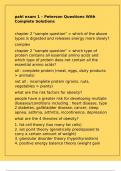
pahl exam 1 – Peterson Questions With
Complete Solutions
chapter 2 "sample question" > which of the above
types is digested and releases energy more slowly?
complex
chapter 2 "sample question" > which type of
protein contains all essential amino acids and
which type of protein does not contain all the
essential amino acids?
all : complete protein (meat, eggs, dairy products
> animals)
not all : incomplete protein (grains, nuts,
vegetables > plants)
what are the risk factors for obesity?
people have a greater risk for developing multiple
diseases/conditions including : heart disease, type
2 diabetes, gallbladder disease, cancer, sleep
apnea, asthma, arthritis, incontinence, depression
what are the 4 theories of obesity?
1. fat cell theory (too many fat cells)
2. set point theory (genetically predisposed to
carry a certain amount of weight)
3. glandular disorder theory (hypothyroidism)
4. positive energy balance theory (weight gain
, occurs when caloric intake exceeds energy
exoenditure)
what are some other causes of obesity?
genetics, diseases, drugs, socioeconomic status,
age, gender, ethnicity, dieting
what are some effective strategies for weight loss?
maintain a negative energy balance , make small
but permanent changes to diet, make small but
permanent changes in eating habits, increase the
amount of daily physical activity, increase daily
protein intake, perform resistance training,
increase NEAT (walking)
hierarchy of factors for fat loss, nutrition, and
exercise :
*from least important to most important
fat loss : hormonal balance, exercise, sleep and
stress, nutrition
nutrition : supplements, food composition, nutrient
timing, macronutrients, calories
exercise : low-intensity steady state in isolation,
high-intensity interval training in isolation, strength
training in isolation, strength training + endurance
training
what is the difference between subcutaneous and
visceral fat?
Complete Solutions
chapter 2 "sample question" > which of the above
types is digested and releases energy more slowly?
complex
chapter 2 "sample question" > which type of
protein contains all essential amino acids and
which type of protein does not contain all the
essential amino acids?
all : complete protein (meat, eggs, dairy products
> animals)
not all : incomplete protein (grains, nuts,
vegetables > plants)
what are the risk factors for obesity?
people have a greater risk for developing multiple
diseases/conditions including : heart disease, type
2 diabetes, gallbladder disease, cancer, sleep
apnea, asthma, arthritis, incontinence, depression
what are the 4 theories of obesity?
1. fat cell theory (too many fat cells)
2. set point theory (genetically predisposed to
carry a certain amount of weight)
3. glandular disorder theory (hypothyroidism)
4. positive energy balance theory (weight gain
, occurs when caloric intake exceeds energy
exoenditure)
what are some other causes of obesity?
genetics, diseases, drugs, socioeconomic status,
age, gender, ethnicity, dieting
what are some effective strategies for weight loss?
maintain a negative energy balance , make small
but permanent changes to diet, make small but
permanent changes in eating habits, increase the
amount of daily physical activity, increase daily
protein intake, perform resistance training,
increase NEAT (walking)
hierarchy of factors for fat loss, nutrition, and
exercise :
*from least important to most important
fat loss : hormonal balance, exercise, sleep and
stress, nutrition
nutrition : supplements, food composition, nutrient
timing, macronutrients, calories
exercise : low-intensity steady state in isolation,
high-intensity interval training in isolation, strength
training in isolation, strength training + endurance
training
what is the difference between subcutaneous and
visceral fat?